
Most travelers who start planning the Kailash Mansarovar Yatra lose their first few weeks to the same confusing questions! How fit do I need to be? When should I book? Which route is best, and what paperwork do I actually need?
Well, we at Alpine Eco Trek have put the answers in one place, in the order you will need them. This guide is written for foreign travelers who plan to reach Kailash through Nepal. It covers training, booking, the best months, routes, flights, the China visa, permits, packing, insurance, accommodation, food, guides, altitude, emergencies, money and more.
Note: Indian and Nepali passport holders follow different rules for this journey, and we at Alpine Eco Trek do not operate for these two passports. So this guide does not cover them in detail.
Here is the honest summary. The yatra is not a casual holiday, and it is not out of reach either. It is a seasonal, permit-based pilgrimage at 4,500 to 5,600 m, and the people who enjoy it most are the ones who started early. If you want to go in 2027, the best time to begin is now!
.webp)
What Is the Kailash Mansarovar Yatra?
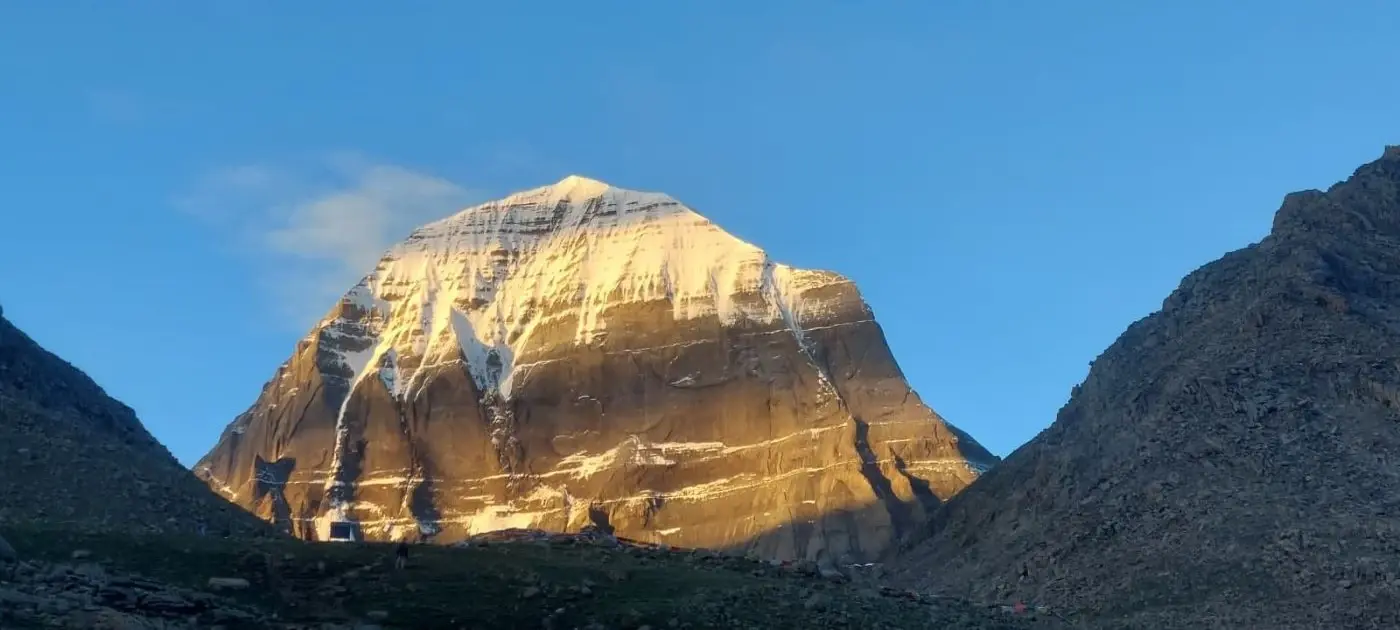
The yatra is a pilgrimage to Mount Kailash (Kang Rinpoche) and Lake Mansarovar, both in the far west of Tibet. Hindus see Kailash as the home of Shiva and Parvati. Buddhists link it with Mount Meru, Jains associate it with the first Tirthankara, and followers of Bon revere the area as well.
A full yatra has three parts. First comes the darshan of Kailash, often from Darchen (4,670 m), the plain base town. Second is the Mansarovar parikrama, a circuit of the lake of roughly 90 km, usually by vehicle. Third is the kora around Kailash, a clockwise walk of about 52 km over 3 days.
This needs more planning than a normal trek. The season is short, foreign visitors need permits that only registered agencies can arrange, and the altitude demands rest days that cannot be squeezed. That is why the order of this guide matters!
How Should You Prepare Physically for the Kailash Yatra?
Begin training as early as you can, because regular exercise is the most useful thing you can do for this trip. Strong legs and good stamina will not protect you from altitude sickness, but they help your body recover faster and let you walk longer, so you can actually enjoy the kora rather than just get through it.
Remember, the yatra is not a technical climb, it is a long, slow walk at altitude. The kora covers about 52 km over 3 days, and the hardest day is 22 km with a climb of roughly 740 m up to Dolma La at about 5,630 m. So your body should be ready for 5 to 10 hours on foot, day after day.
Why Does Exercise Matter So Much at Altitude?
When you are fit, every step costs your body less energy, which leaves you with some reserve once the air gets thin. Fitness also protects your knees on the long, loose descent after Dolma La, which is harder than the climb itself. And it gives you confidence, which counts for just as much when you are tired at 5,000 m!
Note: even a marathon runner can get altitude sickness, while a calm 65-year-old who walks every day may do very well. Fitness helps you cope with the trek, but it does not make you immune.
How Long Before the Trip Should You Start?
Start as soon as you can. If you have no fitness base at all, 6 months before a May or June departure is enough, though only just. At Alpine Eco Trek, we suggest at least 12 weeks of regular training, and longer if you are starting from the sofa. Here is a simple way to build it up:
- Weeks 1 to 8 (base): walk 3 times a week for 45 to 60 minutes, add stairs and two short strength sessions.
- Weeks 9 to 16 (build): do hill walks of 2 to 3 hours, climb stairs with a 5 to 6 kg pack and add one longer day each week.
- Weeks 17 to 22 (peak): do back-to-back long days of 5 to 7 hours, and practice downhill with trekking poles.
- Last 2 weeks (taper): shorten the walks, sleep well and complete your last medical checks.
Practice with the boots, socks and daypack you will actually use. Blisters on day 1 of the kora are not fun!
.webp)
What About Strength, Knees and Breathing?
Two strength sessions a week are enough: squats, lunges, step-ups, calf raises and a plank. Strong thighs protect your knees on the descent. Add slow, deep breathing in rhythm with your steps, and avoid training to exhaustion in the last 3 weeks.
Which Medical Checks Should You Do?
See your doctor 4 to 6 months before departure. Explain that you will spend several days above 4,500 m in a remote area. Ask about your heart, lungs, blood pressure and blood sugar, and consider an ECG.
Conditions such as unstable heart disease, poorly controlled blood pressure, severe asthma or a recent chest infection may rule out the trip, so ask early. Carry a doctor's letter if you have any health condition, and tell us about every medicine you take.
What If You Are Over 60?
Many pilgrims in their 60s and 70s complete the kora, provided their doctor agrees. Start earlier, walk slowly and often, and add stairs. We can arrange a horse or porter in Darchen if you need one (more on this later). Pace matters more than age.
How Should You Prepare Mentally for the Yatra?
Mental preparation is half the journey, and honestly, many travelers forget about it. Expect some discomfort and decide beforehand that you will accept it, because nights are cold, bathrooms are basic, sleep gets broken and delays do happen.
Here is what helps:
- Know the rituals! Learn the basics of the puja, the kora and the local customs, and carry a small personal prayer or intention with you.
- Accept the slow days! Rest days and long drives are part of the plan, so do not treat them as wasted time.
- Be patient with your group, your guide and the weather.
- Tell your family in advance about the weak signal and the few days you will be offline.
- Break the kora into small goals, like reaching the next prayer flag or the next tea stop.
A strong mind is what makes the walk feel meaningful rather than just hard! And if a bad moment hits you near the pass, remember that thousands of pilgrims have walked this same path before you!
.webp)
When Should You Book the Kailash Mansarovar Yatra for 2027?
Book 6 to 9 months before departure. If you are reading this in late 2026 and want a May or June 2027 yatra, you have less than 6 months, so please do not waste time. Contact a reliable agency like Alpine Eco Trek as soon as you can!
A Simple Booking Timeline
- 9 to 12 months before: check your passport, see your doctor and start basic fitness.
- 6 to 9 months before: choose your route and ask for a written quote.
- 4 to 6 months before: pay the deposit (usually 15% to 25%) and book your international flights.
- 2 to 3 months before: apply for your China visa, if you need one.
- At least 45 days before: send your passport scan and booking form, so we can apply for your permits.
- 2 to 3 weeks before: pack, collect medicines and arrange cash.
Why Does Early Booking Matter So Much?
Seats are limited on the dates people like most. The weeks around Saga Dawa, the festival of the Buddha's birth, enlightenment and passing, fill up months ahead. Tibetan calendars reportedly place it on 18 June 2027, so check the date again closer to travel.
Permits matter too. Once a permit is issued, your cities and route are fixed, so a change of plan means a new application. Flights, helicopter seats and rooms in Darchen and Saga are limited as well, and they go first. Early booking simply gives you more choice!
.webp)
What Is the Best Time for Kailash Mansarovar Yatra in 2027?
The best windows are May to mid-June and September to early October. Roads are drier, skies are clearer and the kora passes are usually free of deep snow. When we plan departures at Alpine Eco Trek, late May and September are the months most pilgrims ask for.
Month-by-Month Guide for 2027
- April: permits for foreign groups on the kora usually start in the second half of April. Nights at Dirapuk are bitterly cold.
- May to mid-June: the most popular and balanced window. Mornings are clear and the roads are generally dry. Saga Dawa falls around the full moon of the fourth Tibetan month.
- July and August: western Tibet sits in a rain shadow, but Lhasa gets most of its rain now. Cloud can hide the mountains, and monsoon landslides make the Nepal road routes less predictable.
- September to early October: the air is clear and crowds thin out. China's National Day holiday (1 to 7 October) fills hotels and flights, so September is safer. Snow can close the kora by late October.
- November to March: roads close, guesthouses shut and the kora is not realistic. Tibet has also paused foreign visitors in some Marches.
How Cold Will It Get?
Lhasa is mild in June, with afternoons of 20 to 22 °C and nights near 9 °C. By October, afternoons drop to 14 to 16 °C and nights to 1 to 2 °C. Darchen and Dirapuk sit much higher, so frost at night is normal even in summer. Pack for winter at night and sunshine by day!
Which Dates Should You Avoid?
Three stretches need caution. Early April and late October bring snow risk and thin services. China's National Day week (1 to 7 October) brings crowds. And the days around Saga Dawa can be wonderful but loud and expensive if you want quiet. In Nepal, Dashain and Tihar raise flight demand in autumn, so book seats early if your trip falls there.
Is 2027 a Special Year for the Kailash Yatra?
Tibetan tradition treats the Horse year, 2026, as especially auspicious for the kora. Well, 2027 is not a Horse year, but pilgrims go every year, and nobody measures sincerity by the calendar. If the year matters to you, ask your own priest before you choose.
.webp)
What Are the Best Routes to Kailash From Nepal?
For most foreign travelers, Nepal offers the widest choice, the most flexibility and the easiest start. We do not say that lightly. There is no lottery, Kathmandu is a pilgrimage in itself, and you can choose between several routes. Here are the main ones.
Route 1: Nepal by Road Through Kodari or Kerung
Overland routes leave Kathmandu by road and cross into Tibet at Kodari (Zhangmu) or Kerung (Rasuwagadhi). From the border, the road runs west through Saga to Lake Mansarovar. In our own 14-day Kodari program, you sleep in Nyalam, Saga, Lake Mansarovar, Darchen, Dirapuk and Zuthulpuk: Kailash Overland Tour via Kodari Nyalam Border.
On the Kodari line, the Araniko Highway takes you from Kathmandu to the border in about 5 to 7 hours when the road is clear. Zhangmu waits at 2,300 m, and Nyalam, 30 km higher, is where you sleep at about 3,750 m. That is a gain of roughly 2,400 m in a single day, so a quiet evening and a rest day later in Saga matter.
The road is both the appeal and the weakness. Landslides in the monsoon and border decisions can close these crossings at short notice (the recent Rasuwa-Bhotekoshi flood is one example), and nobody can promise they will be open on your exact day. Good operators like us confirm the routing 45 to 60 days before departure and keep a fallback ready.
Route 2: Nepal by Humla, With a Helicopter to Hilsa
This route flies from Kathmandu to Nepalgunj, then on to Simikot (2,910 m). A helicopter lifts you over the Humla Karnali gorge to Hilsa (3,700 m) in about 20 minutes. You walk across a footbridge that serves as the border and meet your Tibetan guide on the far side. Taklakot (Purang), Lake Mansarovar and Darchen follow.
It compresses the trip into about 11 or 12 days, which suits people with limited leave. The cost is a fast jump in altitude: you sleep near 150 m in Nepalgunj and at about 3,900 m in Taklakot two days later. Weather can ground aircraft, and early October snow can close the crossing. Helicopters carry only a handful of passengers per lift, with about 15 kg of baggage per person.
You can inquire about this package with us, as we run the Kailash Mansarovar Helicopter Tour ourselves, starting at USD 3,600: Simikot Kailash Helicopter Tour. At Alpine Eco Trek, we also advise 2 spare days after the program, because one grounded aircraft can slide the whole chain.
Route 3: Fly to Lhasa, Then Drive West
You can also fly from Kathmandu to Lhasa (3,650 m), spend two or three nights adjusting and then drive west through Shigatse and Saga. Our own Lhasa program takes 17 days and gives your body the most gradual climb: Kathmandu Lhasa Kailash Overland Tour. It also avoids the Nepal border road on the way in.
The road follows the Friendship Highway through Gyantse and Shigatse to Saga, at about 4,640 m, then continues north-west to Lake Mansarovar and Darchen. Expect about 3 driving days from Lhasa to the lake. This is the route we usually recommend to pilgrims who worry most about altitude.
Route 4: Fly Into Tibet From China
Foreign travelers can also enter through a Chinese city such as Beijing or Chengdu and fly to Lhasa. From there, you drive west, or you fly onward to Purang, near Kailash, on seasonal flights that run only on certain days. Everest Base Camp can be added on the way: Beijing Lhasa EBC Kailash Tour, and a fly-in, fly-out program from Chengdu takes about 12 days [INTERNAL LINK: Lhasa Kailash Lhasa Fly In Fly Out Luxury Tour].
Note: Kailash can also be reached from India through the Indian government yatra, but that route is only for Indian citizens, so we do not cover it here.
.webp)
How Do You Choose Between the Routes?
Ask yourself four plain questions, and the answer usually appears:
- How many days of leave do you have? Under 13 days points to Humla or a fly-in program. Over 16 days opens every option.
- How worried are you about altitude? If you are very worried, choose Lhasa, with its slow climb.
- How do you feel about road travel? Long drives suit some and exhaust others.
- Is your date fixed? Festival dates and flight days leave less room for change.
How Many Days Do You Need?
Plan 11 to 12 days for the Humla helicopter route, 13 to 14 days for the Kodari road route and 16 to 17 days for the Lhasa route. Add 2 spare days after the program, and add your international flight days. For most travelers, 14 to 17 days of leave is a comfortable range.
Can You Add Asthapad, Tirthapuri or a Stay at Dirapuk?
Yes. Optional trips such as the Asthapad trip, the Tirthapuri trip or a 2-day stay in Dirapuk can be done on request. Asthapad is the place Jain tradition links with the liberation of Rishabhanatha, the first Tirthankara. Tirthapuri, west of Kailash, has hot springs and a monastery tied to Padmasambhava. These optional trips cost about US$ 90 pp per team, with a guide, permit and vehicle. Please ask us before you travel, not at Darchen.
When and Why Should You Buy Flights Early?
Buy your flights early, but in the right order. First confirm your route and dates with your agency in writing, then book. Flights are the pieces that move least once the plan is set, so early booking protects both your seat and your budget.
Which Flights Do You Need?
Think of three layers. First are your international flights to Kathmandu's Tribhuvan International Airport. Second are the domestic flights: Humla programs use flights from Kathmandu to Nepalgunj and Simikot, followed by a helicopter, and Lhasa programs use flights from Kathmandu to Lhasa. Third are the Tibet flights, such as the seasonal Lhasa to Purang flight that runs only on certain days.
Why Does Early Booking Help?
Seats on small aircraft and helicopters are limited, and popular dates sell out first. Fares usually rise as departure approaches, and flights around the festival weeks and Chinese holidays fill fast. Early booking gives you the dates you actually want!
How Do You Book Without Taking a Risk?
A few habits save money and stress:
- Choose changeable tickets for your international flights until your visa and dates are confirmed.
- Keep names on tickets identical to your passport, including middle names.
- Leave 2 spare days before your flight home, because weather or a border can delay you.
- Expect strict baggage limits. Helicopters load by weight, and Chinese domestic flights usually allow about 20 kg.
- Keep your passport, permit copies and medicines in your hand luggage.
Note: Alpine Eco Trek reserves the domestic flight and helicopter seats on our Humla programs for you, so you only need to book the international flights.
.webp)
When Should You Apply for a China L Visa?
Most foreign travelers need a China L (tourist) visa, unless their nationality is covered by China's visa-free policy. Let us make this simple.
Do You Need a Visa or Can You Enter Visa-Free?
China has offered 30-day visa-free entry to a long list of countries on a year-to-year basis, with the current policy running to the end of 2026. Please check what applies for 2027 before you rely on it. And remember that visa-free entry does not cover Tibet, so a Tibet Travel Permit is always required.
From this year, you can enter Tibet from Nepal with a Chinese individual visa issued in your home country, without any issue. You do not need a Chinese group visa from Kathmandu any more.
When Should You Apply?
Apply about 8 to 10 weeks before departure, and not earlier than 3 months before you travel, because the visa is normally valid for about 3 months from issue. Standard processing often takes only a few working days, but peak seasons and some embassies take longer. Applying early lets you have the visa in hand before our 45-day permit deadline.
Your passport must be valid for at least 6 months, with blank pages. Never leave the visa to the last 3 weeks before you fly to Kathmandu. And if you can, avoid non-refundable flights until it is approved.
What About the Nepal Visa?
You also need a Nepal tourist visa, which you can buy on arrival at Tribhuvan International Airport: US$ 30 for 15 days, US$ 50 for 30 days and US$ 125 for 90 days. Because the border day can run late, choose the longer option if you plan to stay on. Entry rules change, so please confirm the current requirements for your nationality.
Who Applies for the Tibet Permits, and When?
Only a registered travel agency can apply for Tibet permits, and you cannot do it alone. At Alpine Eco Trek, we apply for them as part of your package, working with our Tibetan partners.
Which Permits Do You Need?
Three documents matter. The Tibet Travel Permit (TTP) comes from the Tibet Tourism Bureau and is checked at borders, hotels and checkpoints. PSB permits cover areas outside Lhasa. And a special Kailash Mansarovar permit covers the lake, Darchen and the kora. Your guide collects the local permits on the way, so keep your passport within reach at checkpoints.
When Do We Apply?
We need your passport scan at least 45 days before departure, and for festival weeks we start earlier. Once a permit is issued, your cities and route are fixed, so you cannot add a side trip or swap places. If you want an optional trip, tell us before we apply.
Why Can't You Go Independently?
The rule behind all of this is simple: foreign visitors cannot reach Kailash independently. You travel with a registered agency, a licensed guide and an approved route. Some professions, including journalists and diplomats, can face extra questions or refusals, so tell us early.
What Does Alpine Eco Trek Need From You?
To keep your booking smooth, we ask for a few things, and the earlier the better:
- A passport valid for at least 6 months beyond your trip
- A scanned copy of your passport, at least 60 days before departure
- Our booking form, which we email to you
- A copy of your Chinese visa, as soon as it is issued
- Your occupation and an emergency contact
- A deposit of 15% to 25% to confirm your booking
- Details of any health condition or medicine, in confidence
- Your food preference, such as Jain food or any other
- A proof of ID, which you carry during the trip
The balance is cleared on arrival in Kathmandu. We also ask you to read our booking policy: documents on time, abide by company policy and accept that the itinerary can change without notice because of natural calamities, political unrest or decisions by Chinese authorities.
Note on cancellations: we require a written application. If you cancel more than 90 days before departure, all previously paid amounts are refunded. Between 31 and 90 days, 75% of the deposit is refunded, except the non-refundable deposit. Within 30 days, all paid amounts are forfeited.
.webp)
What Should You Pack for the Kailash Mansarovar Yatra?
Pack for cold nights, strong sun and long days, and keep the load light. A duffel bag of 30 to 35 liters and a small daypack for the kora is enough for most pilgrims. Here is the list we would follow:
- Warmth: thermal or woolen undergarments, a fleece, a warm down jacket, a wind and water proof jacket, woolen gloves and at least 4 pairs of woolen socks
- Feet: hiking shoes you have already broken in, sandals for mornings and evenings, and a walking stick or trekking poles
- Sleep: a silk liner rated to about minus 20 °C
- Sun and skin: sunglasses, sunscreen or cold cream, lip balm and a torch
- Health: essential medicines for minor injuries, your regular prescriptions, a 2-litre water bottle or thermos and a toiletries kit
- Snacks: sweets, ginger or garlic candies, dry fruits and lozenges
- Clothes: T-shirts, long shirts and trekking pants that are easy to walk in
What Equipment Does Alpine Eco Trek Provide?
You do not need to buy everything. We provide a special down jacket for the kora, a warm ear-covering hat, one large duffel bag for your main clothing, one trekking bag for the kora and one rain poncho. These items are provided once you land in Kathmandu. If your trip starts from Lhasa, our crew members hand them over in Saga.
What Should You Leave at Home?
Drones, large cameras you will not use, heavy books, jewellery and spare shoes should stay at home. Aim for about 10 to 11 kg in your main bag, because helicopters allow roughly 15 kg and every kilo counts on the pass. Pack a small medical kit too, with oral re-hydration salts, painkillers, anti-diarrhoea tablets, blister plasters and your regular medicines.
Do You Need Travel Insurance for Kailash?
Yes, we strongly urge every pilgrim to take it. Our booking policy treats insurance as recommended, not compulsory, but we would not travel without it. A medical problem at 5,000 m or a cancelled flight can cost far more than the premium.
What Should Your Policy Cover?
Standard holiday policies often stop covering medical costs at 3,000 to 4,000 m, which is well below Dirapuk. Look for cover for trekking to at least 5,700 m, emergency evacuation and medical treatment in China and Nepal. Tell your insurer the full route, including Dolma La at about 5,630 m.
What Else Should You Check?
Check trip interruption and delay cover, because flights, weather and borders can change your dates. Read the exclusions on natural disasters and missed connections. Keep receipts, print your policy number and emergency phone line, and carry them in your daypack, since a phone scan is useless without signal.
Where Will You Stay on the Yatra?
Accommodation changes sharply from Kathmandu to the kora. Expect comfort in cities and simplicity on the plateau.
Kathmandu and the Tibetan Towns
When you book with Alpine Eco Trek, we usually keep you at the Hyatt Centric or Radisson in Kathmandu, with twin sharing and full board. That gives you a calm base before the altitude. In Lhasa, Shigatse, Saga, Darchen and Nyalam, the hotels have rooms with attached bathrooms and an oxygen setup in each room.
.webp)
The Three Holy Places
At Lake Mansarovar, Dirapuk and Zuthulpuk, the bathrooms are very basic, and in fact there are no attached bathrooms at any of them. In the Kailash area, hotels and guesthouses mostly have no heating, and many places have no hot water in the bathroom. Please plan for cold nights!
If you want more comfort at the lake, the 5-star Mnsarovar Hot Springs Hotel is an option, at US$ 250 per night for a double room as an extra charge. You can contact us or the hotel directly. A single room is available at about US$ 550 per person, and rooms in the Kailash region are shared in groups.
How Will You Travel During the Yatra?
Transport changes with each stage, so here is what to expect.
Flights, Helicopters and Buses
Depending on your route, you may use international and domestic flights, a helicopter to Hilsa and private vehicles. In Nepal, we use a private coach or van from Kathmandu to the border. Within Tibet, small groups travel in vans or 4WD vehicles, and larger groups in a coach with a support truck for food, equipment and staff.
On the Tibetan Plateau
Most highways are paved, but sections near the lake can be rough, dusty or under repair. Drivers are local and know the check-posts, and speed controls mean a vehicle that arrives early must wait. Alpine Eco Trek's Tibet-side vehicles include a heated minibus, and on the lake parikrama we use an eco-bus.
On the Kora
Vehicles are prohibited from Darchen or Yemdwar to Dirapuk, so every step after the gate is on foot or by horse. Yaks and yak men carry the group's baggage, food and fuel. Hired porters and horses are arranged in Darchen, which we explain in the trek section.
What Will You Eat on the Yatra?
Expect pure vegetarian food on most Kailash tours. In Kathmandu, your stay is on full board. From the Kailash side onward, our own cooks prepare pure vegetarian Indian meals, with a focus on South Indian and Nepali dishes. They can adapt meals to your needs.
If you have a food preference, such as Jain food or any other, please inform our staff once you land in Kathmandu, so we can do the shopping accordingly. Menus on the kora are short, so mention allergies early too.
Water: our team provides 3 liters of pure drinking water per person every day. Do not drink from lakes or streams, including Lake Mansarovar. Carry a reusable bottle and purification tablets as a backup, and eat regularly even when your appetite fades.
.webp)
Do You Need a Guide, and Who Will Be With You?
Yes, and it is also the rule. Foreign visitors travel with a registered agency and a licensed guide, and the permits are tied to that arrangement. On our tours, you travel with a team, not a single person.
- A Tibet Tourism Board approved Tibetan guide leads you in Tibet and handles checkposts.
- A Nepali team leader who speaks fluent English and Hindi looks after the group.
- Our own cooks, a cook helper and Sherpa guides look after meals and the trail.
- Insured staff travel with you, and medical insurance covers our Nepali crew.
A good guide hears about your headache at breakfast and changes the day, and our Alpine Eco Trek guides are trained to listen for exactly that. That is worth more than any gadget!
How Do You Choose the Best Agency for Kailash?
Choose an agency that answers your questions in writing. A registered agency matters, because Tibet permits are issued only through one. Look for a company with a long record on Kailash, a Nepali team with its own cooks and guides, and clear oxygen and medical arrangements.
What Should You Ask Before Paying?
- Who applies for my permits, and when?
- Which hotels and guesthouses will we use?
- What oxygen and medical equipment travels with us?
- What happens if a border closes or a flight does not run?
- What is included, and what is extra?
How Do You Spot a Red Flag?
An unusually low price often hides a missing guide, flight or permit. Compare inclusions item by item, and be wary of any company that cannot name the hotels or the crew. Do compare prices with other operators, including ours, and book only when you are fully satisfied!
.webp)
Who Are We?
Alpine Eco Trek & Expedition Pvt. Ltd. is a Kathmandu company that has run Kailash tours since 1997. We are associated with the Government of Nepal, the Nepal Tourism Board, TAAN, the Nepal Mountaineering Association and KEEP Nepal. Our food, guides and oxygen arrangements are our strengths, and our experience is what sets us apart. If you want to see how we plan a yatra, our Kailash Tour Trek website lists every package with its inclusions.
How Do You Handle Altitude Sickness on the Yatra?
Acute mountain sickness (AMS) means headache, nausea, dizziness and poor sleep at altitude. It is the biggest health risk on this trip, and it can affect anyone, fit or not. The good news is that gradual climbing, rest days and honest reporting prevent most problems.
What Do the Guidelines and Studies Say?
Wilderness Medical Society guidelines from 2019 advise gaining no more than 500 m of sleeping altitude a day above 3,000 m, with a rest day every 3 to 4 days. A study of 2,385 tourists in Lhasa linked rapid ascent and arrival by air to AMS, while earlier altitude experience lowered the risk. Pilgrim groups face the same pattern.
How Do You Prevent It?
- Keep these habits:
- Walk slowly and rest often.
- Drink 3 to 4 liters of water a day.
- Avoid alcohol and sleeping pills.
- Eat regularly, even when your appetite is low.
- Never go higher with symptoms.
Some doctors prescribe acetazolamide (Diamox), and that is your doctor's decision. Alpine Eco Trek carries Diamox pills for the Kailash circuit, but we never start anyone on them without medical advice.
.webp)
What Do We Provide for Altitude?
On our tours, oxygen is provided in the bus while driving and in the guesthouse in the morning and evening. Each bus carries one big oxygen cylinder with a mask and regulator, and we carry 4 Poisk Russian oxygen cylinders for the kora. We also check every yatri daily with a blood pressure machine and a pulse oximeter. And we still advise you to buy 2 cans of oxygen in Saga, just in case of an emergency on the trail.
What Are the Warning Signs?
Mild symptoms mean you stop going higher, rest and tell your guide. A severe headache, repeated vomiting or a stumbling walk means you go down. High altitude cerebral oedema (HACE) brings confusion and loss of coordination, and high altitude pulmonary oedema (HAPE) brings breathlessness at rest and a wet cough. Both are emergencies and need descent and oxygen at once.
What Happens in an Emergency, and How Does Evacuation Work?
Let us be honest: Kailash is remote, and help can be more than a day away. That is why prevention, insurance and early reporting matter so much.
What Is the Usual Response?
For serious altitude illness, the usual response is descent by vehicle, with oxygen if needed. Darchen has only a basic clinic, and Lhasa has major hospitals. An evacuation from the kora to a hospital by road can take more than a day. Do not count on helicopter rescue in western Tibet, because it is rarely available and depends on weather.
How Can You Make Evacuation Easier?
Tell your guide early about any symptom, because early reporting gives them more options. Share your emergency contact, blood group if you know it, allergies and medicines with your guide on day 1. Carry your insurance details on paper. And keep the 2 spare days we advise after the program, so a delay does not become a crisis.
Our Kailash Tour Trek team in Kathmandu stays in touch with the Tibetan guide throughout the tour, so someone is always following your progress!
.webp)
What Are the Do's and Don'ts on the Kailash Yatra?
A few simple habits keep you welcome on the route. Here they are:
Dos:
- Walk clockwise around stupas, mani walls and monasteries.
- Remove your hat and shoes before entering chapels.
- Ask before photographing people, and expect some halls to ban photos.
- Give prostrating pilgrims room, and never step over them.
- Carry your litter out, and keep your voice low at Lake Mansarovar.
- Tell your guide early about any health issue.
Don'ts:
- Do not climb Kailash. Nobody may.
- Do not touch prayer flags, prayer stones or the ground around the Tarboche flagpole.
- Do not wash with soap in lakes or streams.
- Do not leave belongings on the route, such as clothing, hair or coins, unless your guide explains the local custom.
- Do not carry political material, and leave drones at home, since they are heavily restricted.
- Do not drink lake water untreated.
Note: Bon followers walk the kora counterclockwise, so you may meet them. Neither group needs to give way. Everyone is simply praying!
How Should You Handle Money on the Yatra?
Carry Chinese yuan (RMB) in small notes. ATMs work in cities such as Lhasa, but they can fail, and from the Kailash side you should expect cash only. Tea, snacks, hot water and tips are paid in notes. Foreign cards can link to Alipay or WeChat Pay in larger cities, which does not help in remote guesthouses.
Budget a small cushion for tips, extra nights, snacks and donations. Tips are optional, but guides, drivers, cooks, porters and pony handlers rely on them. A group tip handed over by the team leader on the last day is the simplest approach.
.webp)
What About Phones and Internet on the Yatra?
Google services, WhatsApp, Instagram and Facebook are blocked on local networks in Tibet. An international eSIM that routes through your home network usually works. Hotel Wi-Fi is decent in Lhasa and Shigatse, and signal follows the highway.
Dirapuk and Zuthulpuk have no usable signal, so tell your family you will be offline for about 3 days. Carry a 20,000 mAh power bank, and keep devices inside your jacket at night so the cold does not drain the batteries. Download maps, tickets and documents before you cross the border!
What Does the Kailash Trek Actually Look Like?
The kora is moderate to hard. It needs no ropes and no technical climbing, but altitude, cold and long days combine. This is also the heart of the journey, so here is the plan.
The 3-Day Kora, Step by Step
- Day 1: drive 6 km from Darchen to Yemdwar in a deluxe vehicle, then walk about 12 km in roughly 5 hours to Dirapuk (4,890 m).
- Day 2: start early and walk 22 km in about 10 hours from Dirapuk to Zuthulpuk (4,790 m), crossing Dolma La at about 5,630 m. This is the hardest day.
- Day 3: walk about 12 km in 3 hours from Zuthulpuk to near Darchen, then drive on. On overland programs, the drive to Saga is 450 km and about 8 hours.
Dirapuk faces the north face of Kailash, and that is the view most pilgrims remember. Below Dolma La lies the small sacred lake of Gauri Kund, then a steep, loose descent.
What If 3 Days Feel Like Too Much?
There are two shorter options. The one-day parikarma runs from Yemdwar to Dirapuk (12 km, 5 hours). You take your darshan, enjoy the sunset on the north face and drive back to your Darchen hotel. The vehicle and the Darchen stay are at your own cost.
After Dolma La, you can trek downhill to Gaurikunda and rent a van to shorten the walk to Zuthulpuk, or continue to Darchen for a more comfortable stay. The van ride, plus accommodation and meals in Darchen, are at your own cost.
Should You Hire a Porter or a Horse?
Yaks and yak men carry the group's baggage, but a personal porter or horse is a separate hire. You book it in Darchen, and we ask you to inform us at least 2 days before you reach Darchen. A porter costs US$ 200 for 3 days, and a horse with a horseman costs US$ 500 for 3 days. You pay directly to the Darchen authority office.
Three rules apply. Hiring is compulsory for all 3 days. A porter or horse is not available to share with family members. And each yatri who hires support receives a name tag. If your knees complain on descents or stairs leave you breathless, book support early.
.webp)
What Rituals Happen at Lake Mnasarovar?
Lake Mansarovar is where the yatra turns from travel into prayer. Hindus say Brahma created it from his mind. Buddhists link it with the legendary lake Anavatapta, Jains hold the region sacred and followers of Bon revere it too. The usual ritual is a puja and hawan on the shore.
With Alpine Eco Trek, our company provides the puja materials and finds a place to perform the puja and homa. Guests are requested to bear the gratitude (dakshina) to Pandit ji. Our team also brings a shower tent and warm water, so you can wash before sitting for the puja.
Now, coming to the rules: a full dip in the lake is not allowed. During the Mansarovar lake parikarma by eco-bus, we find a corner where you can enter the water up to knee level. Take a small bottle if you want holy water, but never drink lake water untreated.
For enthusiasts: Gauri Kund is a small sacred lake below Dolma La. Zuthulpuk holds the cave where the Tibetan saint Milarepa is said to have meditated. And Chiu Gompa, a small monastery beside the lake, gives the best view across the water.
What Should You Do in Kathmandu Before Tibet?
Your first days are not wasted time! Two days of sightseeing in Kathmandu is the standard plan on our tours. Groups that are short on time can cut it to one day, but two days is what we recommend.
For Hindu Pilgrims
Most places here connect with Shiva or Shakti, the same tradition that leads you to Kailash. One day covers Pashupatinath, Guhyeshwari Shakti Peeth, Budhanilkantha and Swayambhunath, and the other goes to Dakshinkali, the Kailashnath Mahadev Statue and Doleshwar Mahadev.
.webp)
For Buddhist Pilgrims
Two sites matter most. Boudhanath, one of the largest spherical stupas in the world, is the centre of the Tibetan community. Walk one clockwise circuit with the pilgrims, because it is a free rehearsal for the kora. Swayambhunath, on a hill west of the city, gives a wide view over the valley.
What If You Go Via Lhasa?
If you travel via Tibet, your sightseeing happens in Lhasa at 3,650 m, and it doubles as acclimatization. The Potala Palace, Jokhang Temple and Barkhor Street fill one day. Drepung Monastery, Sera Monastery, Norbulingka Palace and the Tibet Museum fill another. Keep evenings free, drink water and rest in the afternoon.
How Much Does the Kailash Mansarovar Yatra Cost?
Prices vary by route, season and group size, so we will not quote a single figure here. Five things move the price: route and length, group size, season, hotel category and flights. Departures around Saga Dawa cost more, because rooms in Darchen and Saga are scarce.
What Is Usually Extra?
Costs that are normally extra include international flights, travel insurance, personal expenses and tips. They also include a porter or horse, the gratitude offering to Pandit ji and a single room (about US$ 550 per person). The Mansarovar Hot Springs Hotel upgrade, the van from Gauri Kund with Darchen accommodation and meals, and the vehicle and Darchen stay for the one-day kora are extra too.
How Do You Compare Quotes Safely?
Ask for a written list of inclusions and compare item by item. On our website, we clearly mention them in each package, so you are left with zero confusion. A very cheap quote often hides a missing guide, flight or permit. And do not hesitate to compare us with other operators!
What Does a Typical Kailash Itinerary From Kathmandu Look Like?
A sample helps everything above make sense. Here is a 14-day road itinerary through Kodari and Nyalam, the shape that many Nepal programs follow:
- Days 1 to 3: arrive in Kathmandu at about 1,350 m, then spend 2 days on temple sightseeing.
- Day 4: drive about 125 km to Kodari, cross the border and sleep in Nyalam.
- Day 5: drive to Saga (about 4,640 m).
- Day 6: rest day in Saga, with short walks and daily checks.
- Day 7: drive over Mayum La to Lake Mansarovar, a long day of roughly 450 km.
- Day 8: puja and hawan at the lake, then drive 40 km to Darchen.
- Days 9 to 11: the 3-day kora, with nights at Dirapuk and Zuthulpuk.
- Day 12: drive back to Saga.
- Days 13 and 14: return to Kathmandu, then fly home.
Notice the shape! The climb is staged, the hardest day sits in the middle and the return is built on spare time. Other routes change the order, but not the logic.
Conclusion
Kailash is a mountain that asks for patience before it gives anything back. The people who arrive at Dolma La with energy left are almost never the ones who left everything to the last month. They are the ones who trained early, booked early and asked every question before they paid.
So here is our suggestion. Today, check your passport. This week, book a doctor's visit and take your first long walk. Next month, compare routes and ask for written quotes. By spring, you will have the paperwork moving and legs that are ready!
Honestly, the yatra is not easy, and it is not meant to be. But it is possible for far more people than think so, and it is worth every cold night. If you want a hand with any step, our Tibet tour consultant, or you can email. He will have your answers!
Take the first step now. Message our Kailash Tour Trek team with your dates and your questions, and let Kailash do the rest. And if you want to see the Saga Dawa festival, ask us about our festival tour too. Happy traveling to Tibet!
.webp)