
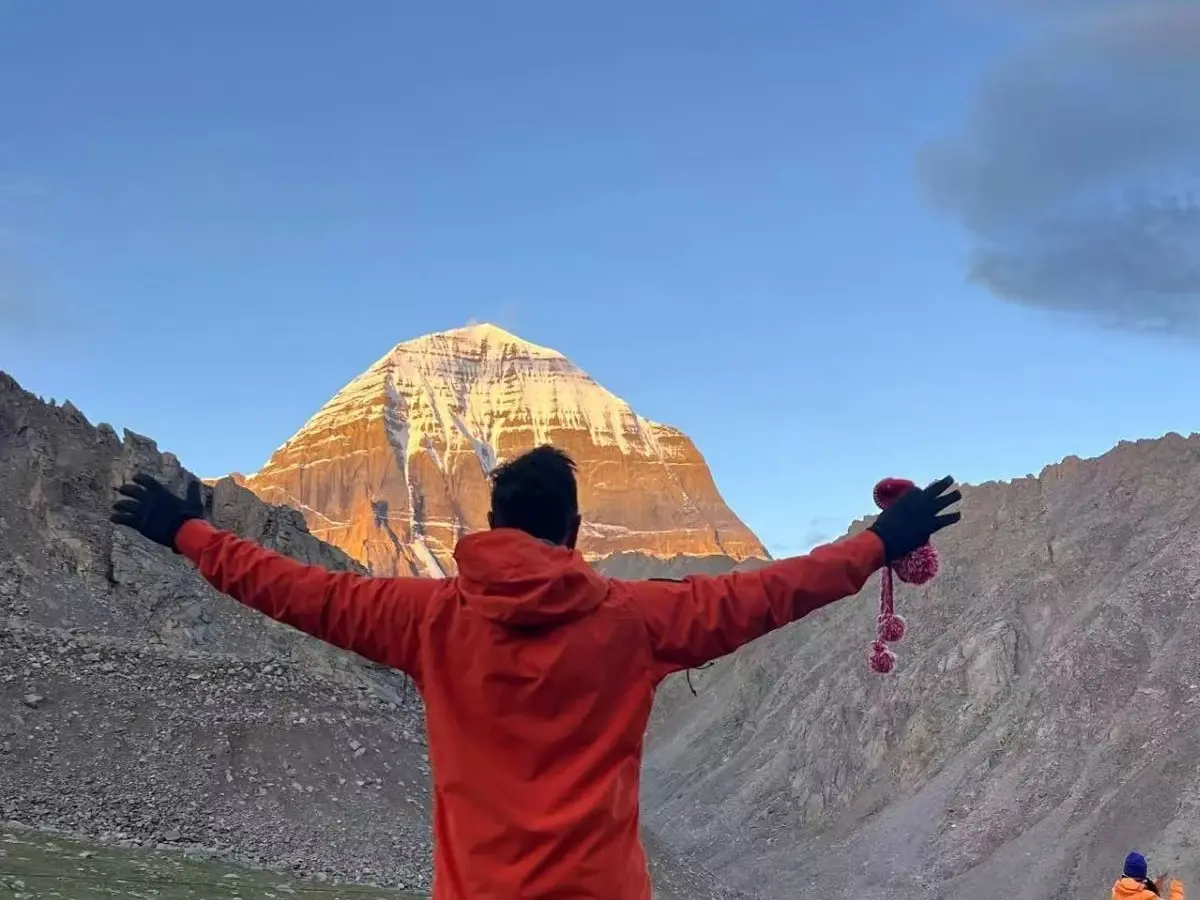
TRIP HIGHLIGHTS
- Fly from Beijing to Lhasa in just over 4 hours, then spend 3 nights adjusting at 3,650 m.
- Visit the Potala Palace, Jokhang Temple, and Barkhor circuit during 2 full days of sightseeing in Lhasa.
- Stop at Yamdrok Lake and the Gyantse Kumbum on the road to Shigatse.
- Reach Everest Base Camp on the Tibetan side and see the north face from Rongbuk.
- Climb high and sleep low: about 5,200 m at base camp, then 4,640 m in Saga that night.
- Sit for a puja and hawan beside Lake Manasarovar (4,590 m), with warm water ready before the ritual.
- Walk the 52 km Kailash kora in 3 days, crossing Dolma La at about 5,630 m.
- Sleep in rooms with attached bathrooms and oxygen in Lhasa, Shigatse, Saga and Darchen.
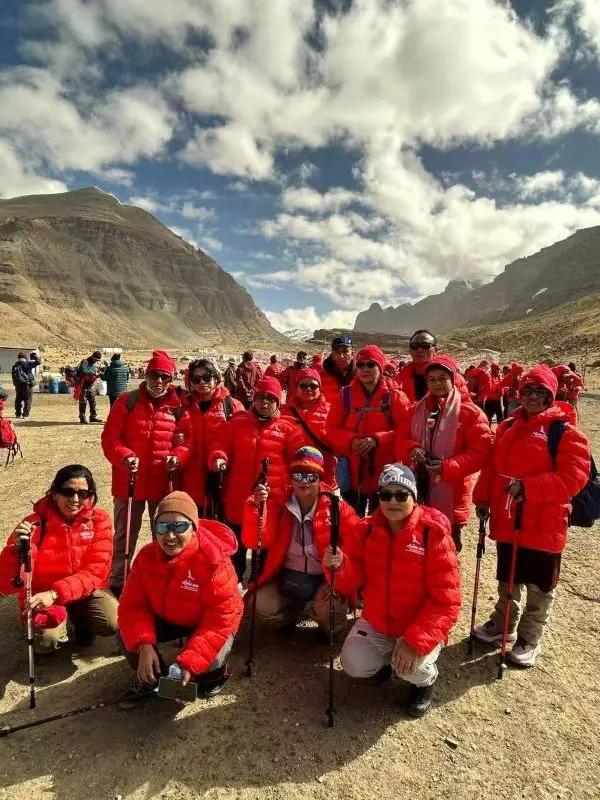
- Meet our Nepali crew and cooks in Saga, where you also collect your kora down jacket, hat and bags.
- Carry oxygen on every bus, with daily pulse and oximeter checks for each pilgrim.
- Return to Kathmandu by road via Nyalam and the Kodari border on day 13.
TRIP OVERVIEW
Most travelers who ask about the Beijing Lhasa EBC Kailash Tour have two mountains on the wish list and one worry.
Can a body that starts the week near sea level cope with Everest's north face on day 7 and Dolma La on day 11? It can, if the route gives it time. That is the whole idea behind this 14-day package from Alpine Eco Trek!
The route is simple to say and long to drive. You land in Beijing, fly to Lhasa on day 2 and spend 3 nights there. After that, the Friendship Highway carries you west through Shigatse to Tingri. From there you visit Everest Base Camp, sleep in Saga and continue to Lake Manasarovar and Darchen for the 3-day kora. A last long road takes you south to Kathmandu through the Kodari border.
So what makes it different from other Kailash routes? The Beijing start puts your biggest jump in altitude on day 2, and after that the climb is unusually gentle. Everest also comes before Kailash, which means you meet thin air at 5,200 m long before the pass at 5,630 m.
This guide follows the route, the numbers and the paperwork in the order you will need them. Please read the altitude and visa sections slowly!
Two Mountains, One Road: Why Everest and Kailash Fit in One Trip
Everest Base Camp and Mount Kailash sit along the same western road across the plateau. That is why one itinerary can hold both without feeling stretched.
From Tingri, a spur road of roughly 85 km leads south to Rongbuk and the base camp. The same highway then carries you on toward Saga and the lake. So Everest becomes a very long day trip, not a separate journey. It keeps the whole plan to 14 days.
That said, this is a drive-up base camp, not a trek. If you picture the Khumbu trail with days of walking, adjust the picture. You arrive by vehicle, step out at about 5,200 m and look at the north face of Everest.
It stands clear of the ridges around it (and, frankly, looks like the postcards, only colder). The effort on this tour is stored in the altitude and the distances, not in the walking.
Who is it for? Pilgrims who also want to see Everest, mostly. And travelers who like a long, changing road more than a flight to the foot of a mountain. The Kailash Tour Trek team set the sequence so that Everest comes before Kailash.
That order matters, because the body copes better when the first 5,000 m day is a few hours at a viewpoint, not a 22 km walk over a pass.
A Beijing start has its own logic too. One flight takes you into Tibet without touching the Nepal border on the way in. The way out is by road through Kodari.
Starting in Beijing: What Happens on Days 1 and 2
Day 1 is an arrival day with nothing scheduled, and that is deliberate. You land in Beijing, clear immigration and transfer to your hotel for the night.
Beijing sits at about 45 m, so this is the last time for a while that you will breathe easily. Use it well: drink water, eat properly and sleep. Day 2 brings the biggest change in altitude on the whole trip.
On day 2, you fly to Lhasa, a flight of just over 4 hours. The airline checks your Tibet Travel Permit together with your passport at check-in. Keep a printed copy in your hand luggage, not in the suitcase.
Chinese domestic flights usually allow about 20 kg of checked baggage in economy (check your ticket). That is tighter than many international flights, so pack a main bag that you can carry yourself. Your duffel bag from us only arrives in Saga.
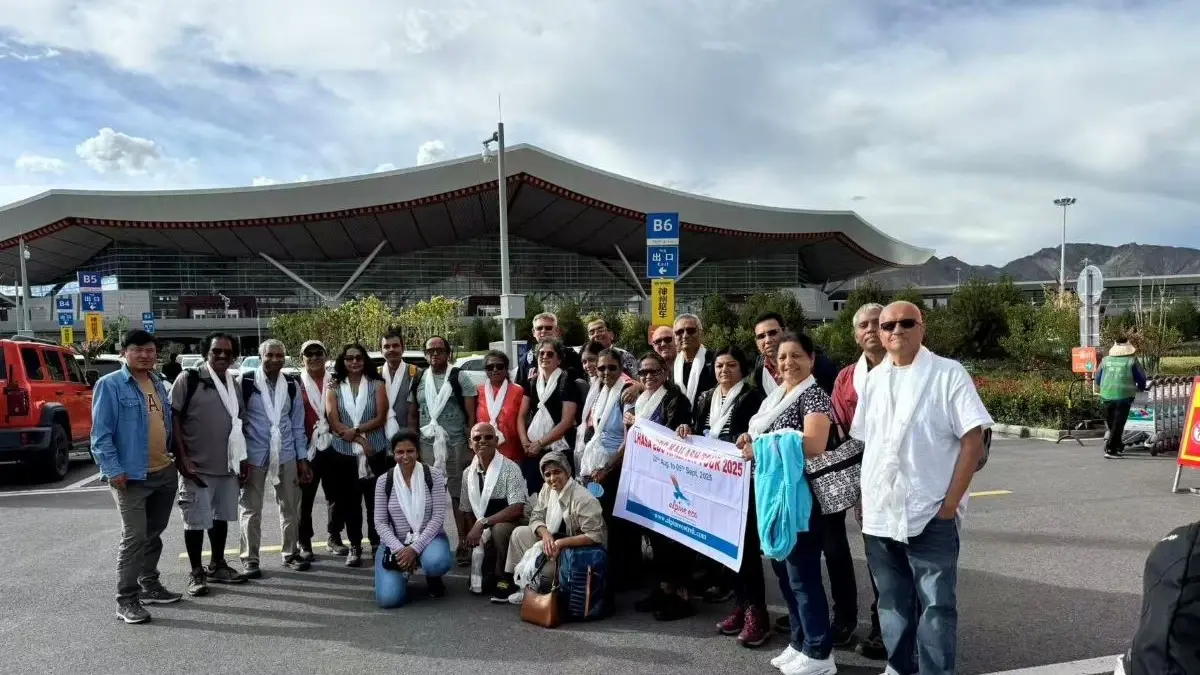
Lhasa's Gonggar airport lies about 65 km from the city, roughly an hour by road. Your Tibetan guide meets you there with a white khata scarf.
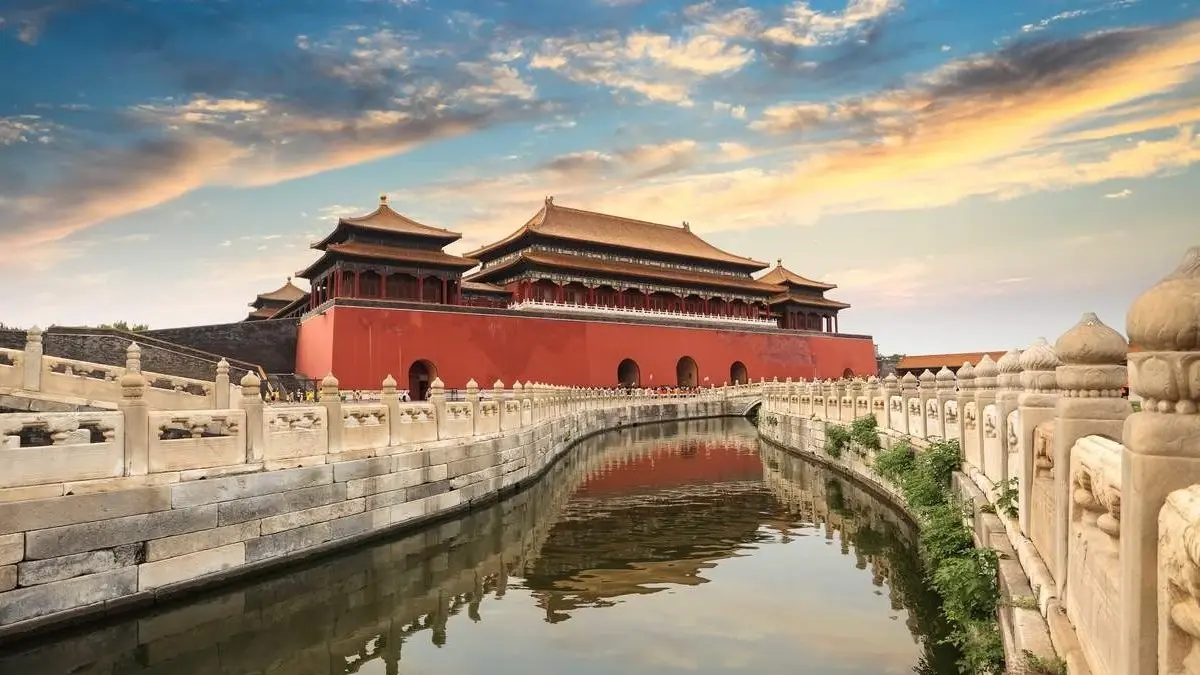
The itinerary has no sightseeing there, so the city is a gateway, not a stop. If you want the Forbidden City or the Great Wall, arrive a few days early and tell Alpine Eco Trek when you book. Also, your Chinese visa and Tibet permit are tied to dates.
A missed flight into Beijing costs more than a lost afternoon. Reach the airport early on day 2, because boarding for Tibet flights involves extra document checks.
Three Nights in Lhasa: A Sensible Order for Days 2 to 4
Lhasa gets 3 nights because your body needs them, and the temples are a bonus that happens to fit. Day 2 is for arriving and doing very little. Days 3 and 4 hold the sightseeing. The trick is to put the demanding stops early in the day and the gentle ones after lunch.
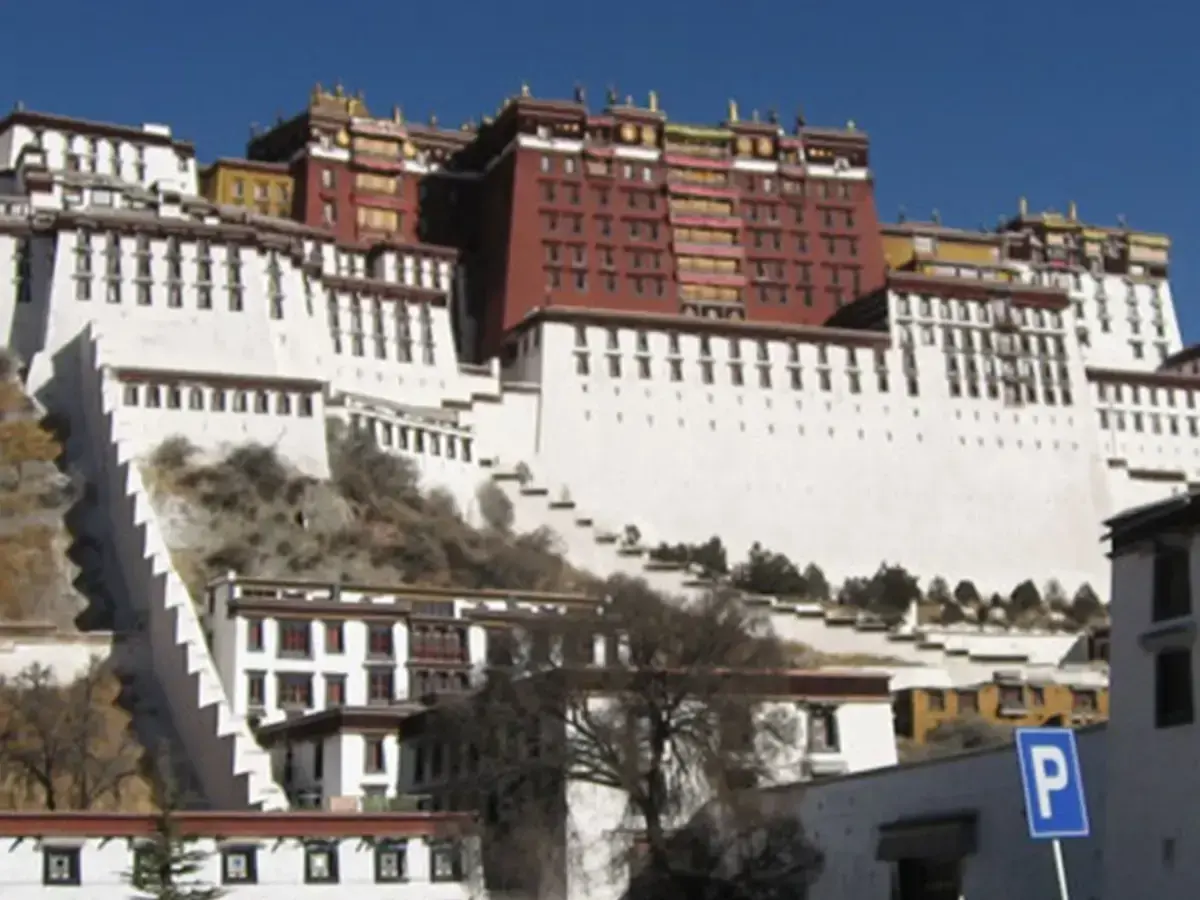
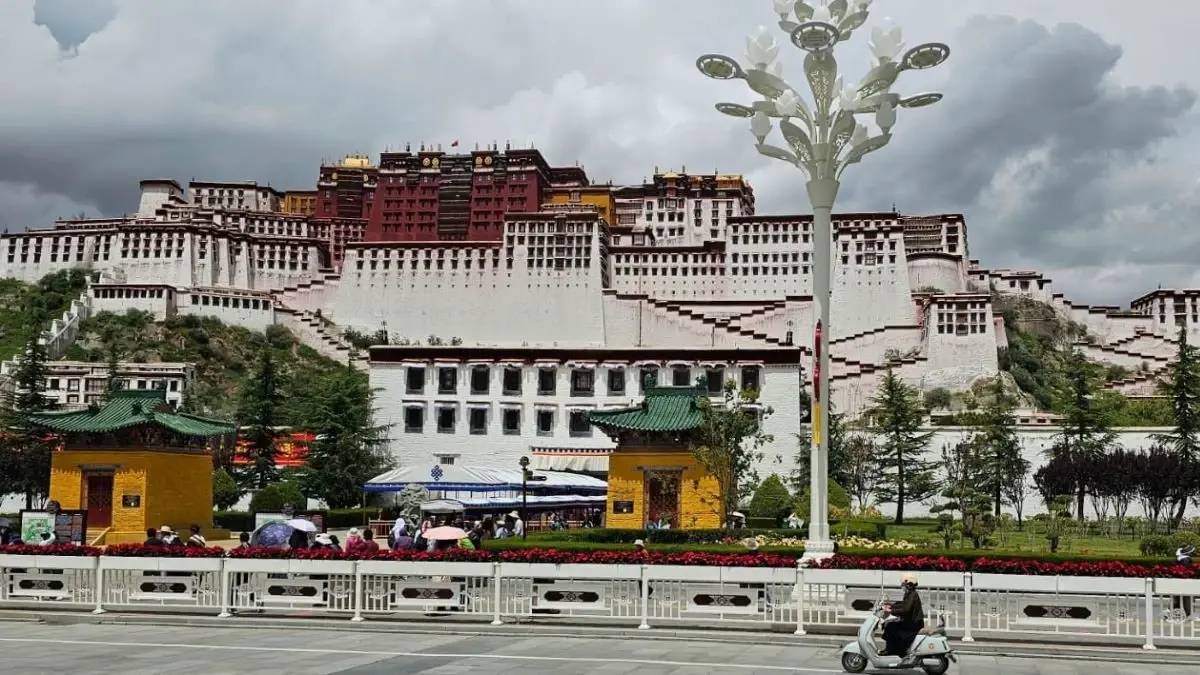
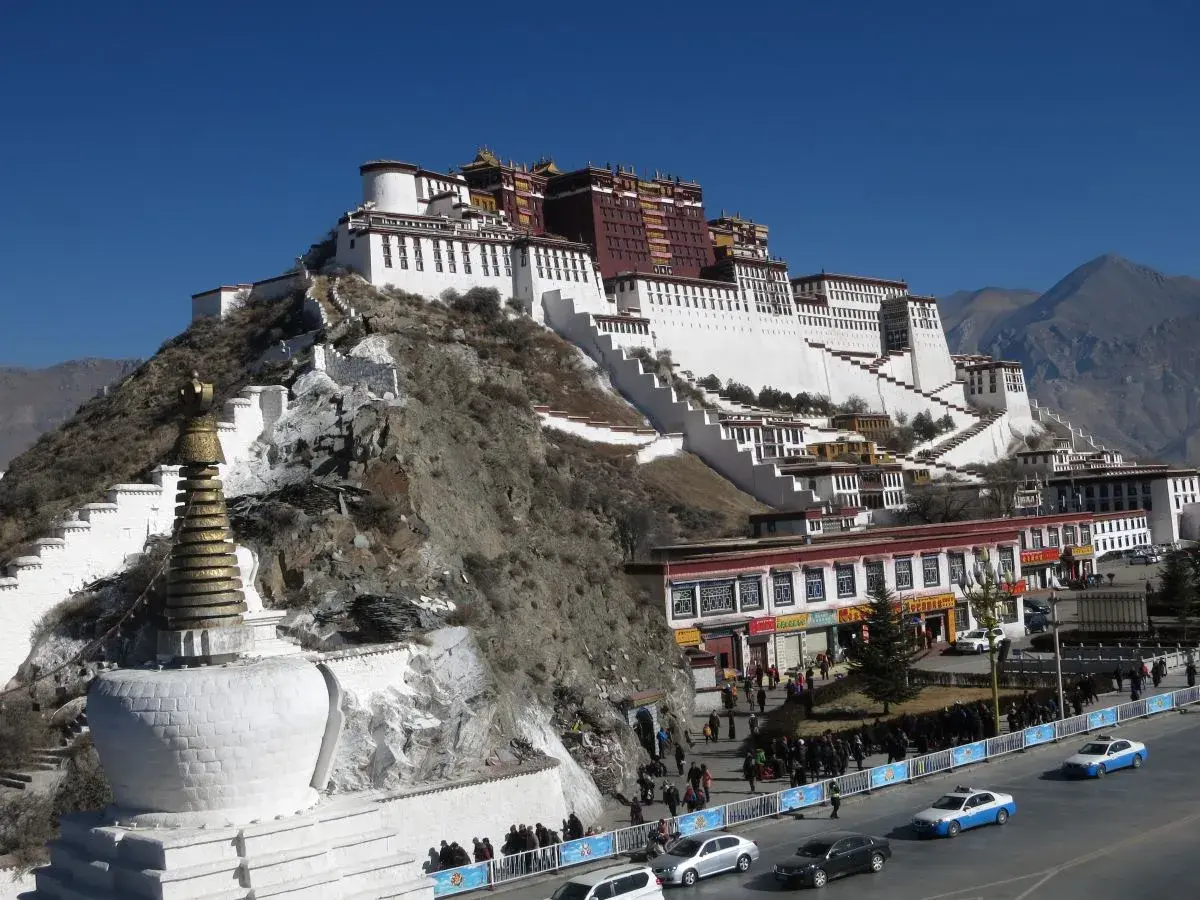
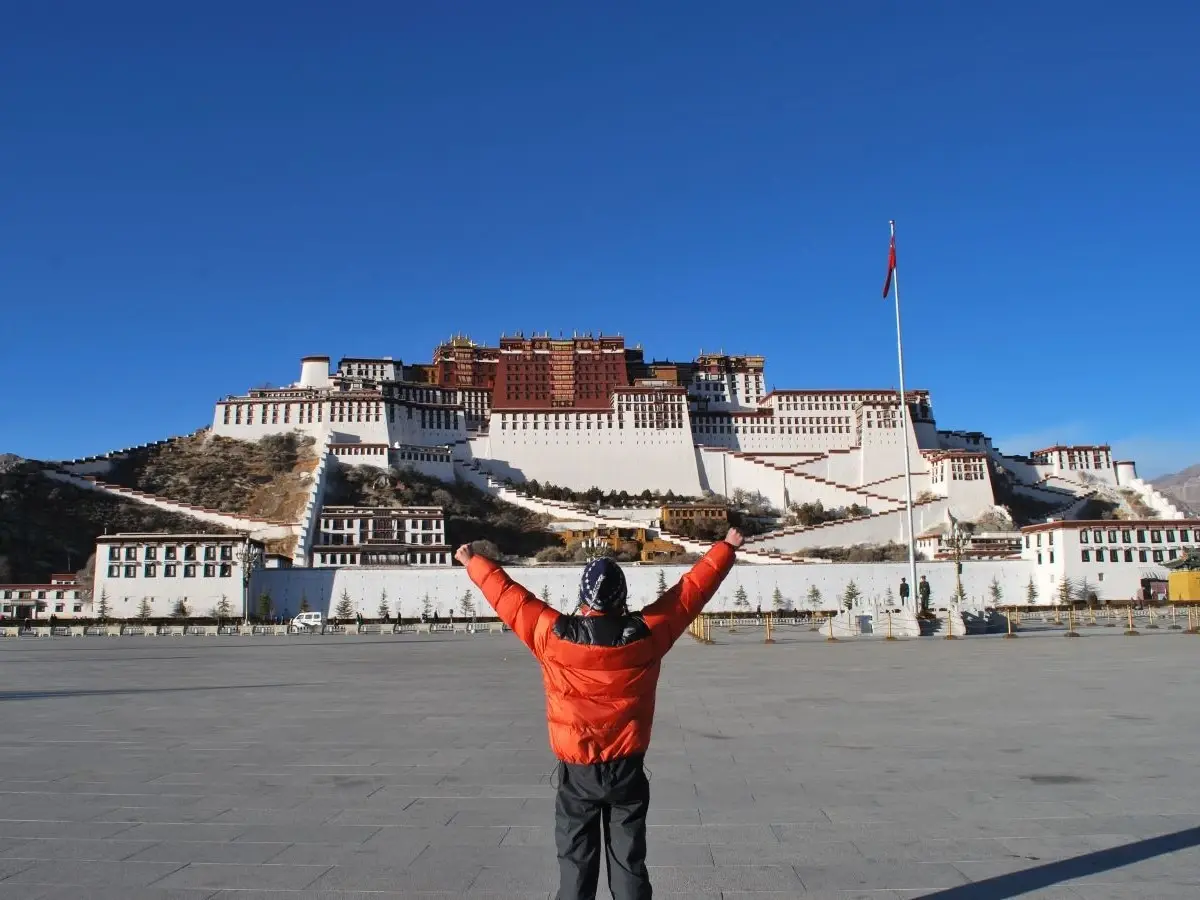
Start day 3 with the Potala Palace, a UNESCO World Heritage Site since 1994, rising about 117 m above Marpo Ri hill. Entry is timed, and your passport is checked at the gate. You get roughly an hour inside, with a long climb of steps that feels longer at 3,700 m.
Then walk to the Jokhang Temple, where pilgrims prostrate outside before the Jowo Shakyamuni statue. Finish on the Barkhor circuit, which is the best free show in town. Join the clockwise flow of pilgrims and buy a prayer flag if you like. Sit down for butter tea when your legs say so.
Day 4 moves to the edges of the city. Drepung Monastery, west of the center, was once among the largest monasteries in the world. Sera Monastery is known for its afternoon debates, where monks clap and argue in the courtyard. Norbulingka, the summer palace of the Dalai Lamas, is a calm place to close the day.
Plan for the sun too. Lhasa gets around 3,000 hours of sunshine a year, and ultraviolet exposure is strong even on cool days. Wear sunscreen and sunglasses, and rest in the afternoon, since tiredness often hits around 3 p.m. Alpine Eco Trek keeps the evenings free for exactly that.
Yamdrok, Gyantse and Shigatse: The First Day Away from Lhasa
Day 5 is the first time the road, not the city, does the work. You leave Lhasa, cross the Yarlung Tsangpo and climb to Khamba La (4,794 m). Yamdrok Lake spreads out below as a turquoise sheet that looks edited but is not.
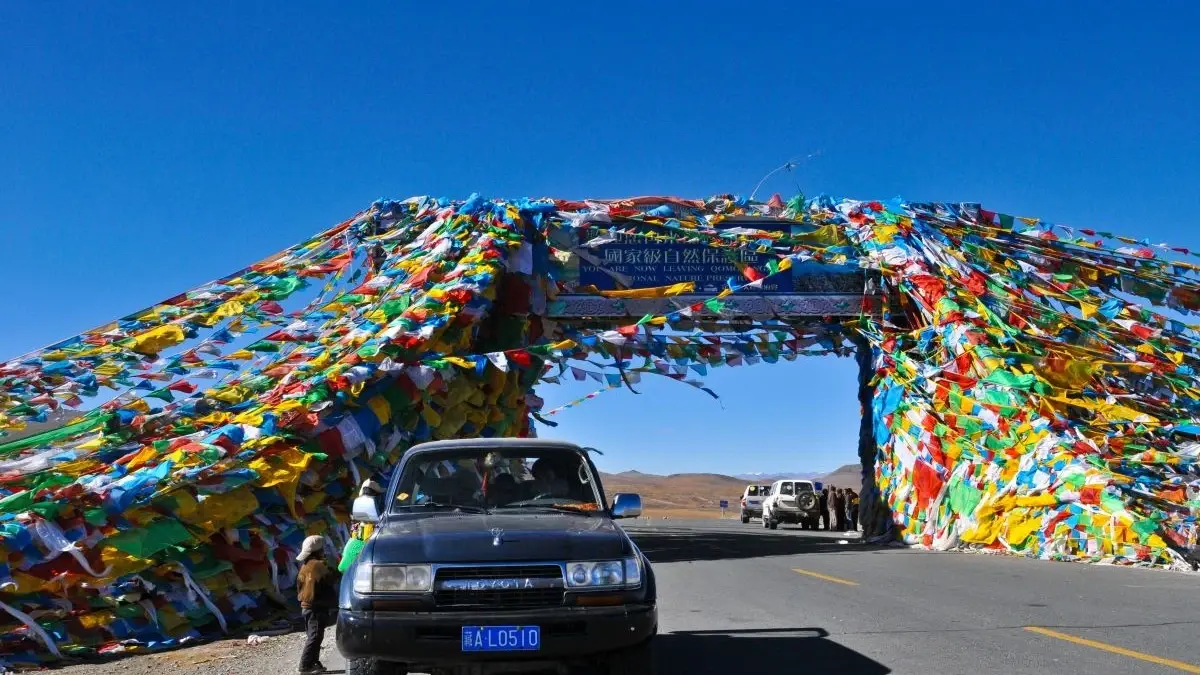
The road follows the shore and then climbs again to Karo La (around 5,045 m). A hanging glacier sits close to the highway. For many guests this is the first time above 5,000 m, so step out slowly, breathe and skip the sprint to the viewpoint.
Altitude headaches often show up on this day, so mention any to your guide before you reach the lake. It is cold and windy at the passes, so keep a warm layer within reach.
Gyantse is the lunch stop and the cultural highlight. Its fort stands on a rock above the town. The Pelkor Chode Monastery holds the Gyantse Kumbum, a multi-storey stupa with 77 chapels.
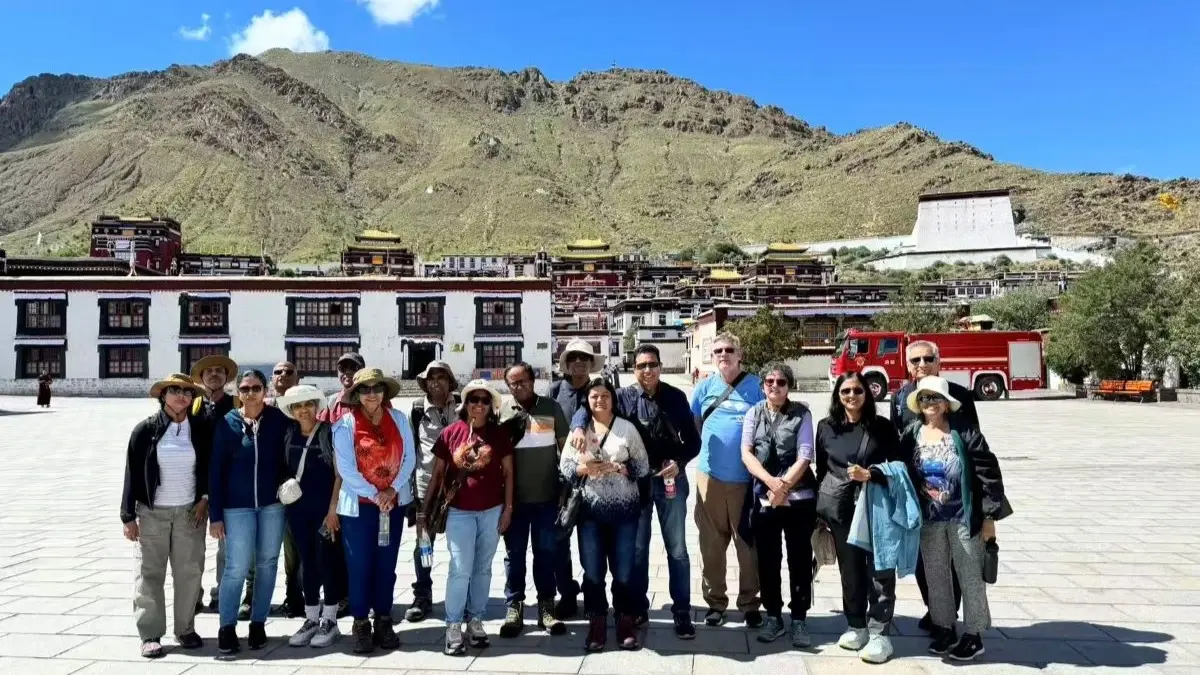
Shigatse, the second city of Tibet, is where you sleep at 3,840 m. Tashilhunpo Monastery, founded in 1447 and the seat of the Panchen Lama, is the main sight. Its large Maitreya statue is worth the entry. If the light and your energy allow, visit this evening. Otherwise, tomorrow's drive comes first.
Here is why this day matters beyond sightseeing. It exposes your body to passes above 4,700 m, while your sleeping altitude rises only about 190 m from Lhasa. So you collect altitude exposure without a big jump at night.
We use that trick throughout the program. Your Shigatse room has an attached bathroom and an oxygen setup. Alpine Eco Trek asks you to use the morning and evening oxygen if your head feels heavy.
Reaching Everest Base Camp from the Tibetan Side
The road to Everest begins with a long, plain day. On day 6, you drive from Shigatse to Tingri, about 327 km in 7 to 8 hours.
The road follows the Friendship Highway west through Lhatse and over high passes. Tingri sits at about 4,300 m, which makes it your highest sleeping altitude so far.
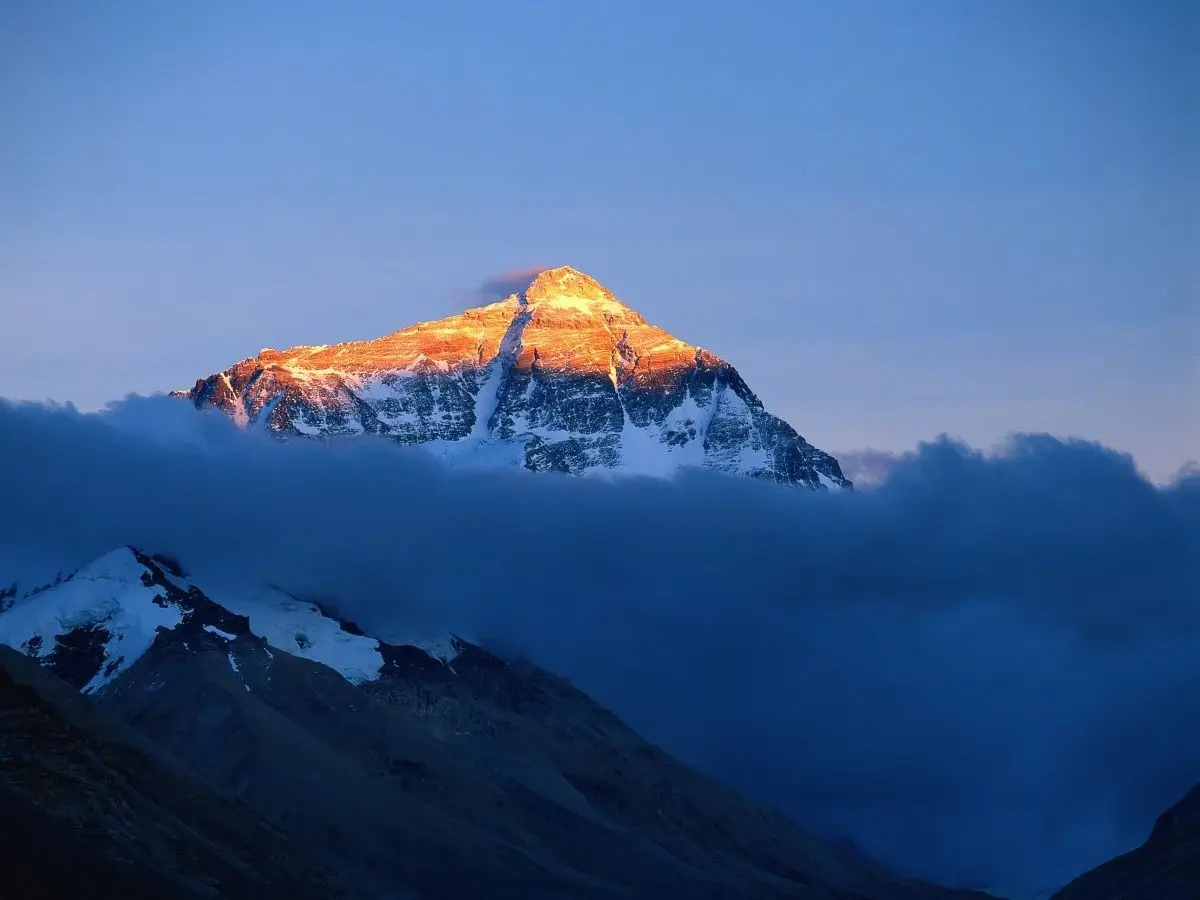
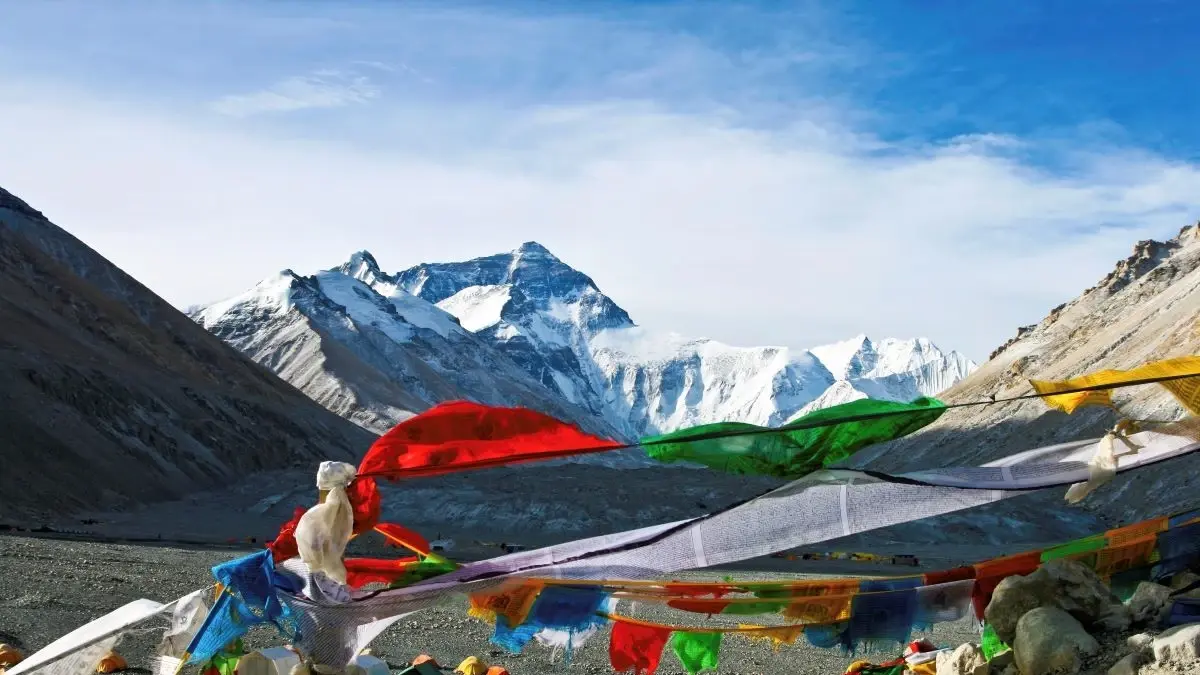
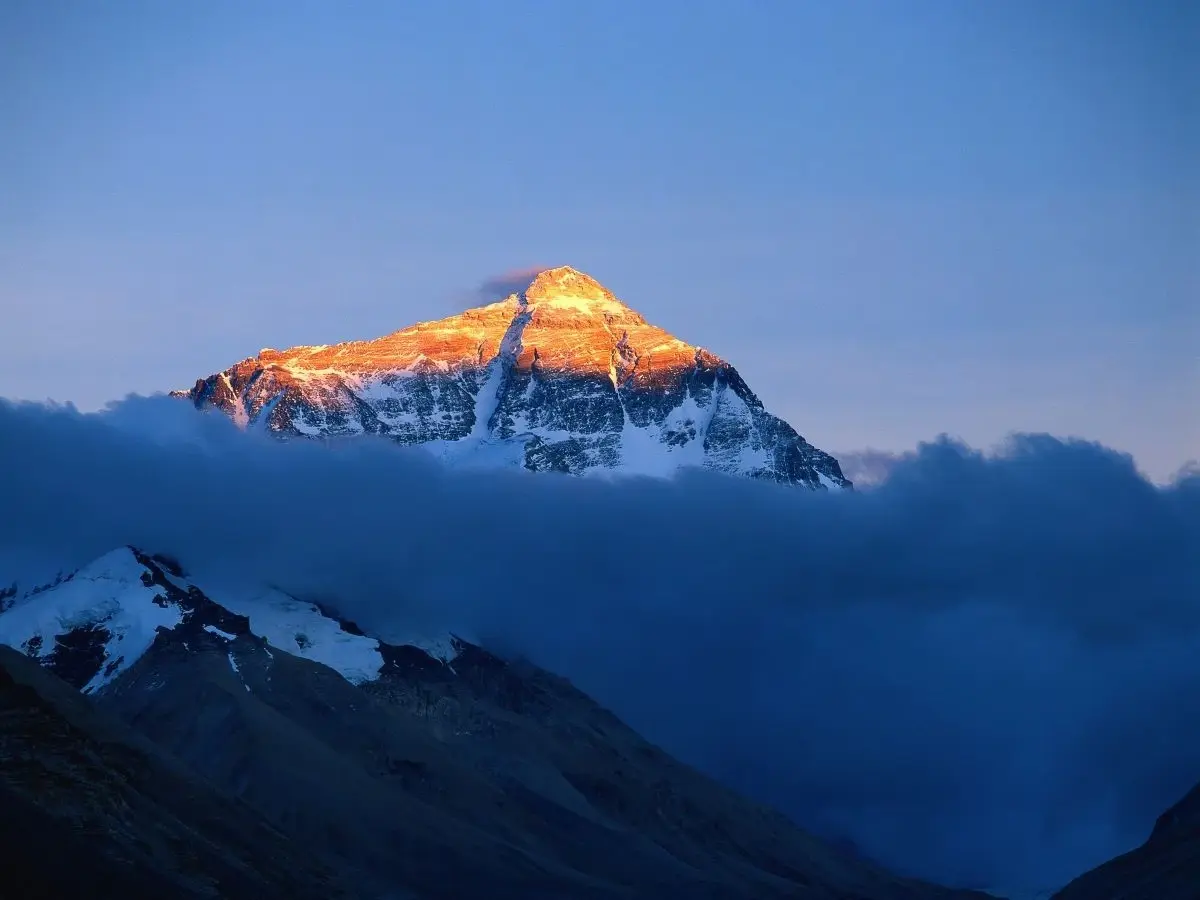
On day 7, a spur road leads south from the highway to Rongbuk Monastery, at about 5,000 m among the highest monasteries in the world. The north face of Everest fills the head of the valley.
A few kilometers further, at about 5,200 m, you reach the Tibetan Everest Base Camp. The final stretch is often run by shuttle vehicles under local control.
That arrangement can change from season to season, so your guide confirms the plan on the day. Everest also needs its own permit on top of your Tibet permits, which the Kailash Tour Trek team arranges.
What do you actually see? On a clear morning, the north face rises as a single dark pyramid above the Rongbuk glacier. If cloud sits on the summit, you still get the valley, the prayer flags and the sense of scale.
Mornings are the best time, because cloud tends to build later in the day. Wind is the real challenge, and base camp is colder than anything in Lhasa. Wear your own warm layers, because the kora jacket reaches you only in Saga.
You spend a few hours at about 5,200 m and then drive on to sleep at 4,640 m in Saga. That is the old climb-high, sleep-low habit in action. It works as a free rehearsal for the pass at Kailash four days later.
Days 7 and 8 on the Road: From Everest to Saga and the Lake
Let me be straight about day 7: it is long. After the base camp visit you drive back down the spur to Tingri (about 85 km). Then you continue roughly 312 km to Saga.
Depending on how long the group stays at Everest, the weather and the check-posts, that adds up to a day of 11 to 13 hours. We leave Tingri early for that reason, keep the viewpoint stop sensible, and carry lunch rather than hunting for a restaurant.
Saga stands at 4,640 m beside the Yarlung Tsangpo, which becomes the Brahmaputra downstream. It is also the place where our Nepali crew joins the group.
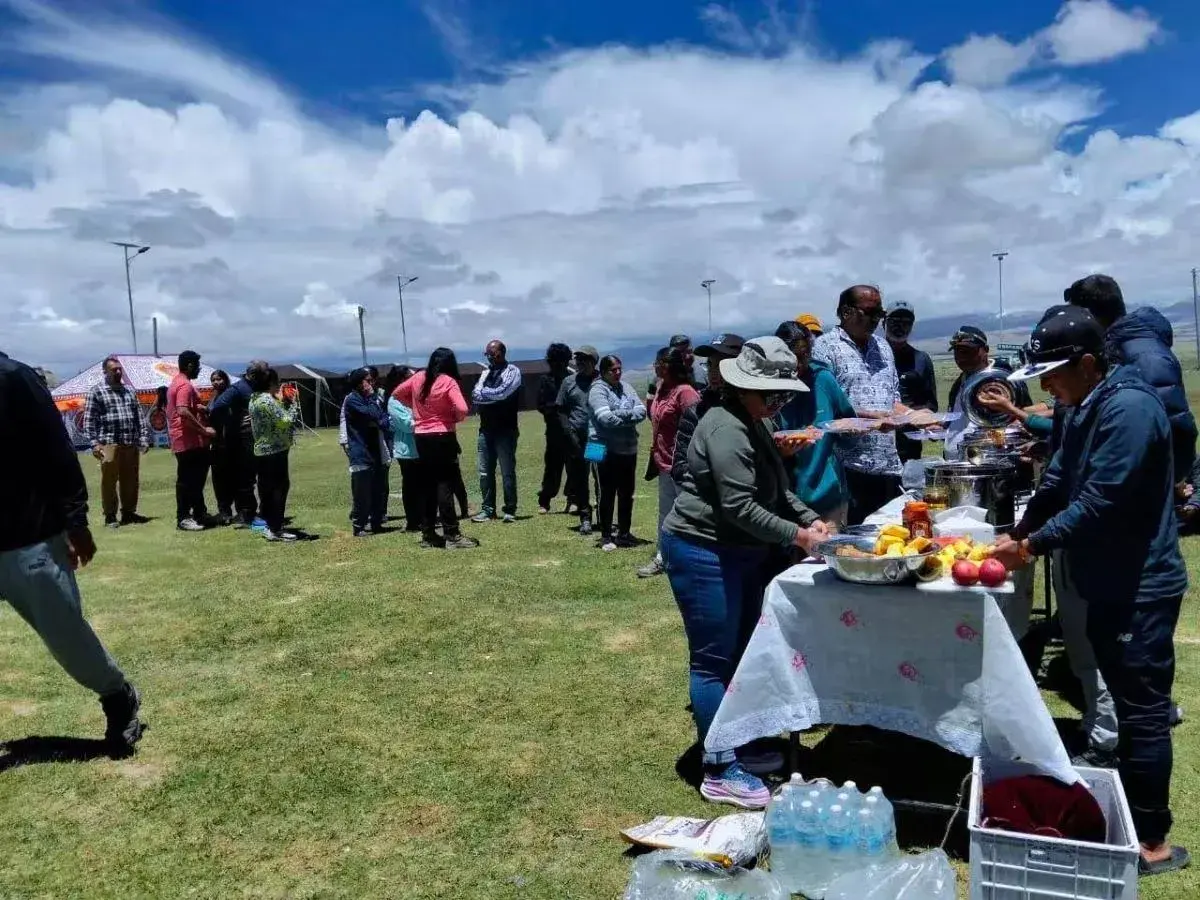
From Saga onward, our own cooks prepare pure vegetarian Indian food, with South Indian and Nepali dishes. The crew also hands over your equipment (more on that in the essential information section).
Day 8 carries on toward the lake, about 450 km in 8 to 10 hours. The road crosses Mayum La at 5,211 m, the highest road pass of the trip. Beyond it, plains open up where kiang (Tibetan wild ass), gazelle and nomad tents appear without warning.
Toward the end of the day, Gurla Mandhata (7,694 m) rises behind the lake basin. The scale of this stretch is what stays with you, more than any single monastery.
Keep a small day bag within reach, because the luggage is packed away. Lunch comes from small roadside kitchens, and the facilities are basic. Tissues, hand sanitizer and a few snacks you actually like will make the day easier.
Lake Manasarovar: How the Puja Morning Works and What Is Not Allowed
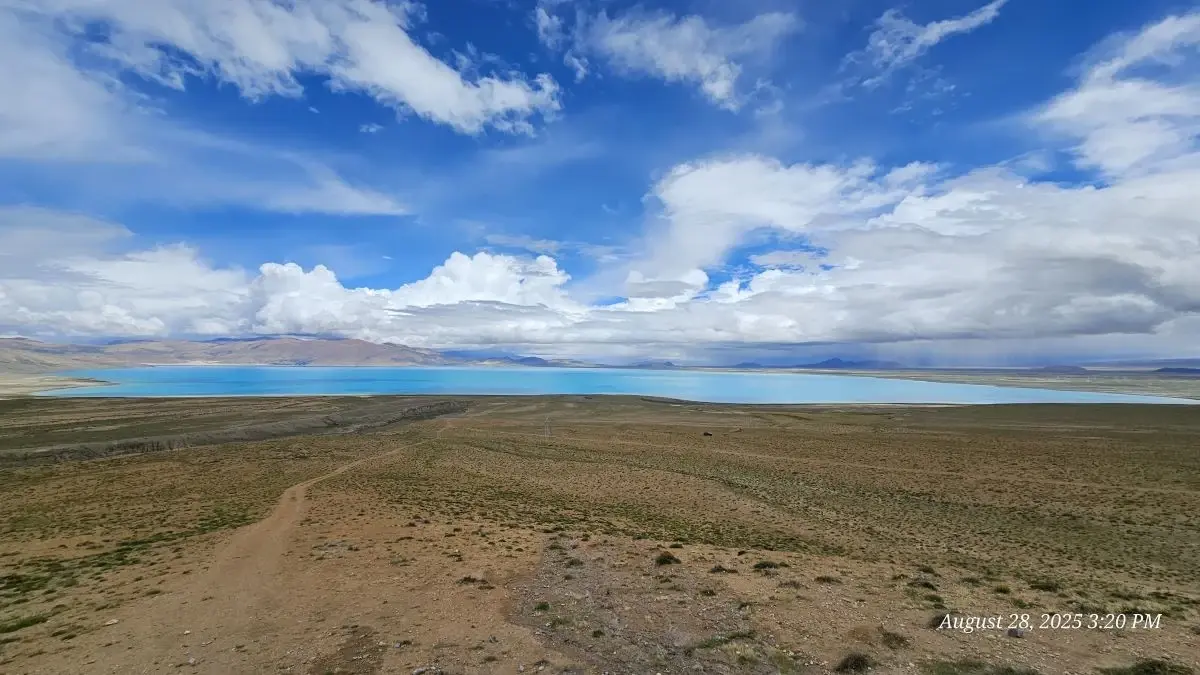
At 4,590 m, Lake Manasarovar is holy to Hindus, Buddhists, Jains and followers of Bon alike. You reach it on the evening of day 8.
A basic guesthouse near the shore hosts the night, with shared rooms and no attached bathroom. The puja happens the next morning, so let me walk you through how that morning unfolds.
First, our team sets up a shower tent and heats water, so you can wash with warm water before the ritual. That is a small mercy in the cold.
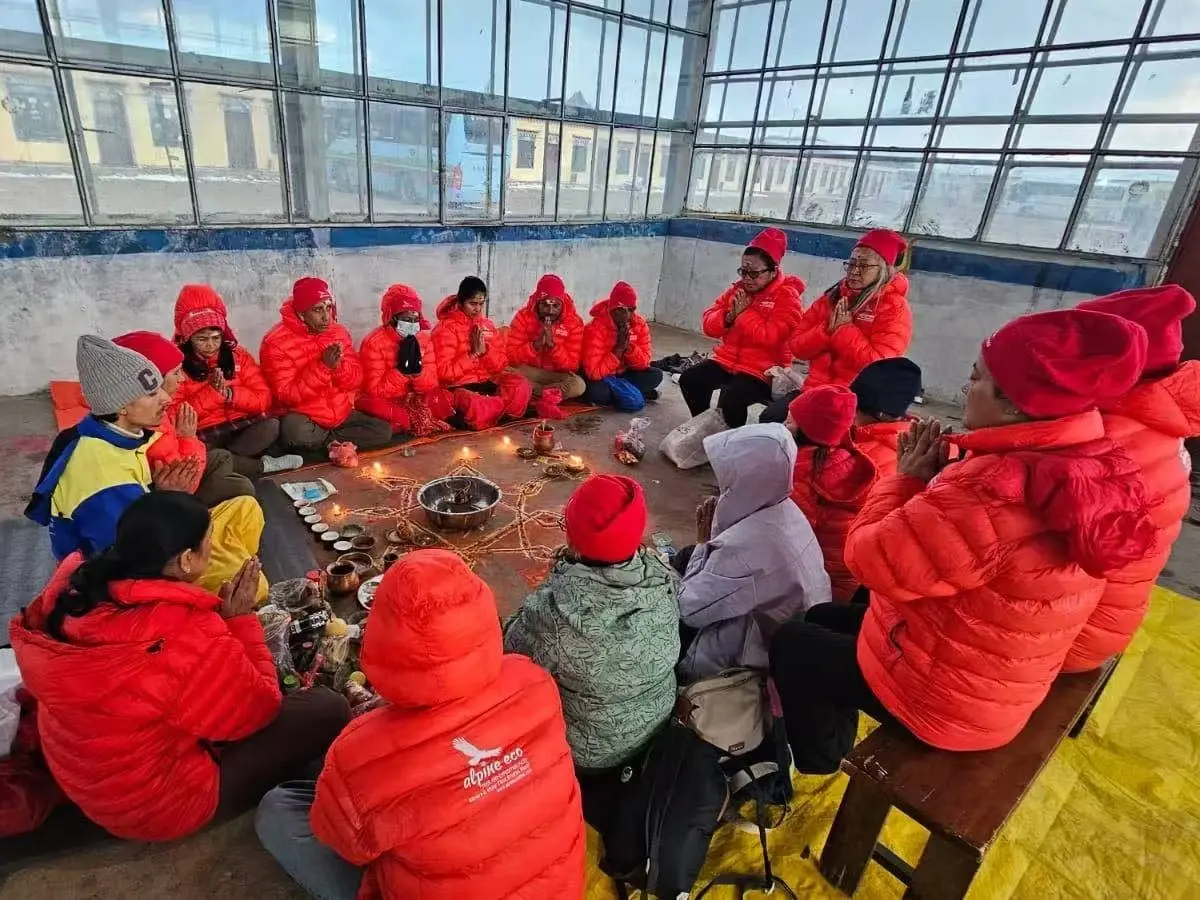
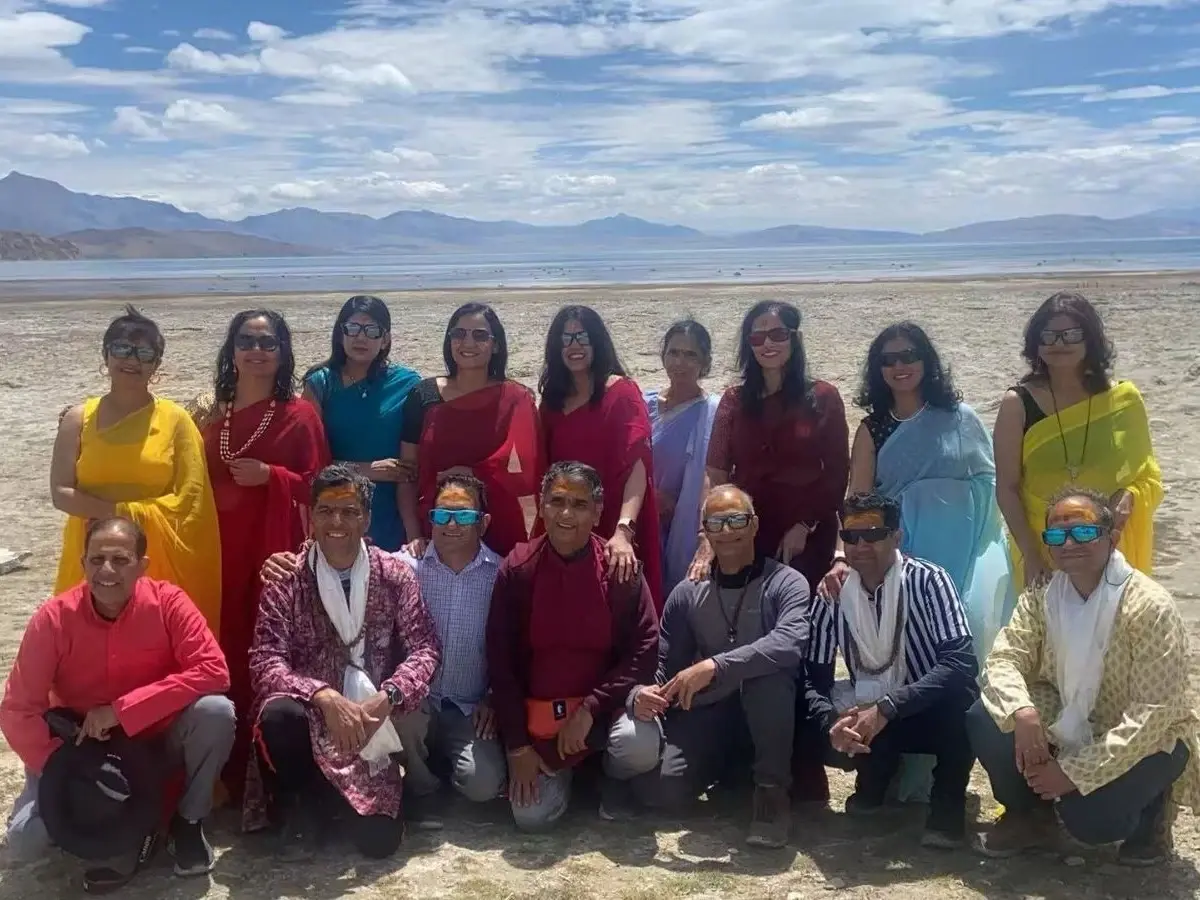
Then Alpine Eco Trek provides the puja materials and finds a suitable place on the shore for the puja and hawan. You offer your own gratitude (dakshina) to Pandit ji, which is not part of the package price.
Now the rules. A dip in the lake is not allowed. Instead, during the Manasarovar parikarma by eco-bus, our guide finds a corner of the shore. There you can step in up to knee level.
Bring a towel, dry socks and warm clothes, because the wind picks up fast. Do not drink lake water without treating it, however sacred it is to you. Carry a small bottle if you want to take some home.
If you want more comfort, there is a 5-star hotel at the lake, the Mansarovar Hot Springs Hotel. A double room costs US$ 250 per night, and this is an extra charge. Contact us or the hotel directly if you are interested. After the puja and lunch, you drive on to Darchen on day 9.
The Kailash Kora: Reading the 52 km as Three Different Days
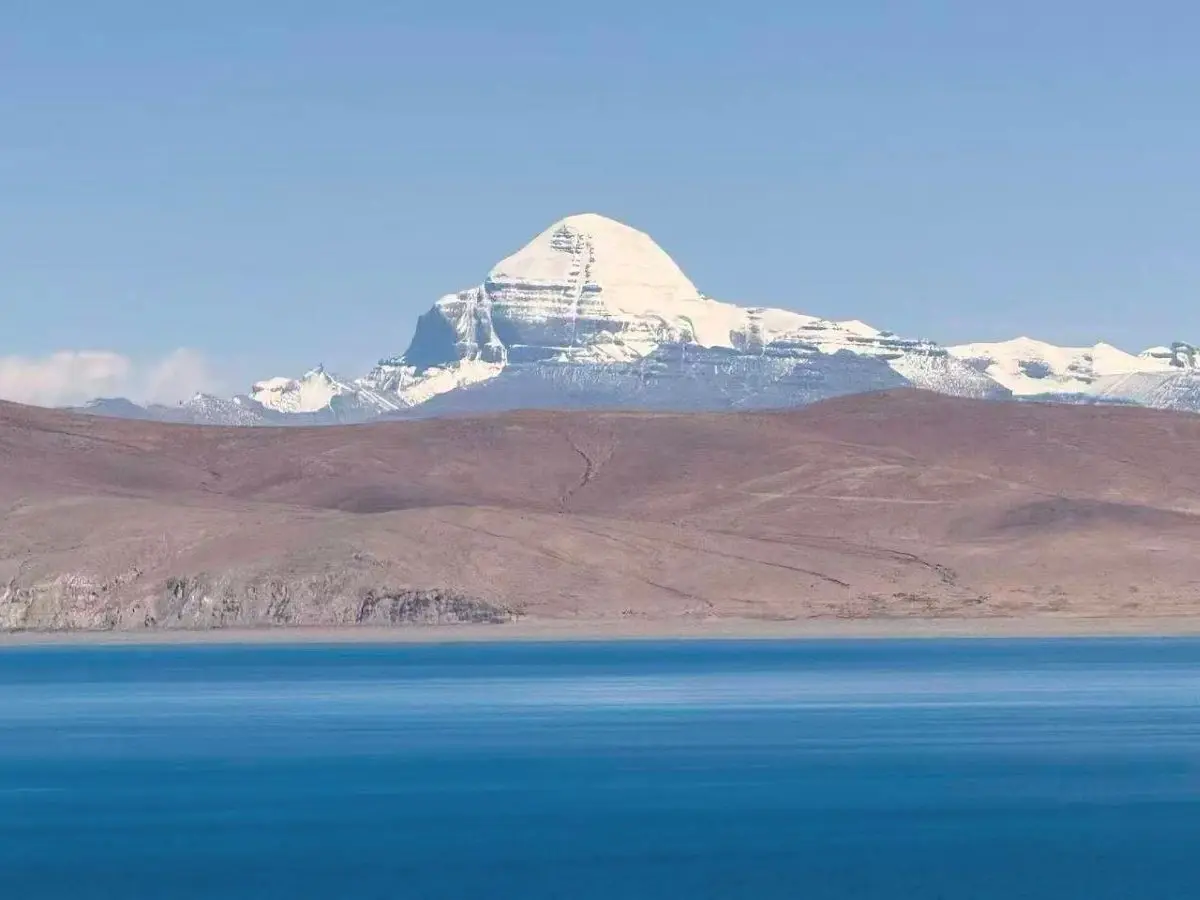
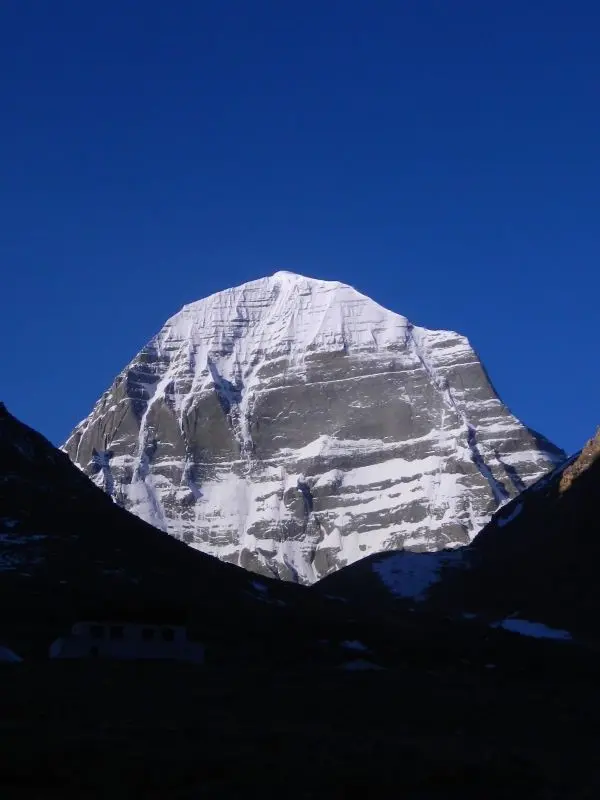
The clockwise walk around Mount Kailash (6,638 m) is called the kora. Its outer circuit measures about 52 km, though sources range from 52 to 58 km depending on where the counting starts.
Hindus, Buddhists and Jains walk clockwise, and followers of Bon walk the opposite way. When the two streams meet, nobody argues, because everyone is praying.
Three Days At a Glance
The walk starts from Darchen (4,670 m), where you sleep on day 9. Vehicles are not allowed from Darchen or Yemdwar to Dirapuk, so every kilometre after the gate is on foot or by horse. Here are the three days at a glance:
- Day 10, to Dirapuk: a 6 km drive from Darchen to Yemdwar in a deluxe vehicle, then 12 km of walking in about 5 hours, ending at Dirapuk (4,890 m).
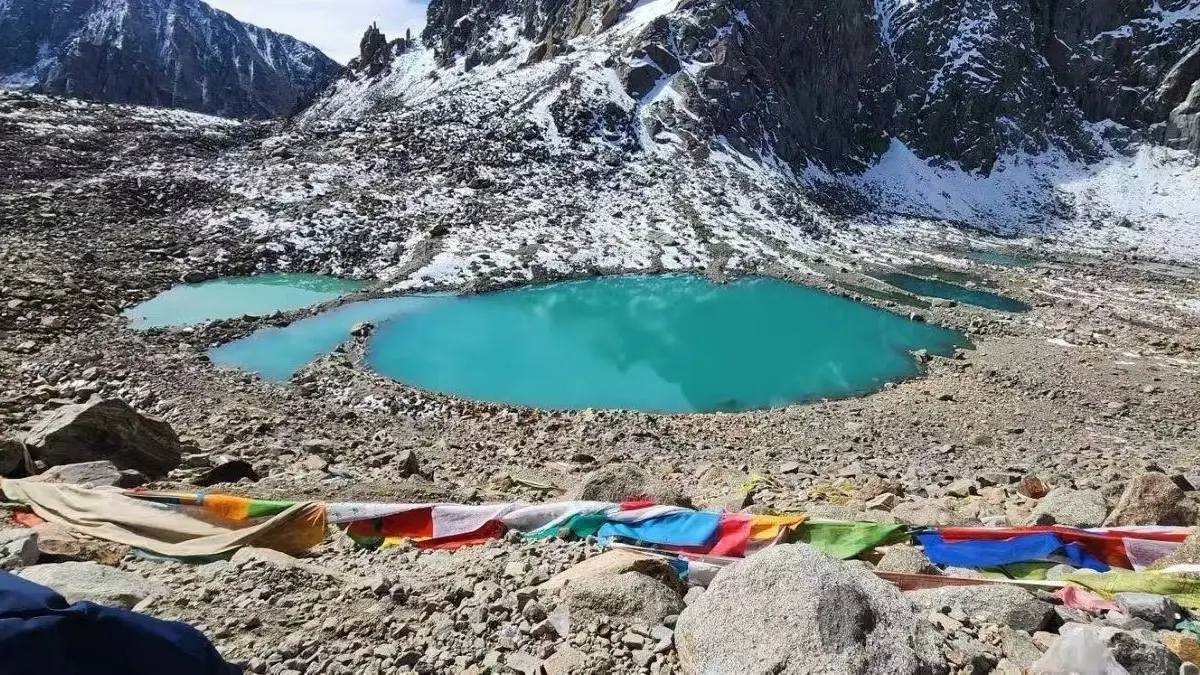
- Day 11, over Dolma La: 22 km in about 10 hours from Dirapuk to Zuthulpuk (4,790 m), with a climb of roughly 740 m to the pass (5,630 m) and a descent of nearly 850 m.
- Day 12, back to Darchen: 12 km in about 3 hours from Zuthulpuk to near Darchen, then a 450 km drive of about 8 hours to Saga.
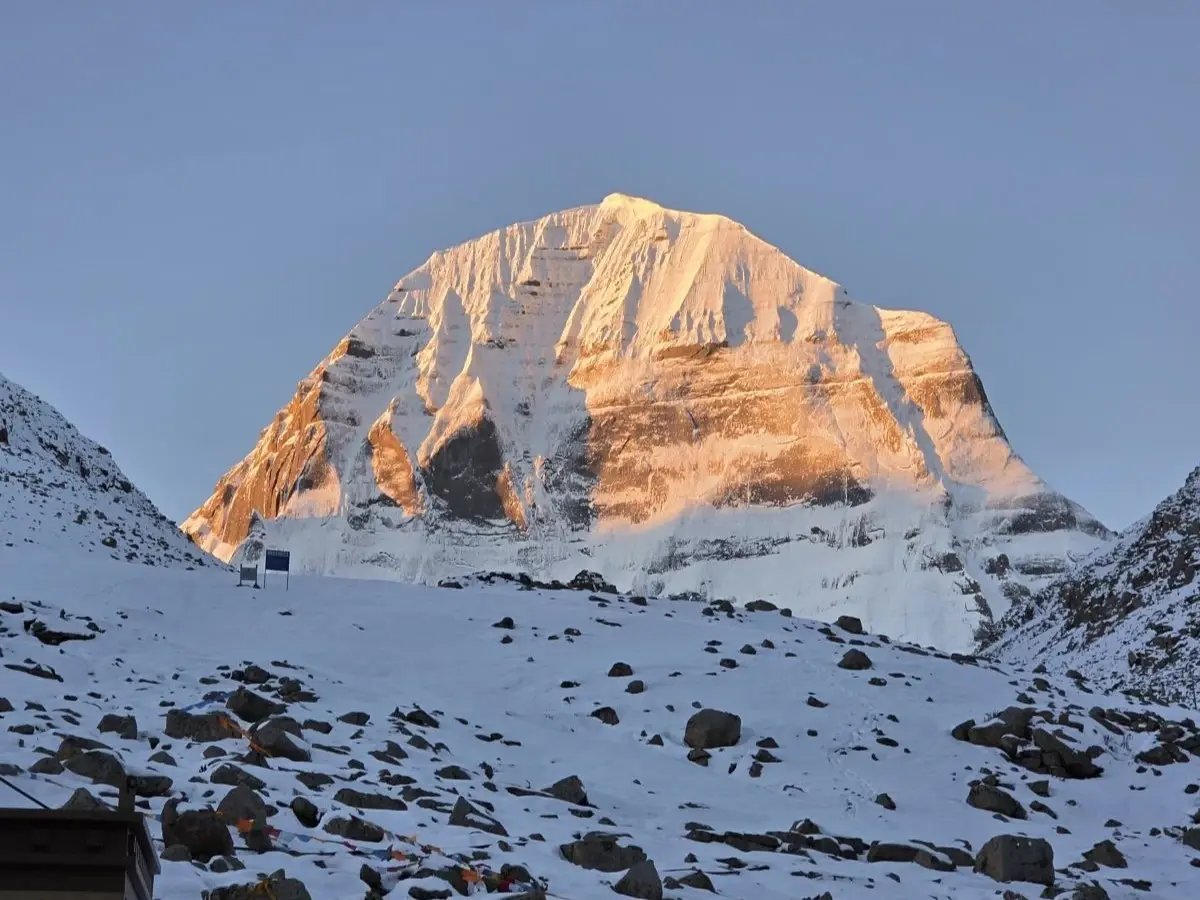
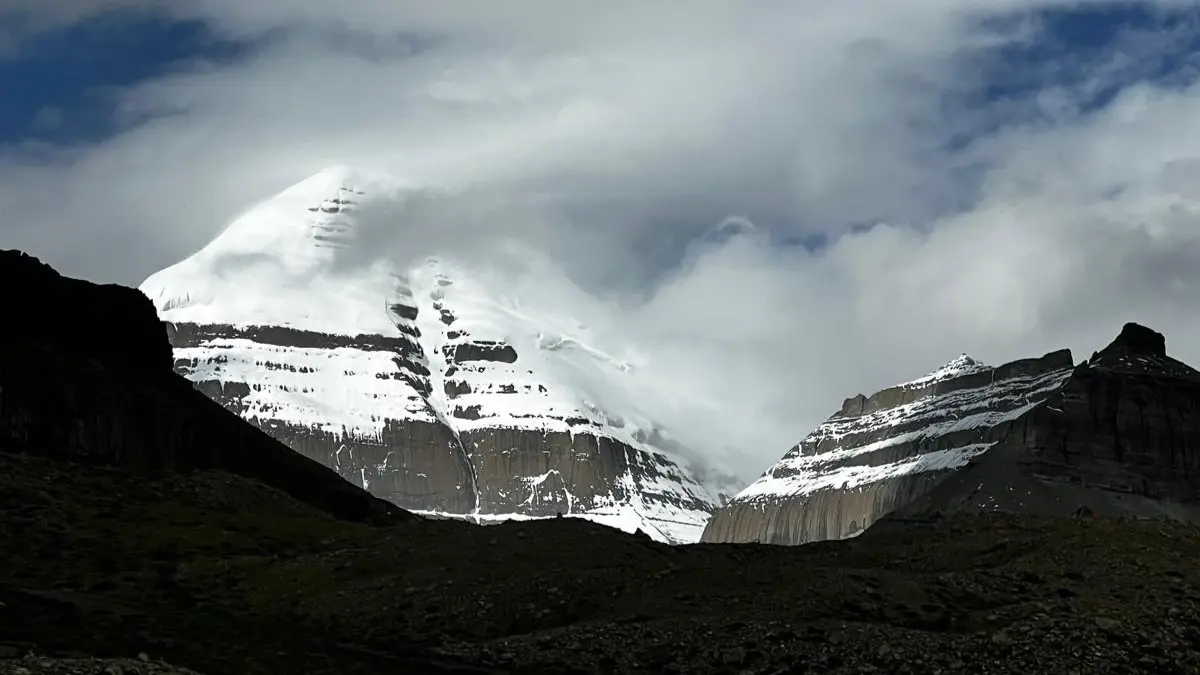
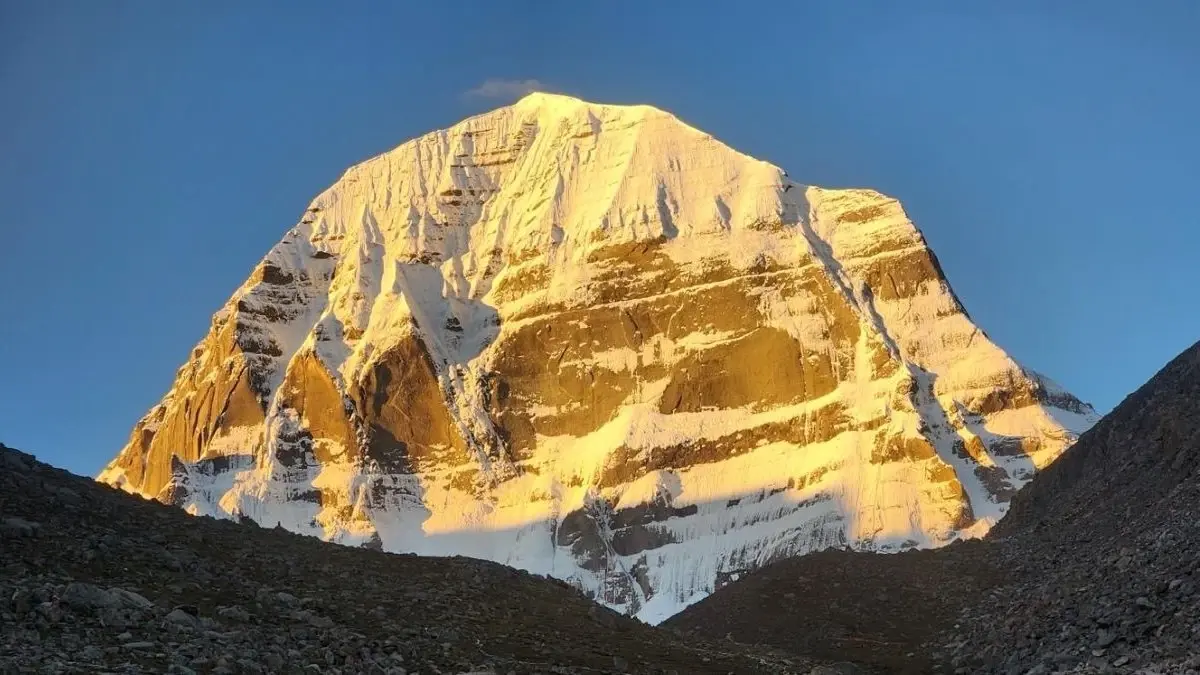
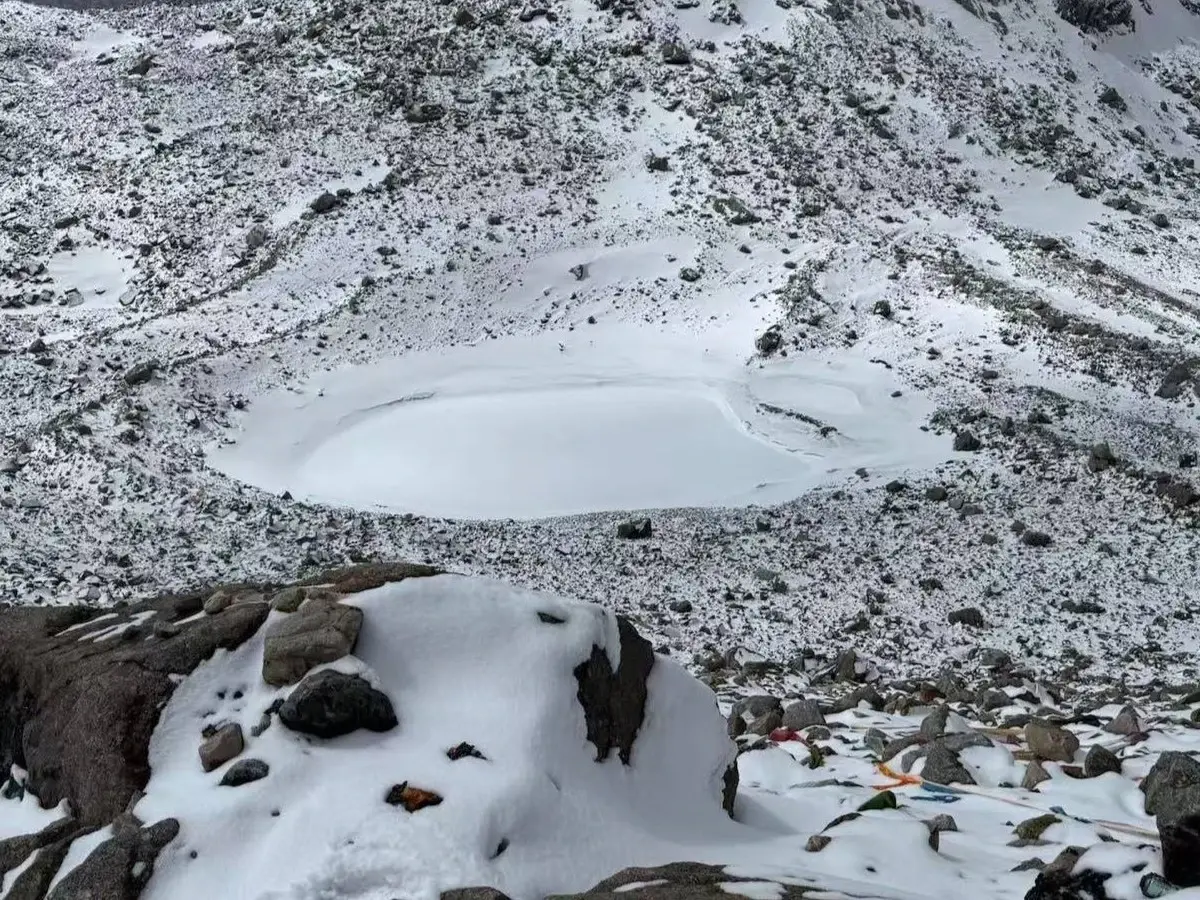
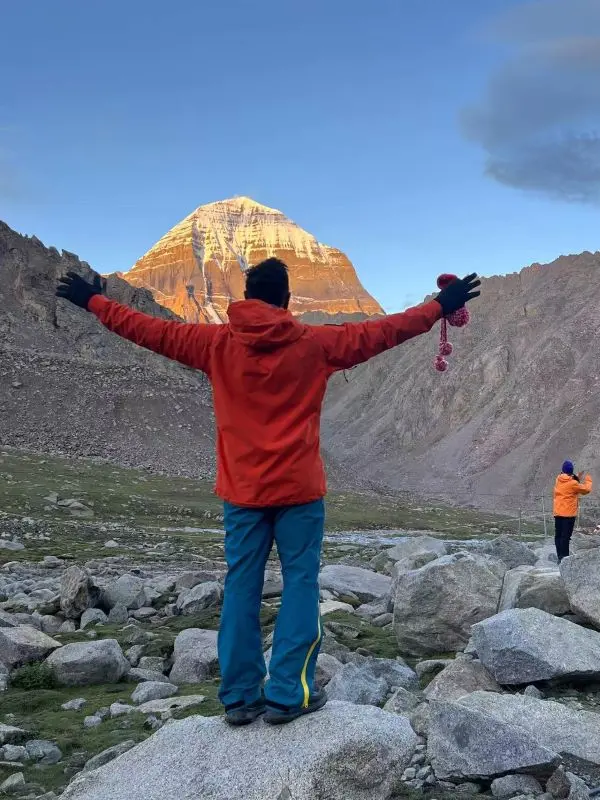
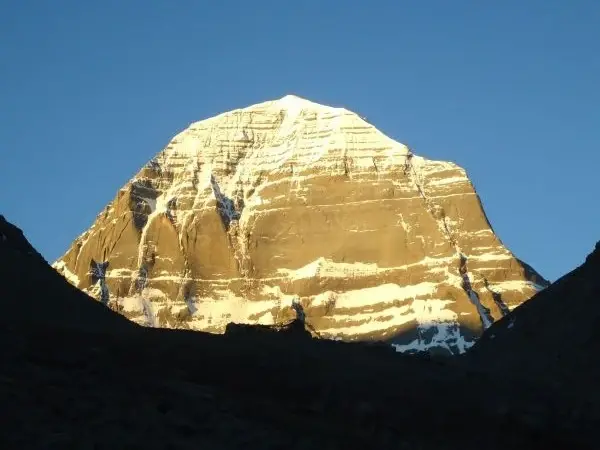
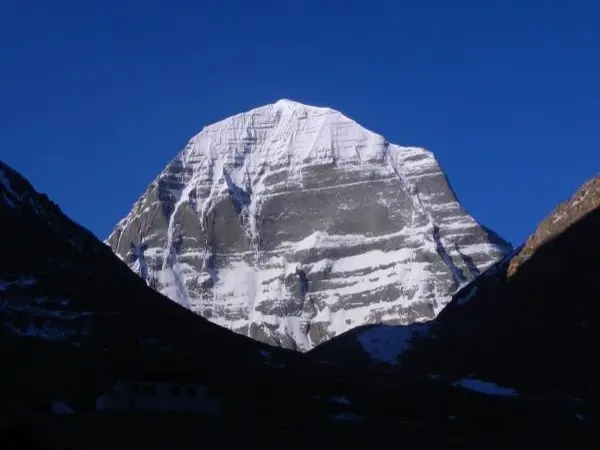
They feel very different. Day 10 is gentle on paper, but thin air makes every step heavy. The north face of Kailash waiting at Dirapuk is the reward. Day 11's pass is the one you train for.
Counting Merit, and Shorter Options
Tradition keeps score: one kora clears the sins of a lifetime, and 108 are said to lead to liberation. The inner kora around Nandi Parvat needs extra time and permission, so it is not part of this program.
If 3 days feel like too much, there are two shorter options:
- One-day parikarma: trek from Yemdwar to Dirapuk (12 km, 5 hours), take your darshan, enjoy the sunset on the north face of Kailash, and drive back to your Darchen hotel. The extra cost of the vehicle and the Darchen stay is at your own expense.
- Shortcut after Dolma La: trek downhill to Gauri Kund, then rent a van to cut the walk to Zuthulpuk, or continue to Darchen for a more comfortable stay. The van ride, plus the accommodation and meals in Darchen, are at your own cost.
Porters, Horses and Optional Extras at Kailash
Alpine Eco Trek's yaks and yak men carry the group's baggage, food and fuel on the kora, and that is part of the package.
A personal porter or horse is a different matter, and you should decide early. If you want a porter, or a horse with a horseman, for the 3-day parikarma, you hire them in Darchen. You need to tell us at least 2 days before you reach Darchen.
The prices are fixed locally. A porter costs US$ 200 for 3 days, and a horse with a horseman costs US$ 500 for 3 days. You pay these amounts directly to the Darchen authority office, and each yatri who hires support receives a name tag.
Two rules surprise people. Hiring is compulsory for all 3 days. A porter or a horse with a horseman is not available to share with family members.
How do you decide? Ask yourself two plain questions. Do my knees complain on long descents? Am I breathless on stairs at home? If either answer is yes, book support. A horse still needs you in warm layers, but it turns day 11 from a risk into a plan.
Optional extras sit on top of the standard route. The Asthapad trip, the Tirthapuri trip and a 2-day stay at Dirapuk can be arranged on request. Asthapad is where Jain tradition places the liberation of Rishabhanatha, the first Tirthankara.
Tirthapuri, west of Kailash, is known for its hot springs and a monastery linked to Padmasambhava. These optional trips cost about US$ 90 pp per team, and that covers the guide, permit and vehicle.
Permits and road conditions decide what is possible, so ask Alpine Eco Trek before you leave for Tibet, not when you reach Darchen.
The Road Home: Saga to Kathmandu via Nyalam and Kodari
Day 13 is the longest day of the program, and it is better to say so now. You leave Saga, drive about 240 km to Nyalam and continue to Zhangmu.
After Chinese exit formalities, you cross the Friendship Bridge (usually on foot) and finish with about 125 km along the Araniko Highway to Kathmandu. Add the border and you are looking at roughly 13 to 15 hours. Start in the dark, keep your passport and permit copies in the day bag, and have snacks ready.
There is a reward, though. The drop from Saga (4,640 m) to Kathmandu (1,350 m) in one day feels like switching from winter to spring.
That said, the Kodari crossing can be unpredictable. Landslides on the Araniko Highway, monsoon rain and decisions on either side of the border can close it at short notice. Sometimes it is for a day, sometimes for much longer. Nobody can promise it will be open on your exact day, and a good agency tells you so before you pay a deposit.
Here is how Alpine Eco Trek handles that. We confirm the routing 45 to 60 days before every departure. Our team also asks the Tibetan partners for the current position before permits are filed. If the crossing is not workable, we tell you in writing.
We then propose another way out, such as a flight from Lhasa to Kathmandu, instead of gambling with your dates. If the day simply runs too late, we sleep in Nyalam and reach Kathmandu on day 14.
That is why you should keep 2 spare days after the program. Insurance that covers trip interruption and natural disasters belongs in the same plan. So does one habit: ask us for the latest position in writing before you pay any deposit.
Beijing to Kailash by the Numbers: Altitude Profile and Difficulty
We rate this tour moderate to hard. It needs no ropes and no technical climbing, but thin air, cold nights and very long driving days stack up. The hardest single day is day 11, with 22 km on foot over Dolma La.
Here are your sleeping altitudes, with the change from the night before:
Night | Place | Sleeping altitude | Change from the night before |
| 1 | Beijing | about 45 m | Start |
| 2 to 4 | Lhasa | 3,650 m | +3,605 m |
| 5 | Shigatse | 3,840 m | +190 m |
| 6 | Tingri | 4,300 m | +460 m |
| 7 | Saga | 4,640 m | +340 m |
| 8 | Lake Manasarovar | 4,590 m | -50 m |
| 9 | Darchen | 4,670 m | +80 m |
| 10 | Dirapuk | 4,890 m | +220 m |
| 11 | Zuthulpuk | 4,790 m | -100 m |
| 12 | Saga | 4,640 m | -150 m |
| 13 | Kathmandu | 1,350 m | -3,290 m |
Why This Profile Works?
The pattern is the best feature of this route. After the flight, no night rises by more than 460 m. That fits inside the 2019 Wilderness Medical Society guidance of no more than 500 m of sleeping altitude a day above 3,000 m, with a rest day every 3 to 4 days. Lhasa's 3 nights act as that rest. Everest is a day visit, so you reach 5,200 m and then sleep 560 m lower.
The one exception is day 2. Flying from Beijing to Lhasa is a jump of about 3,600 m in a single morning. No walking program can soften that. Alpine Eco Trek answers it with time and care, not speed. That means 3 nights in Lhasa, quiet days, oxygen in the rooms and daily checks.
Fitness and Training
Being fit helps recovery, but it does not buy immunity. A study of 2,385 tourists in Lhasa linked poor or average health, an age below 55 and rapid ascent to acute mountain sickness, while earlier experience at altitude lowered the risk.
Prepare for 8 to 12 weeks with long walks, stair climbs and a loaded daypack, and practice downhill with poles. With heart, lung or blood pressure conditions, see your doctor before booking. Our Kailash Tour Trek team is happy to talk through your questions!
Altitude Sickness After a Flight from Beijing: What Changes
Acute mountain sickness (AMS) is the name for the headache, nausea, dizziness and poor sleep that appear when your body cannot keep up with thinner air.
On this tour, the risk peaks on days 2 and 3, because you arrive in Lhasa by air from near sea level. In that Lhasa study, arriving by air and ascending quickly both raised the risk.
Nearly half of the people who developed AMS noticed symptoms within 12 hours of arrival. About 79 percent of them had to cut back their activity.
Walk slowly, keep day 2 quiet and drink 3 to 4 litres of water. Avoid alcohol and sleeping pills, and eat lightly but regularly. The flight itself is dry, so start drinking in Beijing.
Some doctors prescribe acetazolamide (Diamox) as a preventive, and Alpine Eco Trek carries Diamox pills for the circuit. Whether you take them is a decision for your own doctor, not something to try for the first time on the plane.
What We Have in Place
Here is what Alpine Eco Trek has in place:
- Oxygen in your room at Lhasa, Shigatse, Saga and Darchen, plus oxygen in the guesthouse in the morning and evening
- One large oxygen cylinder with mask and regulator in each bus
- 4 Poisk Russian oxygen cylinders with masks and regulators for the kora
- Daily pulse, oxygen and blood pressure checks for every yatri
- A medical kit, first aid supplies and altitude medicine
Add 2 cans of oxygen from Saga to your own pack, as personal backup on the kora trail. Help up there can be more than a day away.
Warning Signs and What to Do?
Mild symptoms call for rest: stop climbing and tell your guide. A severe headache, repeated vomiting or a stumbling walk means you go down. Two conditions are emergencies.
High altitude cerebral oedema (HACE) shows up as confusion and clumsy, uncoordinated movement, while high altitude pulmonary oedema (HAPE) shows up as breathlessness at rest and a wet cough.
Either one needs descent and oxygen straight away. Report a headache at breakfast and the guide still has options for the day. Wait until the pass and the options are few.
Best Time for the Beijing Lhasa EBC Kailash Tour
The best windows for this route are late April to early June and mid-September to early October. They sit on either side of the monsoon, which is the main enemy of both the Everest view and the road home.
Month by Month Comparison
Here is how the calendar breaks down:
- Late April to May: The kora usually opens to foreign groups from mid to late April, but April nights at Dirapuk are very cold. May brings drier roads, clearer mornings at Everest and the best balance of weather and crowds.
- June: Saga Dawa, the Tibetan Buddhist festival commemorating the Buddha's birth, enlightenment and death, falls on the full moon of the fourth Tibetan month, in late May or June. Darchen fills up months ahead, and the monsoon starts to reach Nepal, so delays on the road home become more likely.
- July and August: Tibet sits in a rain shadow, but Lhasa's rain peaks in these months, cloud often hides Everest and the Araniko Highway is at its most fragile. We do not recommend this window for this route.
- September to early October: The air is clearer and the crowds thinner. China's National Day holiday (1 to 7 October) fills hotels and sights, so aim for September. Snow can reach the high passes by late October.
- November to March: Roads close, guesthouses shut and the kora is not realistic.
Temperatures and My Pick
Temperatures help with packing. In Lhasa, June highs are around 20 to 22 °C with lows near 9 °C. October highs fall to about 14 to 16 °C, with lows near 1 to 2 °C. Dirapuk and Dolma La are far colder, so nights drop below freezing even in summer.
If you ask me for one month, I would pick late May for most pilgrims. September suits people who prefer a quieter road. If your dates are fixed, tell us, and the Kailash Tour Trek team will say plainly what to expect.