
Kathmandu Lhasa Kailash Overland Tour

158 Reviews in TripAdvisor
15 Reviews in Google
6 Reviews in Trustpilot

Alpine Eco Trek’s 17-day Kathmandu Lhasa Kailash Overland Tour is a fly-in, fly-out pilgrimage that avoids the flood-damaged Rasuwagadhi road entirely. You cross Yamdrok Lake, perform a puja on Manasarovar’s shore and walk the 52 km Kailash kora over Dolma La (5,630 m). Alpine Eco Trek has led Kailash groups since 1997, backed by its own cooks, guides and oxygen-equipped rooms. Departures for 2027 start at US$3500!

Trip Facts
Duration
17 Days
Destination
Tibet
Grade
Strenuous
Maximum Altitude
5638m /18,500ft
Group Size
Min. 1 to Max.50 people.
Starts / Ends
KTM - Lhasa / Lhasa - KTM

Trip Highlights

  • Start with 2 days of sightseeing in Kathmandu, covering Pashupatinath, Guhyeshwari Shakti Peeth, Budhanilkantha, Swayambhunath, Dakshinkali, the Kailashnath Mahadev statue and Doleshwar Mahadev.
  • Fly from Kathmandu to Lhasa in about 1 hour 30 minutes, with a good chance of Himalayan peaks on the right side of the aircraft on clear mornings.
  • Spend 2 full days in Lhasa (3,650 m) to acclimatize while visiting the Potala Palace, Jokhang Temple, Drepung and Sera.
  • Cross the southern Tibetan plateau by road through Yamdrok Lake, Gyantse, Shigatse and Saga.
  • Reach Lake Manasarovar (4,590 m), one of the highest freshwater lakes in the world, for a puja and homa on the shore, a warm shower in our shower tent and a lake parikrama by eco-bus.
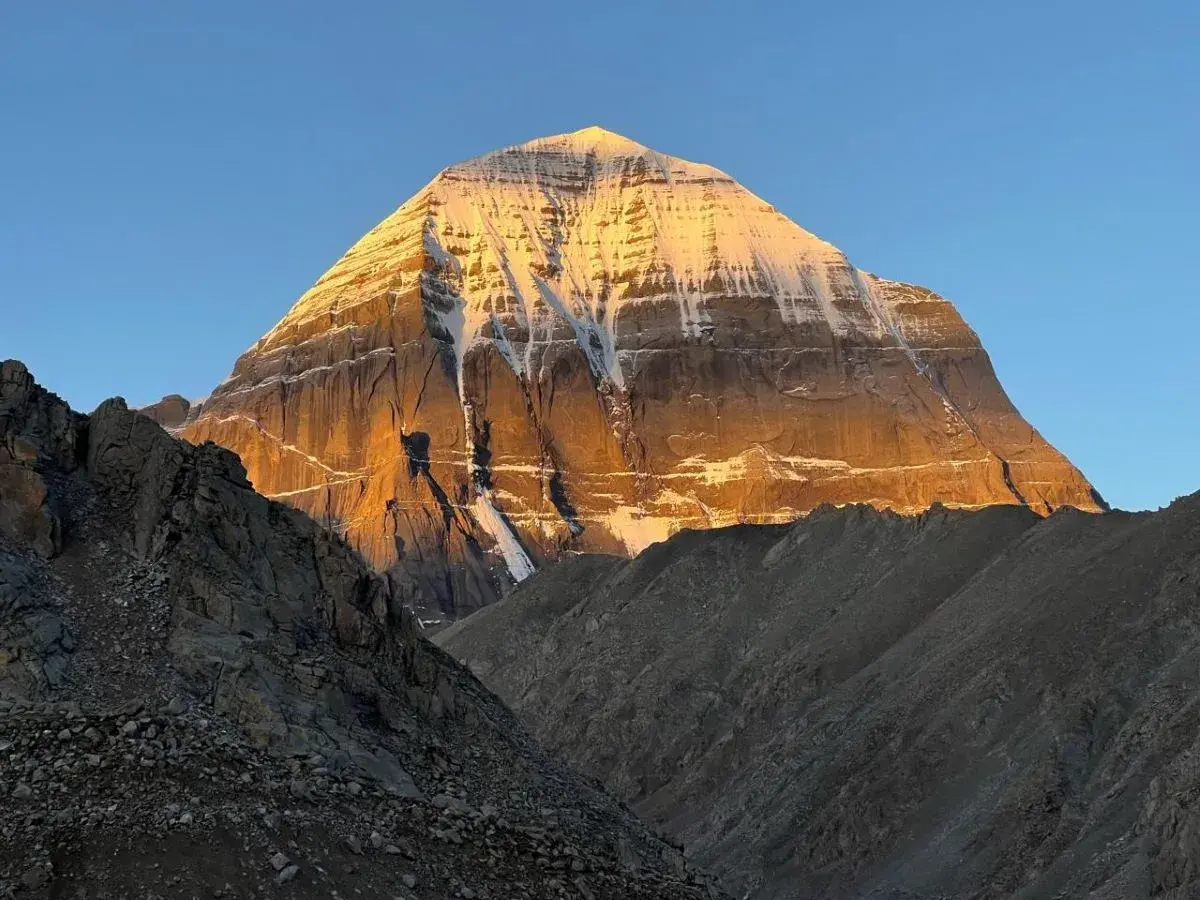
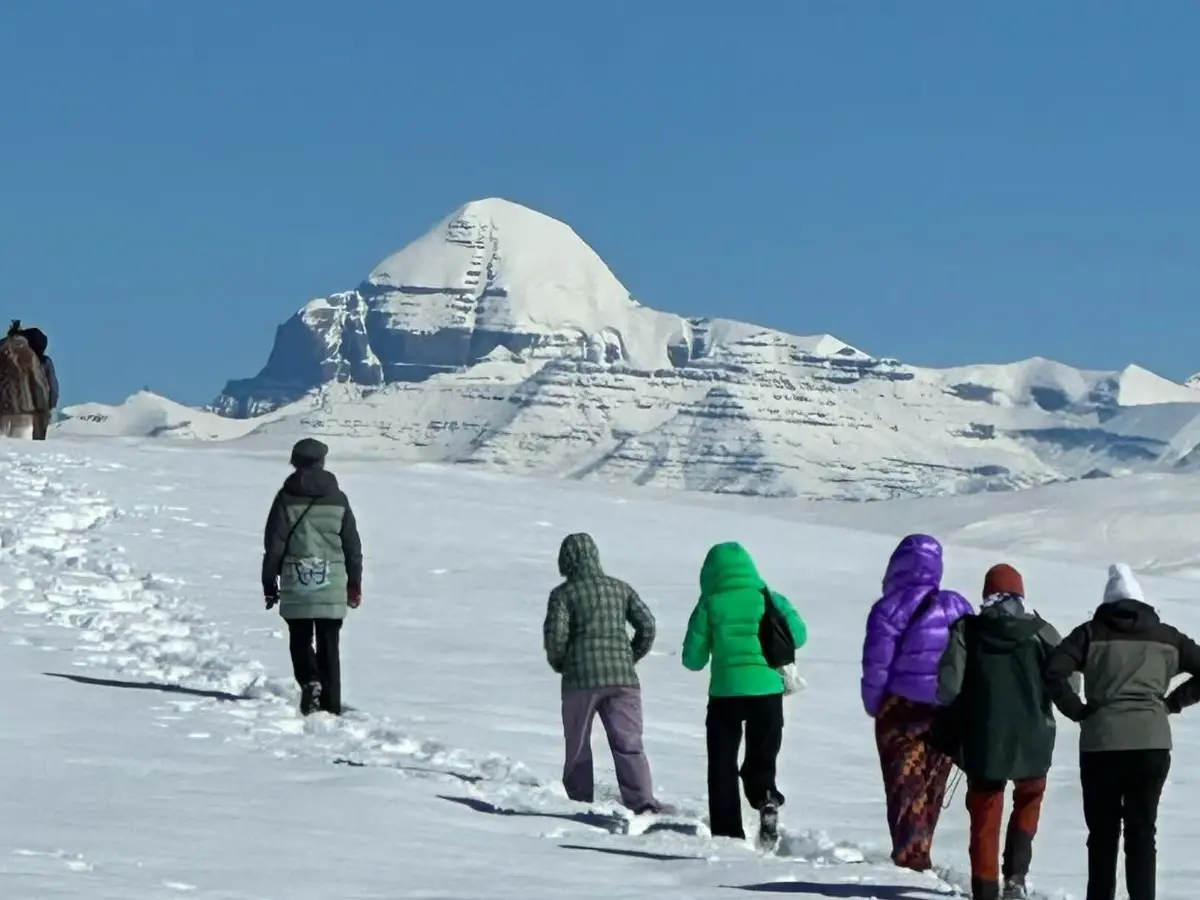
  • Complete the 3-day Kailash kora of about 52 km (32 miles) around Mount Kailash (6,638 m). Cross Dolma La at roughly 5,630 m, the highest point of the entire trip.
  • Stay in hotels with attached bathrooms and an oxygen setup in every room in Lhasa, Shigatse, Saga and Darchen.
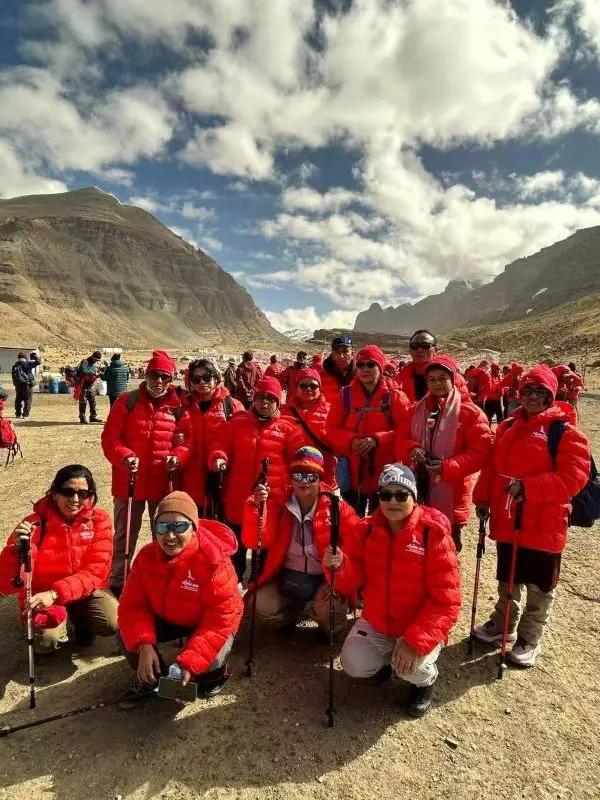
  • Receive a special kora down jacket, a warm ear-covering hat, a large duffel bag, a trekking bag for the kora and a rain poncho from us.
  • Fly back from Lhasa instead of driving, which keeps the program clear of the flood-damaged Rasuwagadhi and Trishuli corridor.
  • Travel with experienced guides, Alpine Eco Trek' local team and insured staff, with portable oxygen carried on the plateau.
  • For groups starting in Lhasa, our Nepali staff joins the group at Saga.

Trip Overview

If you are planning the Kathmandu Lhasa Kailash Overland Tour for 2027, you are probably juggling three questions at once. Which route is actually open, how hard is the kora, and what paperwork do you need before anyone lets you board a plane to Tibet?

This package cum guide answers all three in the order you will meet them, from the first inquiry to the morning you land back in Kathmandu!

Here is the thing about 2027: the usual overland drive from Kathmandu through Kerung is not something anyone can promise right now. The Bhote Koshi flood of 26 August 2026 destroyed long stretches of the road to Rasuwagadhi and damaged the border post itself.

Repairs are under way, but a road rebuilt on a new alignment takes time. So this program takes a different line. You fly into Lhasa, drive west across the plateau, and fly home from Lhasa again!

Let's be honest about flying, though. Landing at 3,650 m after breakfast in Kathmandu (1,400 m) is a rapid ascent, and a University of Oslo study of 2,385 tourists in Lhasa found that arriving by air and ascending quickly both raised the risk of acute mountain sickness (AMS).

What the flight gives you is a base. You spend 2 nights in a city with hospitals, oxygen and familiar food before the plateau becomes remote, and the kora does not begin until day 11.

At Alpine Eco Trek, we built the 17 days around that logic. Two nights in Lhasa, a slow climb in sleeping altitude from 3,840 m at Shigatse to 4,640 m at Saga, then the lake and the mountain. Nothing is rushed, but nothing is padded either!

Pilgrims from India face a different visa process from a traveler holding a British passport, and Nepali citizens have their own rules again. We explain each of them separately in the visa section, because getting this part wrong is the most common reason groups get stuck in Kathmandu.

Key Attractions of This Trip

This Kathmandu Lhasa Kailash Overland Tour blends the deeply sacred heritage of the Kathmandu Valley with the iconic cultural and natural wonders of the Tibetan Plateau.

From ancient UNESCO World Heritage sites to high-altitude sacred lakes and the towering peak of Mount Kailash, each stage of the route offers a distinct milestone in spirituality and landscape.

Attractions in Kathmandu

Our standard plan gives Kathmandu 2 days of sightseeing, and for pilgrims they matter more than they look on paper.

The mountain you are about to see is Shiva's abode in Hindu belief, and most of these temples connect to Shiva or Shakti. Groups that prefer a shorter stay can cut this to 1 day, but 2 days is what we recommend and what this itinerary follows.

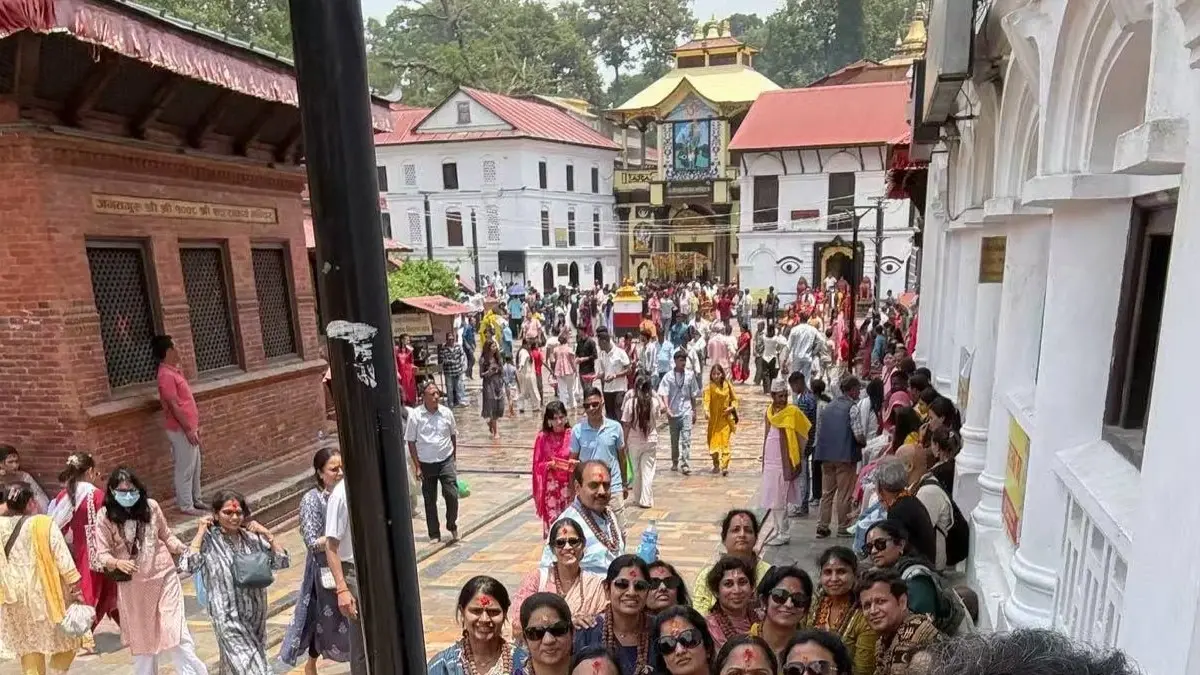
On day 2, we start at Pashupatinath, on the banks of the Bagmati River, the great Shiva temple of Nepal. Only Hindus may enter the main sanctum, yet the riverside ghats, the smaller shrines and the evening aarti are open to everyone from the opposite bank.

Guhyeshwari Shakti Peeth stands close by and is one of the most revered Shakti shrines in Nepal. Budhanilkantha, on the northern edge of the valley, holds a large reclining statue of Lord Vishnu resting in a pond.

We end at Swayambhunath, on a hill west of the city, which gives a wide view over the valley (and a few opportunistic monkeys, so keep your snacks zipped).

On day 3, we go outside the city centre. Dakshinkali, south of Kathmandu, is the main Kali temple of the valley, and Saturdays and Tuesdays are the busiest days.

The Kailashnath Mahadev statue in Sanga is among the tallest Shiva statues in the world. Doleshwar Mahadev, near Bhaktapur, is believed by many devotees to be the head of Kedarnath.

Boudhanath is also on our sightseeing list, and one of the largest spherical stupas in the world. Join the Tibetan community for one clockwise circuit. It is a free rehearsal for the kora, and you will notice how people pace themselves, which is the most useful thing you can copy!

Your guide will time each visit to avoid the midday crowds, and a quick stop for masala tea near the stupa is a good excuse to sit down and watch the neighborhood go by.

Attractions in Lhasa

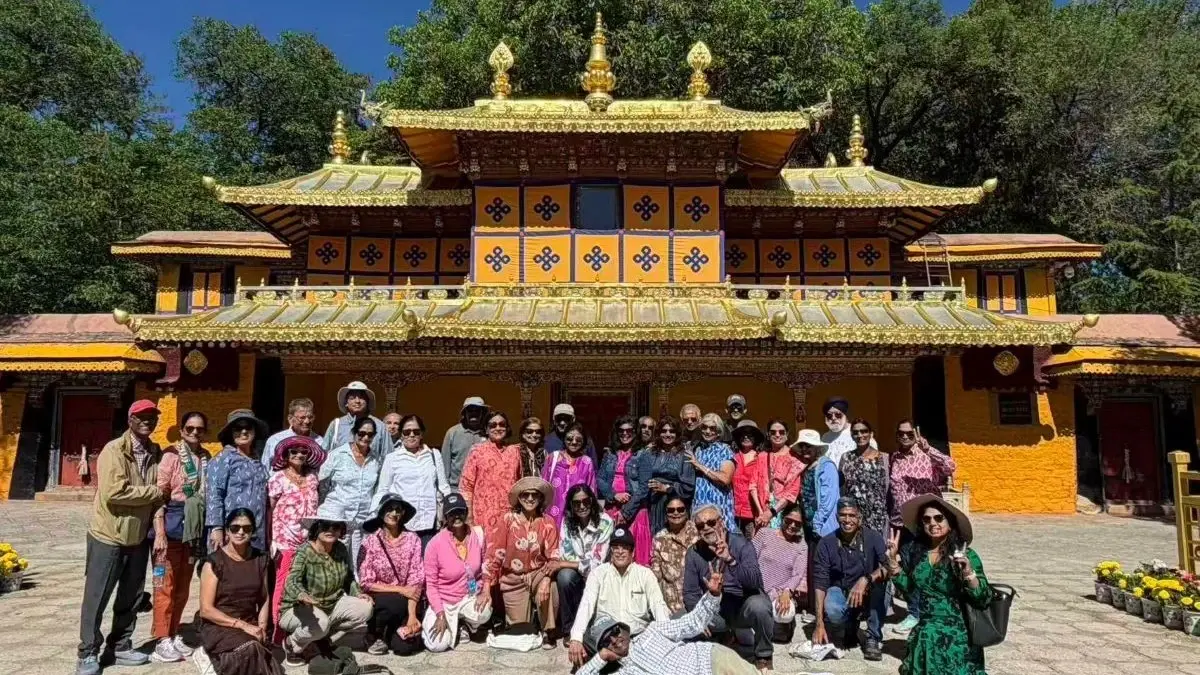
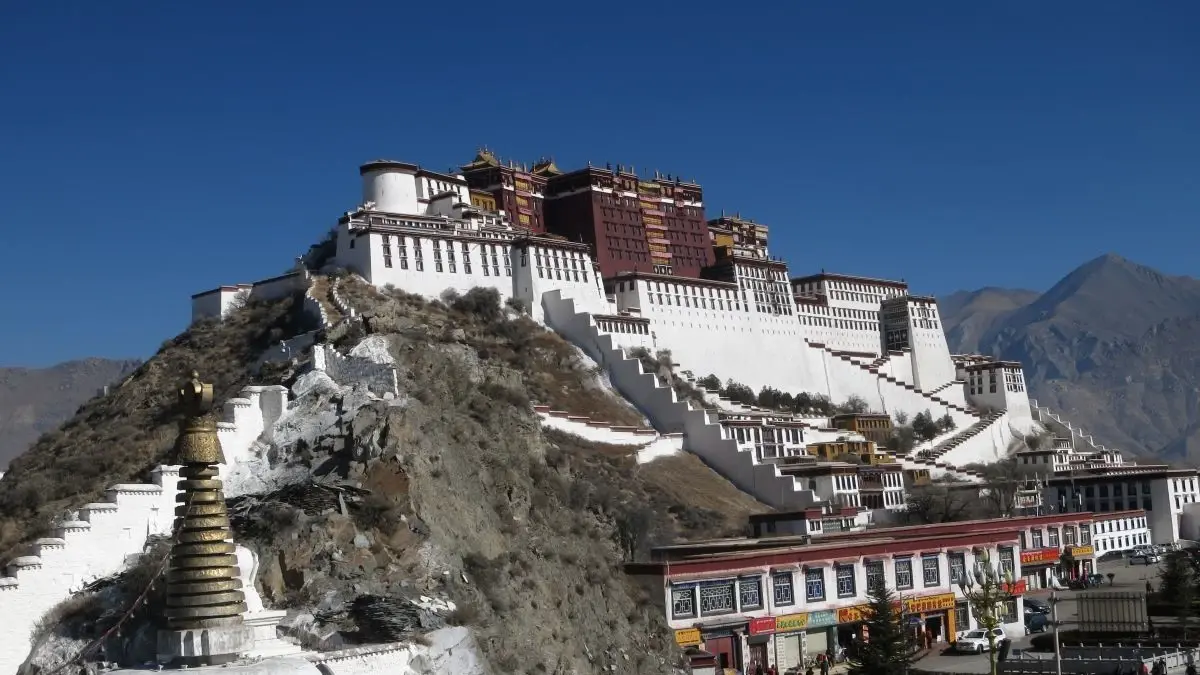
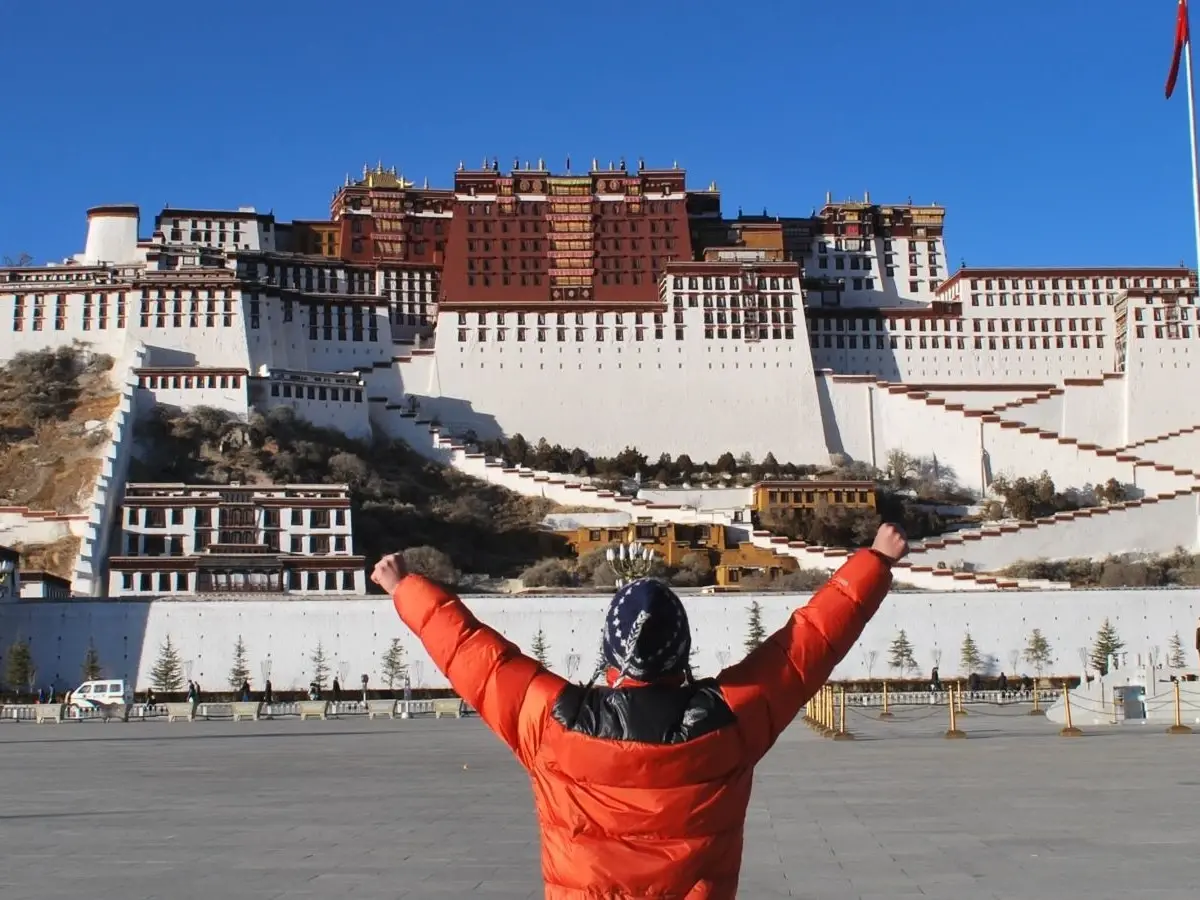
Lhasa is where the trip becomes real! The Potala Palace rises about 117 m above Marpo Ri hill at roughly 3,700 m, and it has been a UNESCO World Heritage Site since 1994.

Entry is by reservation made a day ahead, you carry your passport, and you get about an hour inside. The climb is slow and the steps are many, so walk like a local pilgrim and stop whenever you need to.

The Jokhang Temple in the old city is the spiritual centre of Tibetan Buddhism. Its Jowo Shakyamuni statue draws pilgrims who prostrate on the pavement outside from before dawn.

The Barkhor circuit around it is the best place to watch daily Tibetan life, buy prayer flags and sit with a cup of butter tea.

On the second day we visit Drepung, once among the largest monasteries in the world, and Sera, famous for the afternoon debates where monks clap and argue in the courtyard.

Norbulingka, the summer palace of the Dalai Lamas, makes a gentle end to the day. Photography rules differ in every hall, so ask your guide before raising a camera.

Lhasa also has a habit of making people tired by 3 p.m., so we keep evenings free and suggest an early dinner. If your head feels heavy, a short nap and a liter of water do more for you than another temple would.

Attractions on the Road: Yamdrok, Gyantse and Shigatse

The drive west from Lhasa is a sightseeing day in its own right.

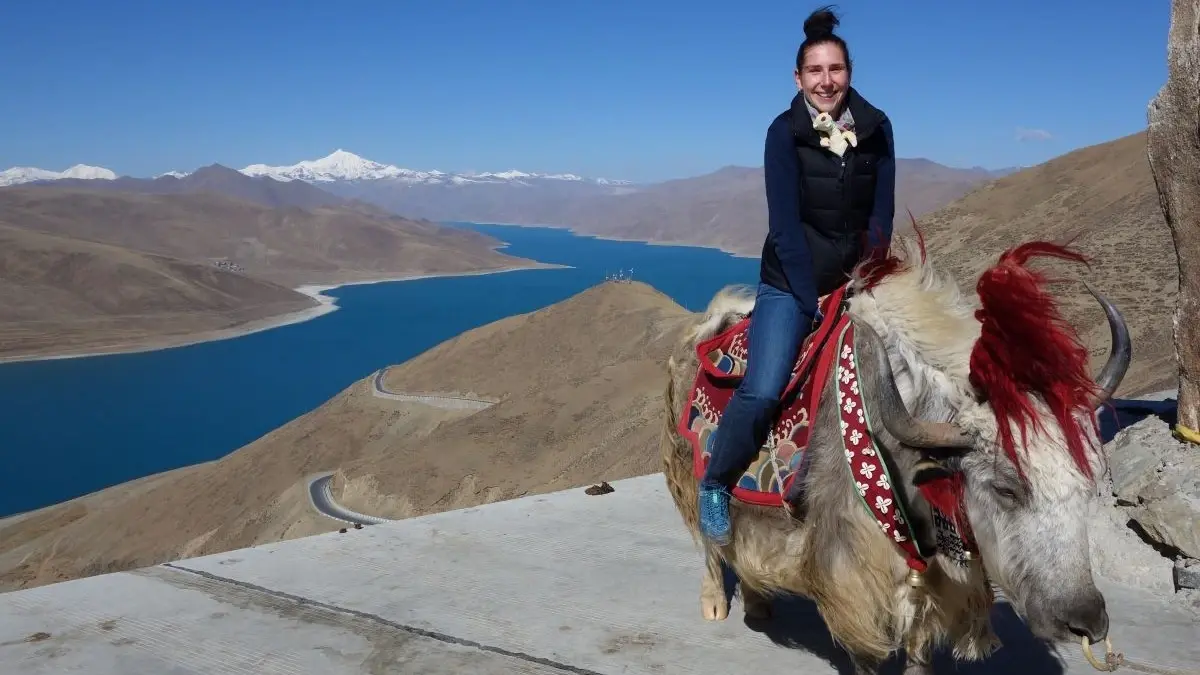
Yamdrok Tso, a turquoise lake at about 4,440 m, is one of the four great sacred lakes of Tibet, and the road climbs to Khamba La (4,794 m) for the first full view of it.

Further on, Karo La (around 5,045 m) brings you beside a hanging glacier, and for many guests this is the first time they stand above 5,000 m.

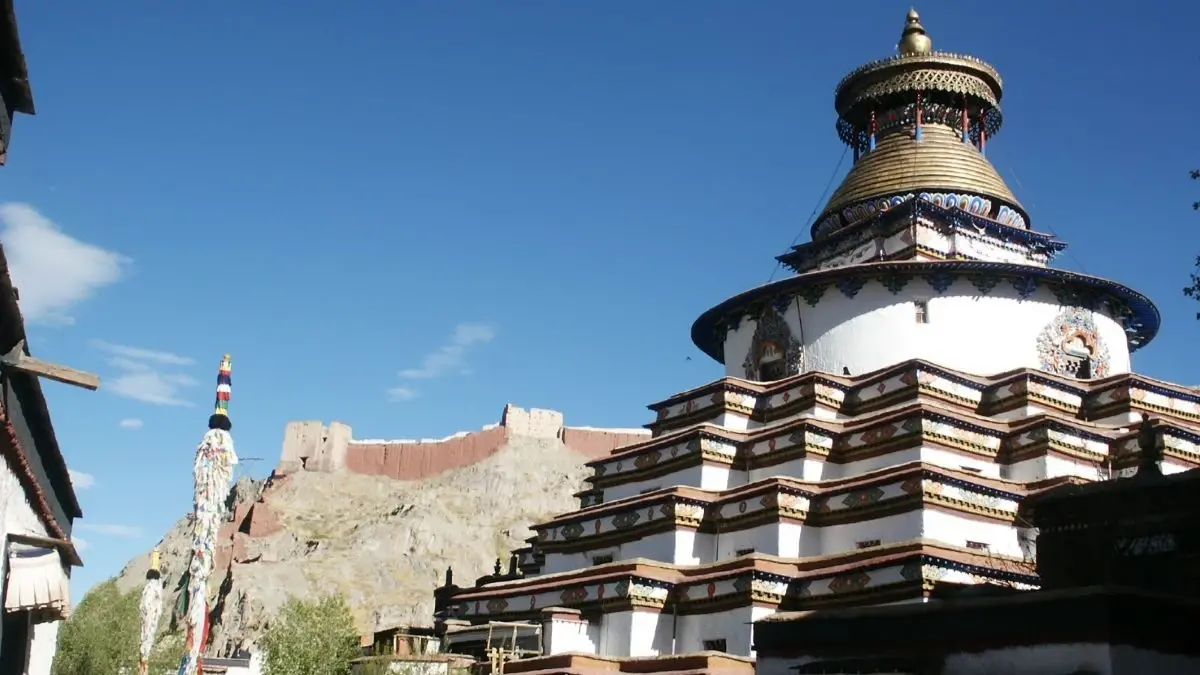
Gyantse is the next stop. Its fort sits on a rock above the town, and the Pelkor Chode Monastery holds the Kumbum, a multi-storey stupa with 77 chapels that rewards slow walking.

Shigatse follows, home to Tashilhunpo Monastery, the seat of the Panchen Lama, founded in 1447. Its Maitreya Buddha statue stands about 26 m high and is the largest in the complex.

These stops double as acclimatization! Each one is a short walk at 3,800 to 4,000 m, which is exactly the kind of gentle exposure your body needs before Saga.

Between the lake and the glacier you will also pass terraced barley fields, small villages with whitewashed houses and yak herds grazing near the road. 

You may ask our driver to pull over for photographs rather than leaning out of the window, since the shoulders are narrow and trucks come fast.

Attractions on the Western Plateau: Saga and Paryang

West of Lhatse the road follows the G219 highway, and the landscape changes. Villages thin out, valleys widen, and you see more sky than ground. 

Saga sits at 4,640 m on a bend of the Yarlung Tsangpo, which becomes the Brahmaputra downstream. It is a small town with basic hotels, and it is where the real remoteness begins.

Between Saga and the lake you cross Paryang's wide plain at about 4,550 m. Watch for kiang (Tibetan wild ass), herds of gazelle, nomad tents and the occasional marmot. 

The peaks of the Himalaya stay on your left for much of the day, and Gurla Mandhata (7,694 m) rises as you approach the lake basin.

None of this is a sightseeing day in the usual sense. It is a long, dusty and quiet drive, and most guests tell us afterwards that it was the part that made the plateau feel enormous. 

Bring a good playlist and a decent neck pillow. Lunch stops are in small roadside restaurants where the menu is whatever the cook has, usually noodles, rice and a vegetable dish, and the toilets are simple. Carry tissues, hand sanitizer and a few snacks, because the next proper meal may be several hours away.

Attractions at Lake Manasarovar

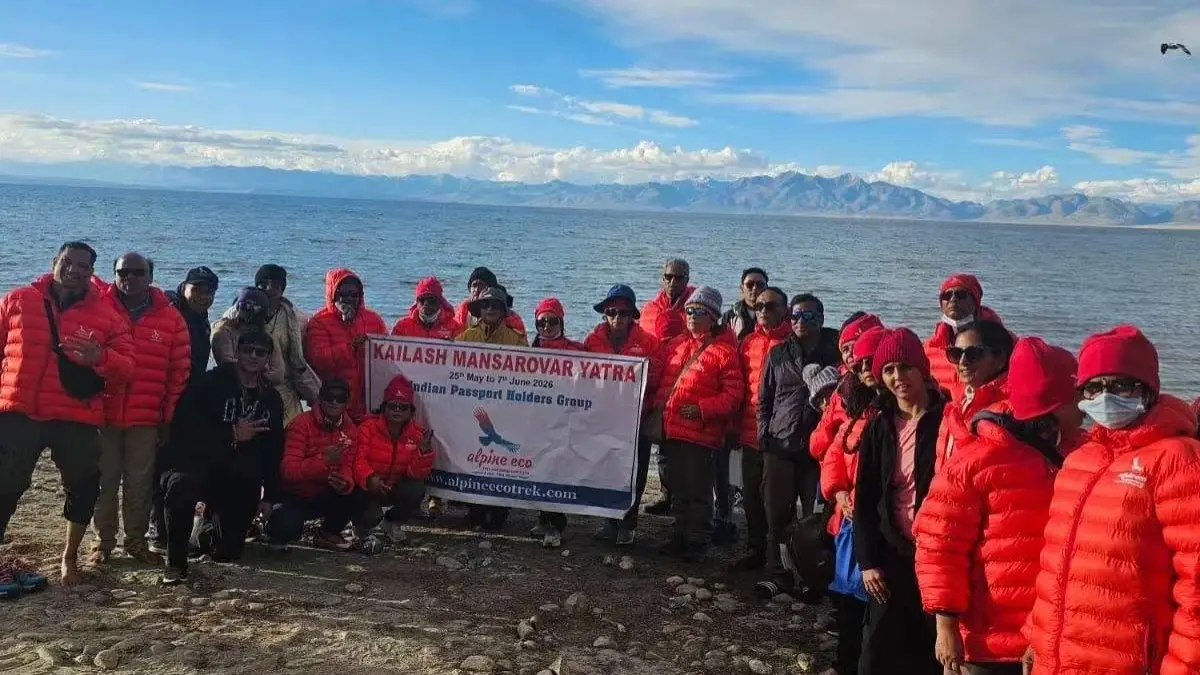
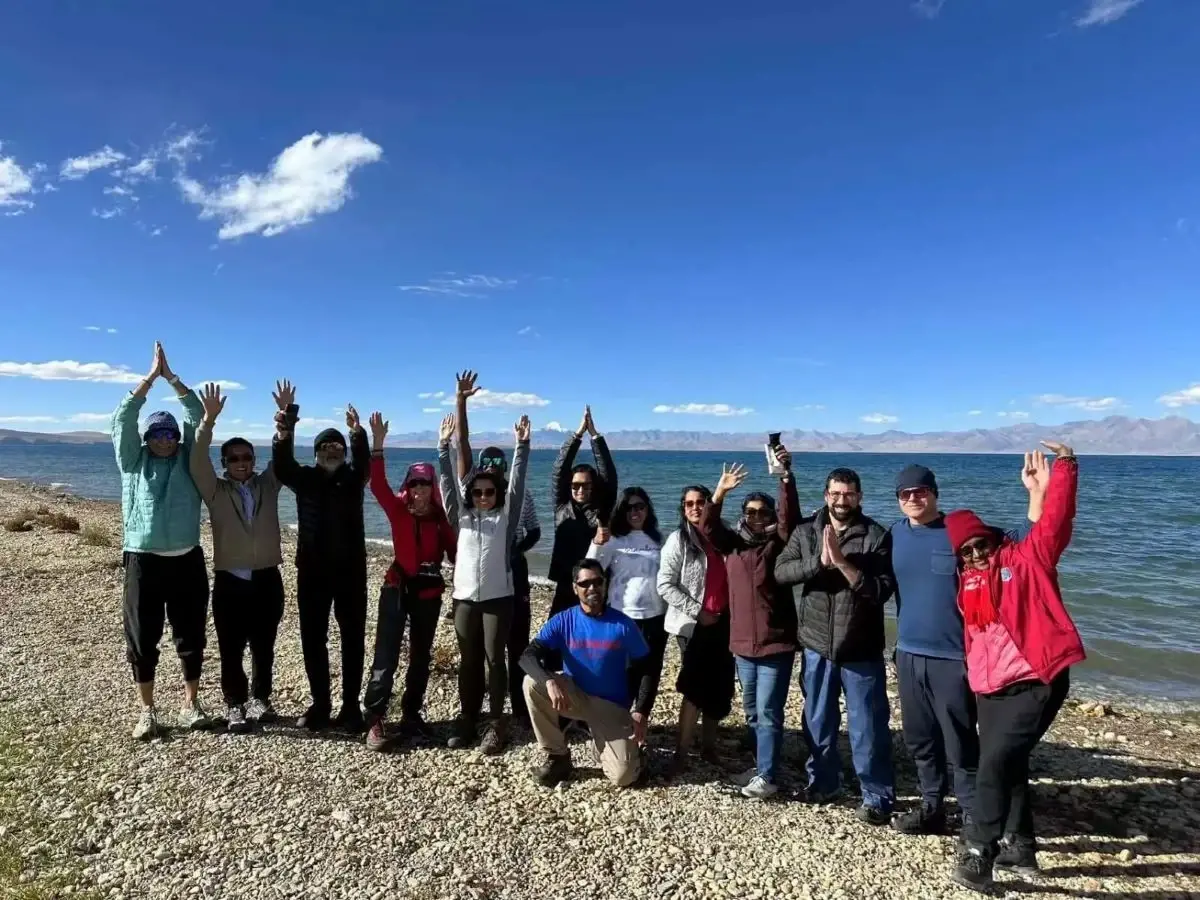
Lake Manasarovar (Mapham Yumtso in Tibetan) lies at 4,590 m and is sacred to Hindus, Buddhists, Jains and followers of Bon. 

Hindus believe it was born from the mind of Brahma, and tradition holds that a bath here washes away the sins of a lifetime. A dip in the lake is not allowed on our tour, though. Buddhists connect it with the mythical lake Anavatapta. Whatever your belief, the water is a deep, shifting blue with Gurla Mandhata behind it.

Rakshas Tal, the saltwater lake to the west, is linked to Manasarovar by a narrow channel and is not considered auspicious. You will see both from the road, and the contrast is striking.

Chiu Gompa, a small monastery on a rocky hill, gives the best view across the water and has a hot spring nearby on some seasons. 

Instead of a dip, our guide finds a corner of the shore where you can step in up to knee level during the lake parikrama by eco-bus. Midday, when the sun is highest, is the most comfortable time.

Never drink the water untreated, even if you hold it sacred. Carry a small bottle to take some home, and let your guide show you where it is clean. 

Pilgrims circle the shore on a lake parikrama of roughly 90 km, and our groups do this by eco-bus, stopping at the water along the way.

Our team arranges the puja and homa on the shore. We bring the puja materials and find a suitable place to perform them, and you offer your own gratitude (dakshina) to the Pandit ji. 

Before you sit for the puja, our crew sets up a shower tent and heats water so you can wash, since there are no attached bathrooms at the lake.

Attractions at Mount Kailash and Darchen

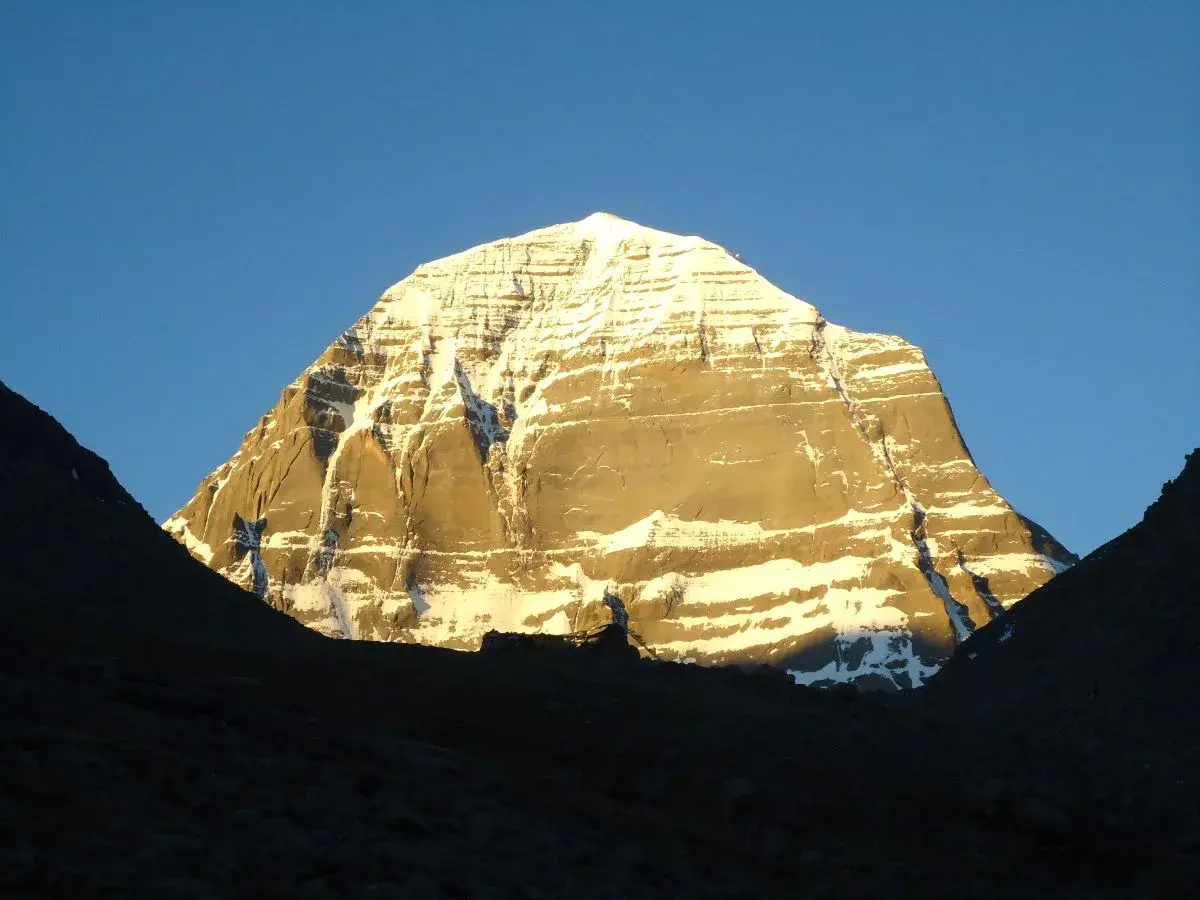
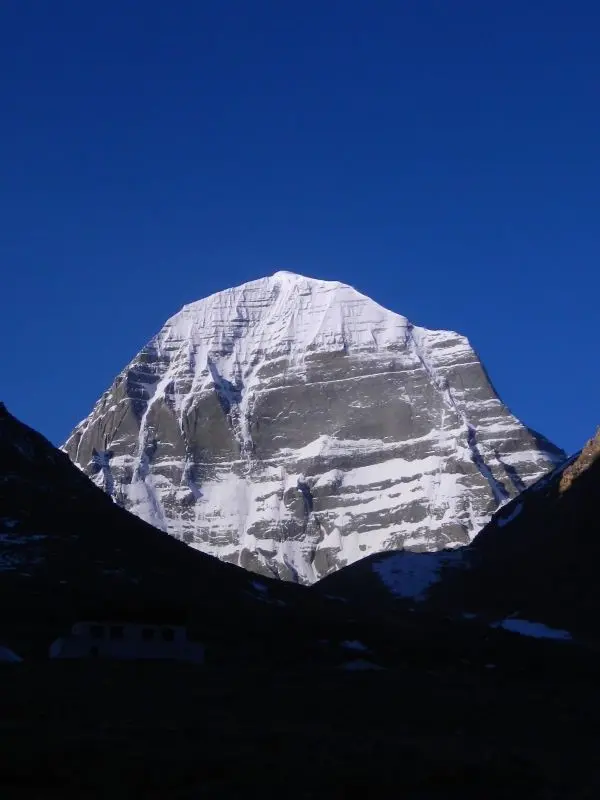
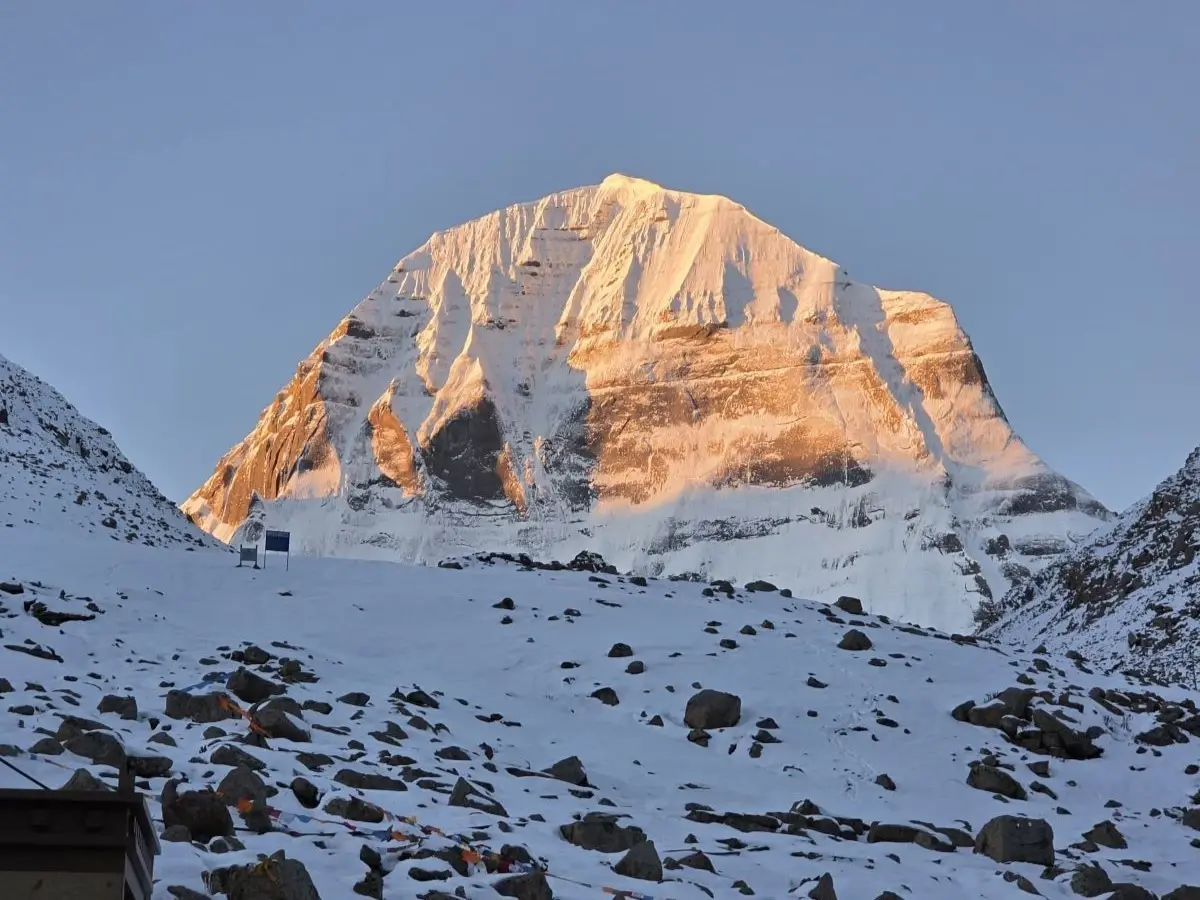
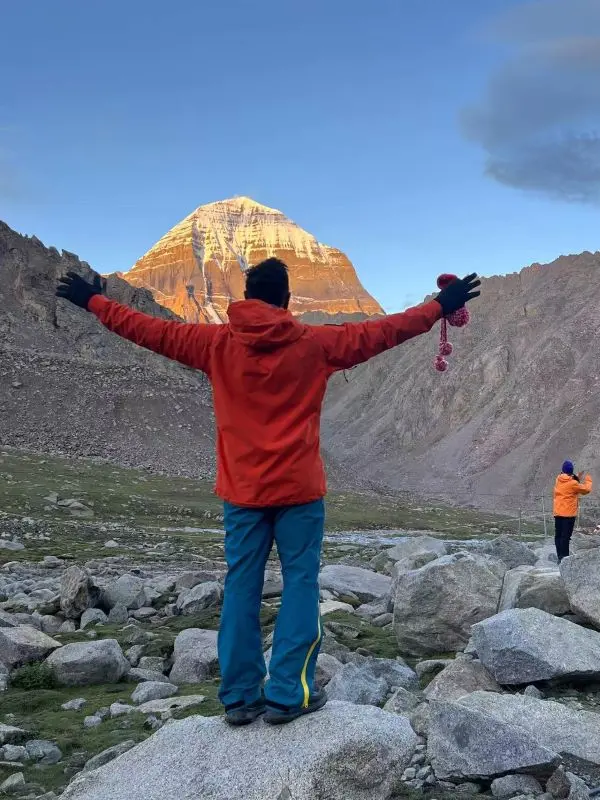
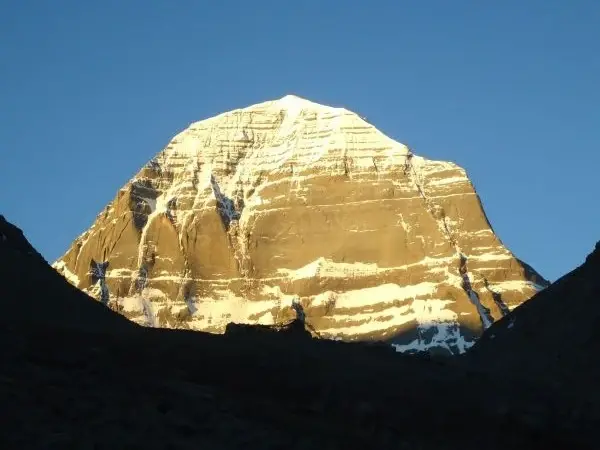
Mount Kailash (Kang Rinpoche, the Jewel of Snow) stands at 6,638 m, and it has never been climbed. Out of respect for the religions that revere it, no one is allowed to try. 

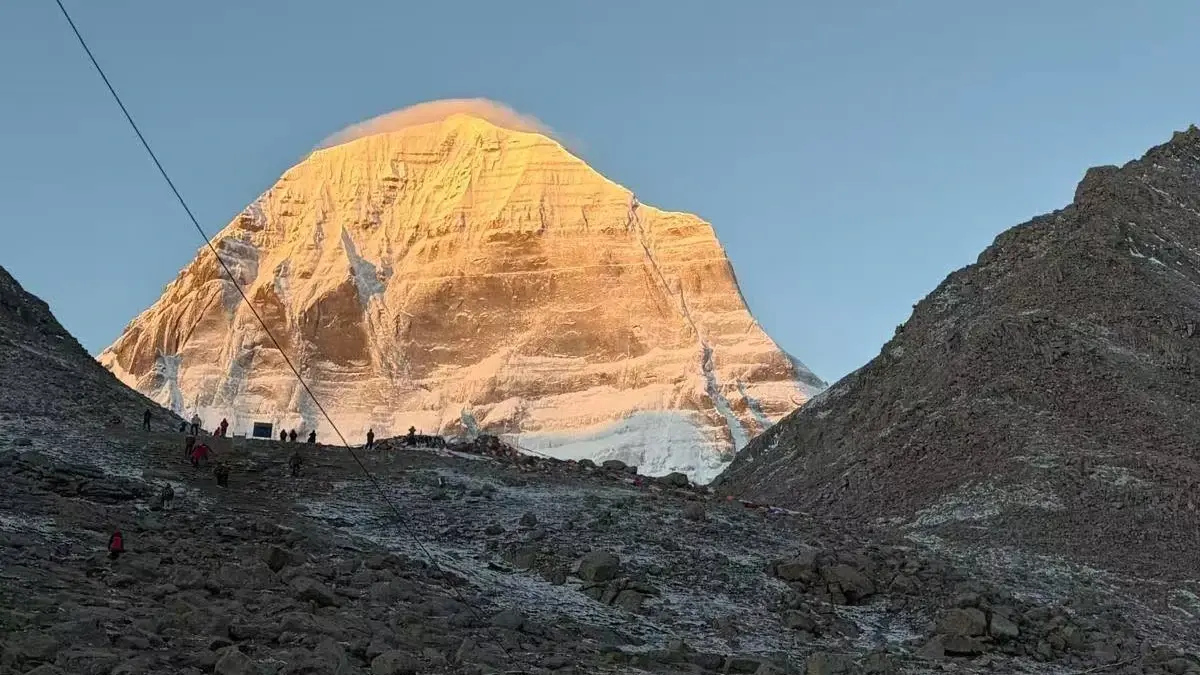
From Darchen (4,670 m) you see the south face as a clean, steep pyramid, and from Dirapuk the north face appears so close you feel you could hear it.

The kora is a clockwise circuit of about 52 km (32 miles). Our groups drive 6 km from Darchen to Yama Dwar, the ritual gate, and start walking from there. 

The route passes Tarboche, where a giant flagpole is raised every year during Saga Dawa, then Chuku Monastery, climbs the Lha Chu valley to Dirapuk, crosses Dolma La, and drops to Zuthulpuk, where Milarepa is said to have meditated in a cave.

Bon followers walk counterclockwise, so you may meet them head on.

Hindus and Buddhists alike believe one kora erases the sins of a lifetime, and 108 koras lead to liberation. Do not take that number literally on your first day. 

Darchen itself is a plain town with guesthouses, a few shops and a police checkpoint, but it is also where the Tibetan, Indian and Nepali pilgrim routes meet, and the evening mood is warm. 

You shall find your guide before sunset and ask about tomorrow's start time. Take it slowly, drink water, and let the mountain set the pace!

The Kailash Kora Explained: Stages, Distances and Customs

The kora (or parikrama in Hindi) is a clockwise walk around Mount Kailash, and the outer circuit is the one almost every visitor completes. It measures about 52 km (32 miles), though exact figures range from 52 to 58 km depending on where the count starts!

Most foreigners take 3 days, while many Tibetan pilgrims do the whole loop in a single long day, starting before dawn and finishing after dark.

  • Day one starts with a 6 km drive from Darchen to Yama Dwar in a deluxe vehicle, followed by a 12 km walk (about 5 hours) to Dirapuk, with the first close view of the north face. 
  • Day two is the big one, 22 km (about 10 hours) from Dirapuk over Dolma La to Zuthulpuk, with a climb of roughly 740 m and a descent of almost 850 m. 
  • Day three covers 12 km (about 3 hours) from Zuthulpuk to near Darchen, where your vehicle waits for the 450 km drive (about 8 hours) to Saga. Vehicles are not allowed from Darchen or Yama Dwar to Dirapuk, so every kilometre to Dirapuk is on foot.

There is also an inner kora around Nandi Parvat, which needs more time, extra permission and good weather. It is not part of our 17-day program.

If 3 days is too much, there are two shorter options:

  • The first is a 1 day parikrama: walk from Yama Dwar to Dirapuk (12 km, about 5 hours), take your darshan, enjoy the sunset on the north face of Kailash and drive back to your Darchen hotel. 
  • The second applies after Dolma La. You walk down to Gauri Kund, and from there you can rent a van to cut the walk short to Zuthulpuk, or continue by van to Darchen for a more comfortable stay. 

The vehicle for the 1 day option, the van from Gauri Kund, and the Darchen stay and meals are at your own cost.

A few customs are worth knowing before you start:

  • Hindus and Buddhists walk clockwise, while Bon followers go counterclockwise. 
  • Pilgrims believe a single kora clears the sins of a lifetime, 13 koras prepare you for the inner circuit and 108 koras lead to liberation. 
  • Many Tibetans prostrate the entire route, lying full length on the ground every few steps, which can take weeks. Give them room!
  • Do not leave belongings on the route, such as clothing, hair or coins, unless your guide explains the local custom. 
  • At Dolma La, people tie prayer flags and leave small offerings, but the pass is a place to pause rather than pose. Move on after a few minutes because the wind is cold and the altitude is real.

What the August 2026 Bhote Koshi Flood Changed?

On the morning of 26 August 2026, a flash flood came down the Bhote Koshi gorge on the Nepal-Tibet border. Early reports traced it to an ice and rock avalanche that blocked a tributary near Rasuwagadhi and then let go all at once. 

The surge took out the Rasuwagadhi border post and customs yard, then ran south through Timure and Syabrubesi into the Trishuli. Investigations are still continuing, so treat the cause as provisional.

The damage to the road is the part that matters for planning! Nepal's Department of Roads says the flood wiped out roughly 40 km of the route between Galchhi, Betrawati and Rasuwagadhi, along with 41 bridges (the Ministry of Physical Infrastructure and Transport put the figure closer to 55 km when connections to the border are counted). 

The 17 km stretch from Syabrubesi to Rasuwagadhi, which a Chinese-funded team had only started upgrading in January 2026, was swept away entirely. This is the road many people call the Pasang Lhamu Highway, and it was the main overland link between Kathmandu and Kerung.

So where does that leave things? The Department of Roads has been opening temporary tracks and arranging Bailey bridges, and the government wants a rough link to the border as soon as possible. But a temporary track for relief and trade traffic is not the same as a tourist border reopening!

As of early September, there was no confirmed date for the Rasuwagadhi to Gyirong crossing, and officials have said the permanent road may follow a new alignment. Nepal has asked China for help with reconstruction, and Beijing has signalled support, though a full rebuild is estimated in the tens of billions of rupees.

Remember that this is not the first time. The same border point was hit by a flood in July 2025, did not resume operations until 1 January 2026, and was devastated again eight months later. 

Anyone planning around this corridor in 2027 should treat it as a route that may or may not be open, and make a fallback plan from day one!

Overland Alternatives and What We Recommend for 2027

This program does not depend on Rasuwagadhi at all. You fly from Kathmandu to Lhasa and fly back, so the flooded corridor never enters your itinerary. That is why we are recommending it as the default for 2027 departures. 

Still, some travellers prefer to enter Tibet by road, and it helps to know the realistic options!

The first is the Kodari to Zhangmu crossing on the Araniko Highway (also called Tatopani). Tibet reopened this border to tourists in September 2023, and the Kodari section of the road was cleared again in August 2026 after being blocked for about a month by landslides. 

But repairs at Liping were still going on, Chinese customs told Nepali officials that trade through the point stays suspended until further notice, and officials said it remained open to pilgrims returning from Kailash. Treat it as possible, not guaranteed! The drive from Kathmandu to the border takes around 5 hours when the road is clear.

The second is the Kerung route itself, once the road and the border post are rebuilt and both governments confirm tourist movement. We would only sell this after official confirmation. 

The third is the Humla route through Simikot, Nara La and Hilsa. It is a trek-and-drive option for 18 days or more, needs a restricted area permit on the Nepali side, and closes with snow in early October, as it did this year.

You can also fly from Lhasa to Ngari (Kunsha airport) and drive about 6 to 7 hours to Darchen. It saves 4 days, but you skip the staged climb in altitude, and we do not recommend it for first-time visitors!

Our approach is simple. We keep the 17-day flight program as the base itinerary, confirm the routing 45 to 60 days before departure, and rebook rather than gamble if conditions change. If an overland departure is what you want, we will tell you honestly whether we can run it.

Best Time for the Kathmandu Lhasa Kailash Overland Tour

The best windows are May to June and September to October. Skies are clearest, the roads are dry, and the kora passes are usually free of deep snow. 

Foreign groups typically get permission to walk the kora from mid to late April, but April nights at Dirapuk are very cold. July and August are possible too, since this part of Tibet sits in a rain shadow, though road washouts and cloud can interrupt the views.

The date everyone asks about is Saga Dawa Duchen, the full moon festival that marks the birth, enlightenment and passing of the Buddha. Published Tibetan calendars place it on 18 June 2027. 

Thousands of Tibetan pilgrims gather at Tarboche to raise the giant flagpole, and hotels in Darchen fill up months in advance. It is a powerful day to be there, but it is also loud, crowded and hard to book. If you want quiet, choose a departure a week either side!

Temperatures give you the real picture. At the Purang County weather station (3,900 m), the July mean is about 14.7 °C and January falls to about minus 7.4 °C. Darchen and Dirapuk are well above that station, so nights drop below freezing even in summer!

Annual rainfall is only around 150 mm. And winter is a different story altogether! Roads close, guesthouses shut and the kora is not realistic from November to March.

Two calendar traps are worth knowing. China's National Day Golden Week (1 to 7 October) packs Lhasa with domestic visitors and makes Potala reservations difficult, and Nepal's Dashain and Tihar festivals around the same time raise flight demand in Kathmandu. 

Late September is often the sweet spot. For 2027, we expect demand to stay high around Saga Dawa, so book early!

Transportation: Flights, Vehicles and Roads

The tour uses 3 kinds of transport, and each one asks something different from you. First, the flights: Air China, Sichuan Airlines and Himalaya Airlines have all operated between Kathmandu and Lhasa, with a flying time of about 1 hour 30 minutes. 

The aircraft usually carry a 20 kg checked baggage allowance, so pack a main bag of that size and leave extras at your Kathmandu hotel. Lhasa runs on Beijing time, which is 2 hours 15 minutes ahead of Nepal.

Second, the vehicles:

  • Small groups travel in Van or similar 4WD vehicles, and larger groups use a coach with a luggage trailer or a support truck. 
  • Drivers are local, which matters because Tibetan highways use strict speed controls and timed checkposts.
  • If a vehicle reaches a checkpoint too early, it waits. This is one reason a 495 km drive takes 9 to 10 hours!

The total road distance is about 2,700 km (1,740 miles), spread over 7 driving days. Most of the G318 and G219 highways are paved, but sections near Paryang and the lake basin can be rough, dusty or under repair. Expect to be shaken, not stirred!

Third, the kora. A deluxe vehicle takes you from Darchen to Yama Dwar (6 km), and the walk starts there. Vehicles are not allowed to go from Darchen or Yama Dwar to Dirapuk. 

Ponies and porters are available for hire, and yaks carry kitchen logistics between guesthouses. When you finish the circuit, your vehicle meets you near Darchen and drives on to Saga (450 km, about 8 hours).

Rotate seats each day, carry motion sickness tablets if you need them, and keep a small day bag within reach. You will not want to dig through luggage in a moving car!

Difficulty Level and Altitude Profile

We rate this tour moderate to hard. There is no technical climbing and no ice axe, but the altitude and the long driving days together make it harder than most people expect. 

The hardest day is day 12, when you walk about 22 km over Dolma La at 5,630 m. The hardest drives are days 9 and 13!

Here are the sleeping altitudes you will experience:

Place  Sleeping altitude In FeetAverage Temperature (°C)
 Lhasa3,650 meters 11,975 ft12.6°C to 15.6°C (May to September)
Shigatse 3,850 meters 12,631 ft11.45°C to 14.85°C (May to September)
Saga4,640 meters 15,223 ft1°C to 17°C (May to September) 
Lake Manasarovar4,590 meters 15,059 ft3°C to 18°C (May to September)
Darchen4,670 meters 15,321 ft7°C to 15°C (May to September) 
Dirapuk 4,890 meters 16,043 ft0°C and 18°C (May to September)
Zuthulpuk4,790 meters 15,715 ft3°C to 16°C (May to September) 
Kathmandu1,400 meters 4,593 ft24°C to 27°C (May to September) 

Common guidance above 3,000 m is to raise your sleeping altitude by no more than 500 m a day, with a rest day every few days. Our program follows that rule almost everywhere, with 1 exception. 

The jump from Shigatse (3,840 m) to Saga (4,640 m) is about 800 m, and the road offers no reasonable stop in between. This is the main reason we insist on 2 full nights in Lhasa first, and why we tell guests to drink water, skip alcohol and sleep early on day 8.

Fitness helps, but it does not protect you. A Lhasa study found that younger age, poor general health and rapid ascent were each linked to AMS, while earlier experience at altitude lowered the risk. 

So, a marathon runner can still get sick, and a calm 60-year-old who has been to Ladakh may sail through. Train for 8 to 12 weeks with long walks, stairs and a loaded daypack, so that 6 hours on your feet feels ordinary!

If a headache, nausea or heavy fatigue starts and rest does not clear it, tell your guide at once. The rule is simple: never go higher with symptoms, and descend if they worsen. 

Talk to your doctor before booking if you have heart, lung or blood pressure conditions!

Altitude Sickness on the Kailash Tour: Prevention and Response

Acute mountain sickness (AMS) is a group of symptoms, including headache, nausea, dizziness and poor sleep, that appears when the body cannot adjust quickly enough to lower oxygen at altitude. 

On this tour, the risk starts in Lhasa and climbs with every sleeping altitude above 4,000 m. A University of Oslo study of 2,385 tourists in Lhasa found that nearly half of the people who developed AMS noticed symptoms within 12 hours of landing, and that 79 percent had to reduce their activity. So the first night is when you need to pay attention.

Prevention is mostly a habit! Ascend gradually, keep your first day in Lhasa quiet, drink 3 to 4 litres of water daily and avoid alcohol and sleeping pills. Eat lightly but regularly!

Our program also follows the old rule of climb high, sleep low: on day 12 you reach 5,630 m but sleep at 4,790 m. Some doctors prescribe acetazolamide as a preventive, which is a conversation for your own physician, not something to start on the plane.

Know the warning signs and what to do about them. Mild symptoms mean you stop going higher, rest and watch closely. Moderate symptoms, such as a severe headache, repeated vomiting or a stumbling walk, mean you descend.

Two forms are emergencies: high altitude cerebral oedema (HACE), which brings confusion and loss of coordination, and high altitude pulmonary oedema (HAPE), which brings breathlessness at rest and a wet cough. Both need immediate descent and oxygen.

Oxygen on this tour comes in layers. We provide oxygen in the vehicle while driving and in the guesthouses in the morning and evening, and the rooms in Lhasa, Shigatse, Saga and Darchen have their own oxygen setup. 

For the kora, we suggest buying 2 cans of oxygen in Saga as emergency backup for the trail, because help can be more than a day away.

Tell your guide early and honestly! A guide who hears about a headache at breakfast can change the day. A guide who hears about it at the pass has far fewer options.

Visa Requirements for the Kathmandu Lhasa Kailash Overland Tour

Two separate visa systems apply to this tour. The first gets you into Nepal. The second gets you into China, which administers Tibet. Most trouble happens in the gap between the two, so it helps to take them one at a time!

Nepal

Indian citizens do not need a visa for Nepal while citizens of SAARC countries get a free 30-day visa on arrival for their first visit in a visa year. 

Most other travellers can obtain a tourist visa on arrival at Tribhuvan International Airport. However, citizens of certain countries must obtain a visa in advance, so check Nepal's current entry requirements for your nationality before travelling. 

The fees are USD 30 for 15 days, USD 50 for 30 days, or USD 125 for 90 days.

Tibet China

Chinese visa requirements depend on your passport and the rules in effect when you travel. 

According to our current guidance, citizens of many countries can travel to Kailash without a Chinese visa in advance, but visa-free eligibility must be confirmed for your nationality and travel dates. Either way, you still need the Tibet Travel Permit, which we arrange through our local partners.

US and South African passport holders should plan ahead and arrange their Chinese visa at least 3 weeks before travelling to Kathmandu. 

Travellers of other nationalities who require an individual Chinese visa, also known as a China L visa, must apply for it themselves and obtain it before arriving in Kathmandu. Confirm the required application timeline for your nationality before booking!

From 2026, you can enter Tibet from Nepal with an individual Chinese visa issued in your home country, so you no longer need the Chinese group visa from Kathmandu. You will still need a Tibet Travel Permit, which our team arranges through a registered agency.

Before you buy your visa, we confirm your exact route in writing, so you can book with confidence.

Indian passport holders

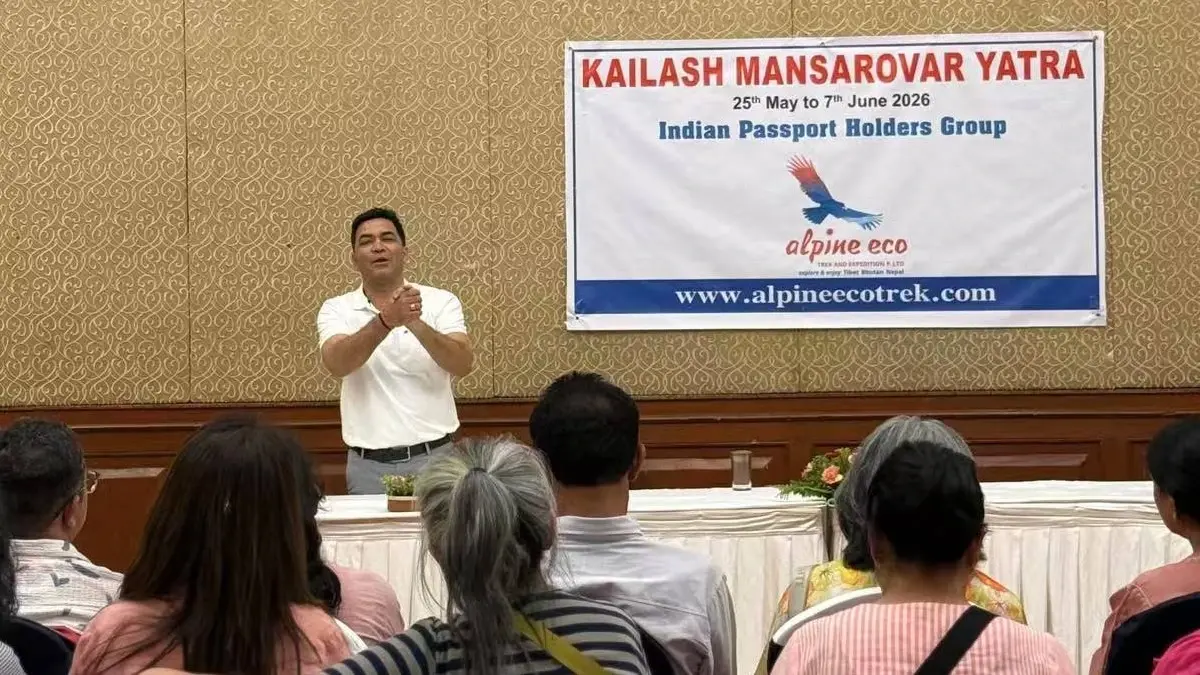
Your process is a bit different! The Chinese Group Visa must be arranged in Delhi before you travel to Nepal, and the application needs your original passport. 

Send it at least 15 days before your planned travel date so the visa can be processed in Delhi. Do not travel to Kathmandu expecting the Chinese visa to be arranged there.

NRIs, OCI cardholders and foreign residents

Check the rules for the passport you will actually travel on. Visa requirements depend on nationality, not simply on your country of residence or OCI status.

Processing times depend on your nationality and the type of visa required, so start early. Before you book flights or buy any visa, send us your passport details and travel dates, and we will confirm the exact procedure for your passport!

Permits Needed for Mount Kailash and Tibet

Tibet is a permit-based destination, and four documents matter:

  • The Tibet Travel Permit (TTP) is issued by the Tibet Tourism Bureau. It costs nothing in itself, but only a registered Tibetan travel agency can apply for it, so you cannot do it alone. It lists your approved cities and is checked when you board the Kathmandu flight, at hotels and at checkpoints.
  • The Alien's Travel Permit (ATP) is required for areas outside Lhasa, which includes Shigatse, Saga and the Kailash region. 
  • A military or border-area permit covers the sensitive zone around Manasarovar and Darchen. Your guide collects these in Tibet, usually within an hour or two in the relevant town. You do not carry them separately, but you must keep your passport accessible, since checkposts examine it often!
  • Applications need clear scans of your passport, your Chinese visa if you have one, and details such as your occupation. Some professions, including journalists and diplomats, can face refusals or extra questions, so tell us early!

We recommend starting 45 days before departure, and a longer lead time during Saga Dawa. Your itinerary is fixed on the permit, which means you cannot change cities or add a side trip once it has been issued!

The rule behind all of this is simple. You cannot travel independently to Kailash as a foreign visitor. You travel with a registered agency, a licensed guide and an approved route. Sticking to it is the cheapest way to avoid trouble at checkpoints.

Accommodation in Kathmandu and Tibet

The accommodation changes as you travel west across Tibet, so it is worth knowing what to expect. 

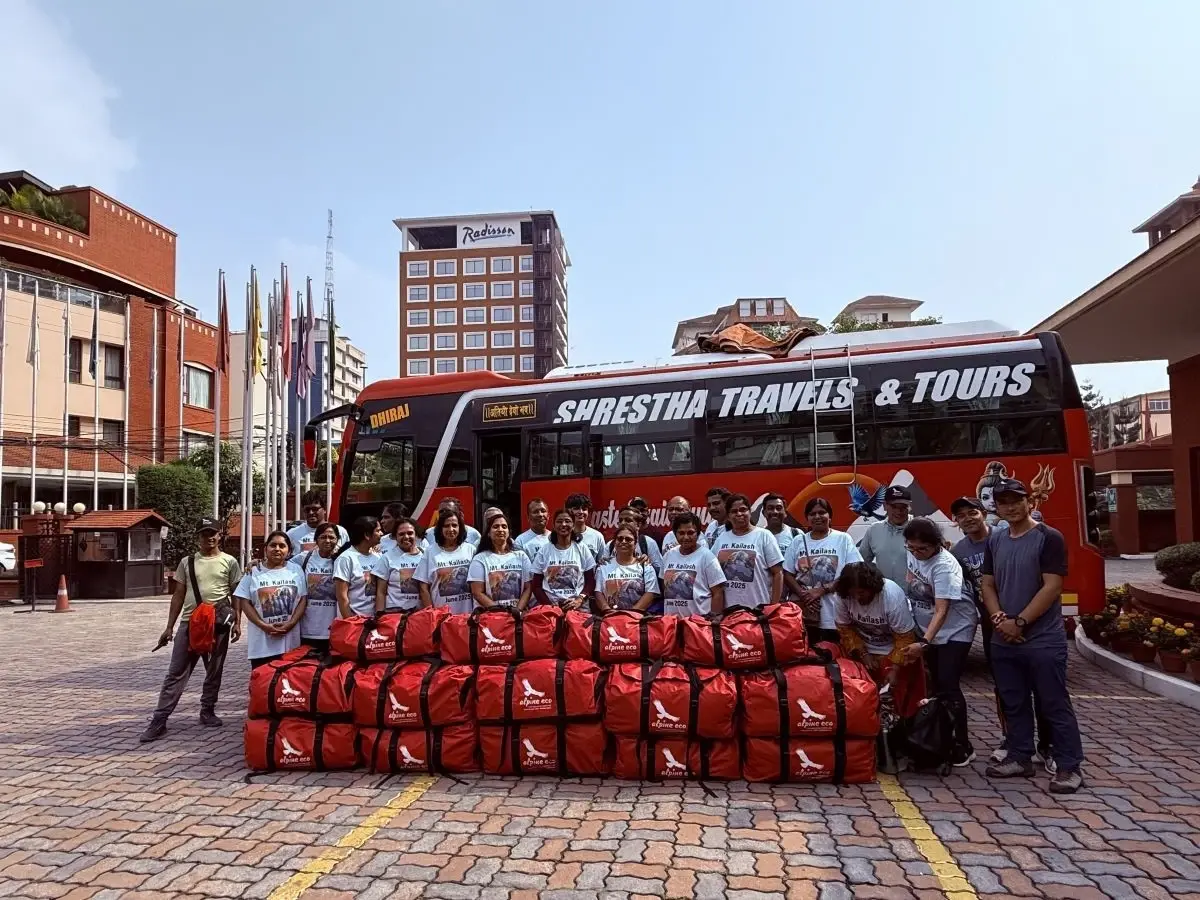
In Kathmandu, we use Hyatt Centric or Radisson hotel, with accommodation on a twin-sharing basis. Your stay in Kathmandu is on a full-board basis, including meals as part of the package. The rooms offer modern comforts, private bathrooms and reliable facilities before you begin the high-altitude journey.

Lhasa has the best rooms of the trip. Hotels near the Barkhor are comfortable, heated and often offer oxygen supply in rooms or at reception. Shigatse is similar but simpler. These are the places to charge everything and have a proper hot shower!

In Lhasa, Shigatse, Saga and Darchen (and Nyalam, if you take the overland route), every room has an attached bathroom and an oxygen setup. Lhasa has the best rooms of the trip. 

Hotels near the Barkhor are comfortable and heated, and Shigatse is similar but simpler. These are the places to charge everything and have a proper hot shower! Saga is where comfort starts to drop, with limited hot water and the occasional power cut.

Lake Manasarovar, Dirapuk and Zuthulpuk are different. The bathrooms at these 3 holy places are very basic, and there are no attached bathrooms at any of them. At Manasarovar you stay in a basic guesthouse near the shore, and our shower tent covers the warm water for your puja.

If you want more comfort at the lake, the Mansarovar Hot Springs Hotel is a 5-star hotel on the shore. A double room costs US$ 250 per night, and the upgrade is an extra charge. Contact us or the hotel directly if you are interested.

On the kora, the guesthouses at Dirapuk and Zuthulpuk are the simplest of all. Expect dormitory beds or small rooms with shared sleeping platforms, blankets, squat toilets outside, no showers and electricity from solar panels or generators for a few hours. 

The common room has a yak-dung stove where everyone gathers. A sleeping bag rated to minus 10 °C and a silk liner make a big difference. Hot water is sold by the flask!

A single supplement is possible in Kathmandu, Lhasa and Shigatse. Beyond that, rooms are shared, and privacy is limited by what is available. That is the nature of the plateau!

Meals and Drinking Water on the Tour

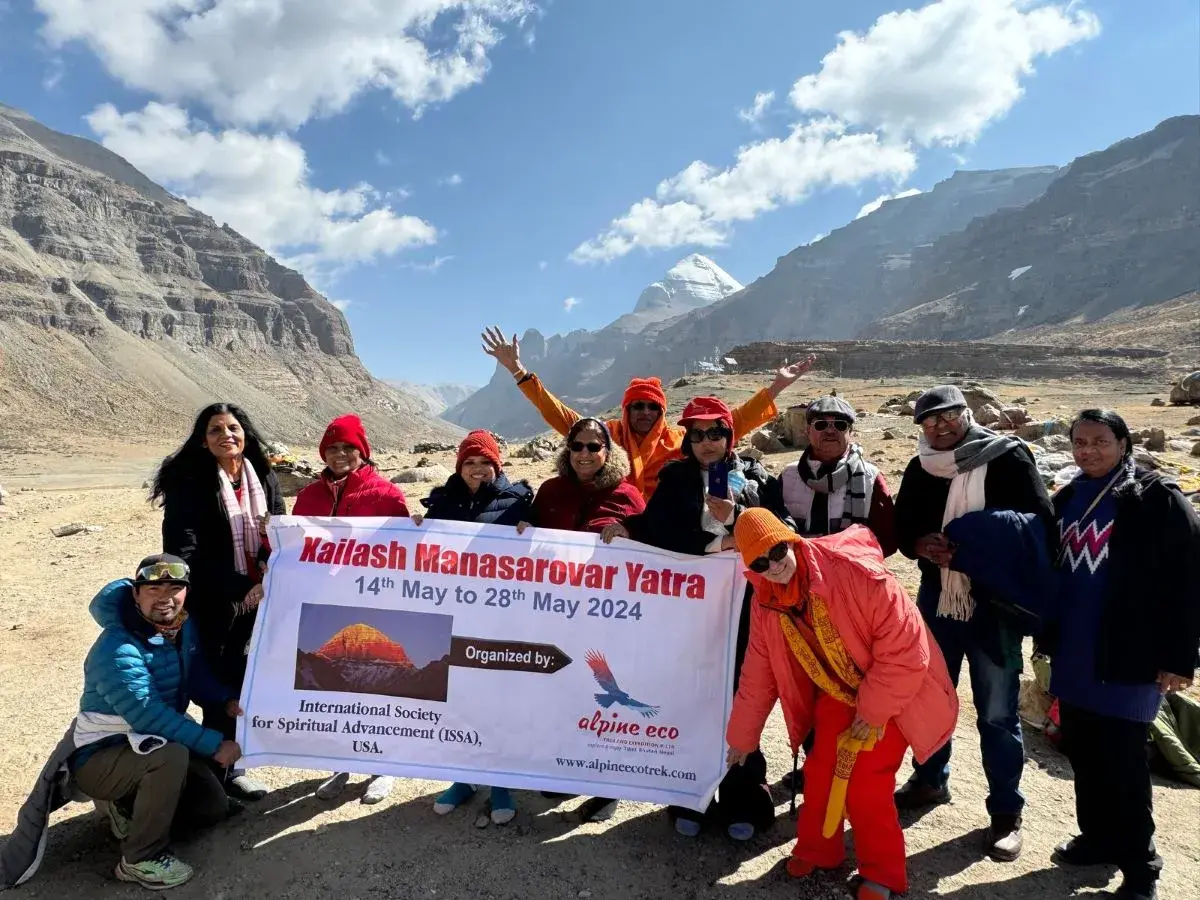
Alpine Eco Trek operates this Kathmandu Lhasa Kailash Overland Tour on a full-board basis, with meals included throughout the trip according to the itinerary. Our food service is one of our strengths, supported by our own team of expert cooks, experienced guides and insured staff.

In Kathmandu, your hotel stay includes meals on a full-board basis. From Lhasa to Saga, meals are included at local restaurants, allowing you to experience local food along the Tibetan route.

From Saga onward, our own team prepares pure vegetarian Indian food, with a focus on South Indian and Nepali dishes. This gives our guests familiar, freshly prepared meals during the more remote part of the journey. 

Moreover, our local team understands the practical needs of travelling at high altitude and helps make meal arrangements throughout the tour.

We recommend eating regularly even when your appetite decreases at altitude. Soup, rice, vegetables and other freshly prepared dishes can help you maintain your energy during long drives and the Kailash kora. You should also carry personal snacks such as nuts, dried fruit and chocolate for the walking days, when shops and food stops are limited.

Our team provides 3 litres of pure drinking water per person every day. Do not drink directly from lakes or streams, including Lake Manasarovar, and carry a reusable water bottle and purification tablets as a backup.

If you have a food preference, such as Jain food or any other requirement, please tell us once you land in Kathmandu so our staff can do the shopping accordingly. Avoid alcohol during acclimatization.

Equipment That We Provide From Alpine Eco Trek

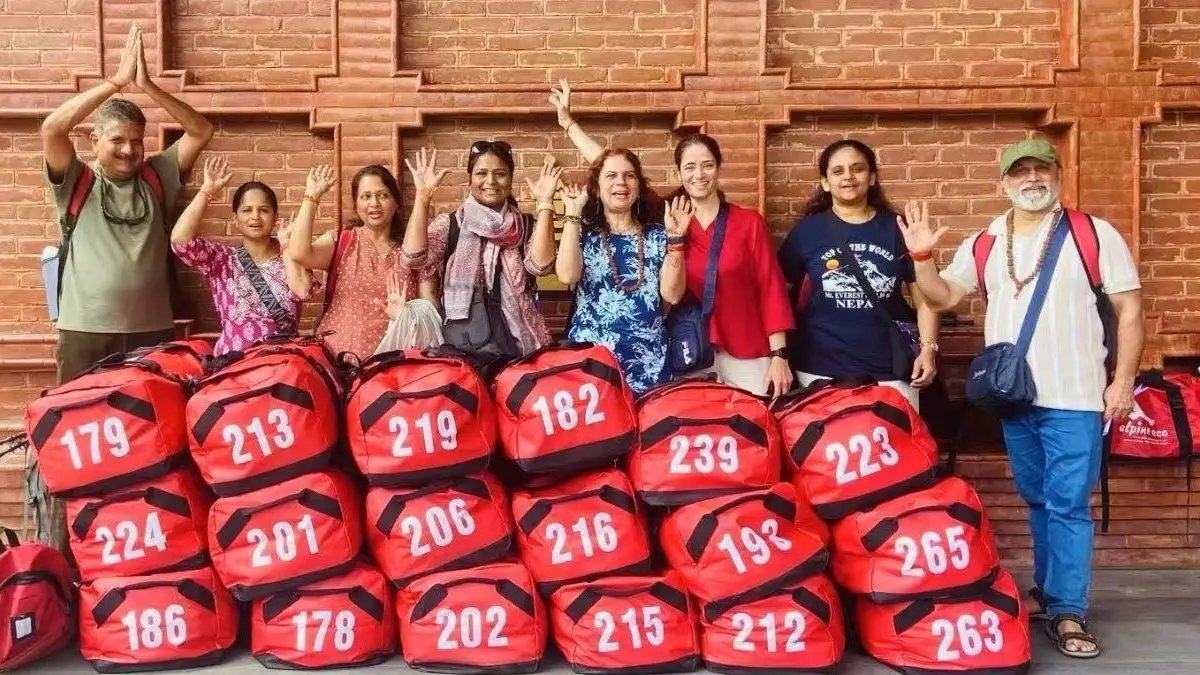
We provide these items, so you do not need to buy or carry them from home:

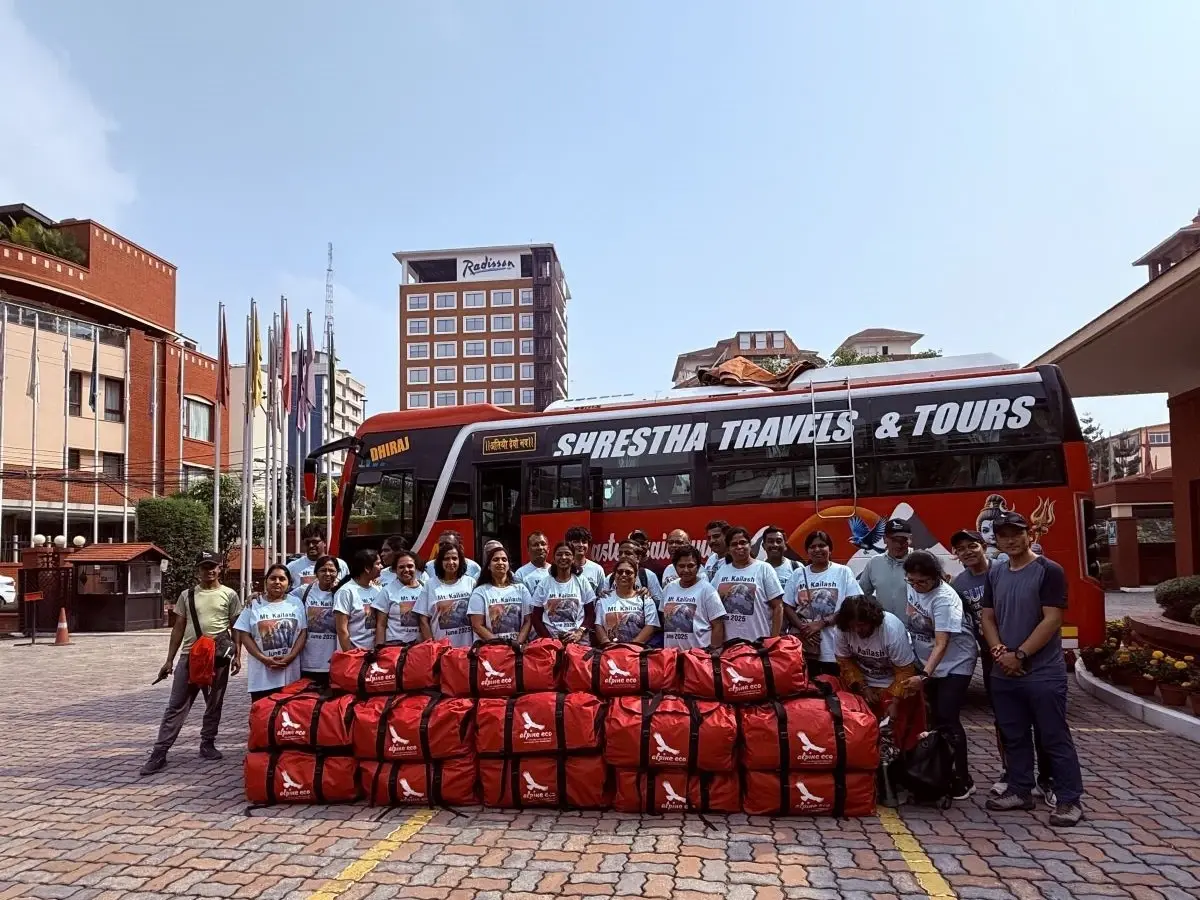
  • Special down jacket for the kora
  • Warm hat that covers the ears
  • 1 large duffel bag for your main clothing
  • 1 trekking bag for the kora
  • 1 rain poncho

You will receive them once you land in Kathmandu. If your trip starts in Lhasa, our crew members hand them over in Saga!

Cost, Inclusions and What Changes the Price

The price of the Kathmandu Lhasa Kailash Fly in Fly Out Tour depends on a handful of variables, and understanding them helps you compare offers properly. 

The biggest factors are group size, the hotel category, the Kathmandu to Lhasa airfare and the season. Departures around Saga Dawa carry a premium because rooms in Darchen and Saga are scarce!

The Kathmandu Lhasa Kailash Tour package includes airport transfers, accommodation on a twin-sharing basis, full-board meals throughout the itinerary, Tibet permits, Chinese Group Visa assistance where applicable, ground transportation in Tibet, experienced guides, Alpine Eco Treks' Nepali staff support, listed entrance fees, return flights between Kathmandu and Lhasa, the equipment listed above, 3 litres of pure drinking water per person per day and the puja materials for the Manasarovar puja and homa.

In Kathmandu, we use Hyatt Centric or Radisson hotel, subject to the confirmed booking. 

From Lhasa to Saga, meals are included at local restaurants, while our own team prepares pure vegetarian Indian food from Saga onward. Visa fees and other charges that depend on nationality or individual circumstances will be clarified in your written quotation.

International flights to and from Kathmandu, personal expenses, tips, travel insurance and optional ponies or porters during the kora, the gratitude you offer to the Pandit ji, the Mansarovar Hot Springs Hotel upgrade (US$ 250 per night for a double room), the van from Gauri Kund with Darchen accommodation and meals if you choose that option, the vehicle and Darchen stay for the 1 day parikrama, and the 2 cans of emergency oxygen we suggest you buy in Saga are not included unless specifically stated in your quotation. Meals listed as included in the full-board package are covered; any exceptions will be clarified before booking.

Travel Insurance deserves another attention! Standard policies stop at 4,000 m or 4,500 m, so ask your provider for cover to at least 5,700 m with emergency evacuation, and do not count on helicopter rescue being available in western Tibet.

The rule we repeat to everyone is the same: compare inclusions line by line. A very low quote usually means a missing item, such as the air ticket, the visa service or a guide, that appears later as an extra. A fair price at Alpine Eco Trek is one where everything you need is on the page.
Kathmandu Lhasa Kailash Overland Tour Itinerary

Starts / EndsKTM - Lhasa / Lhasa - KTM
Max Altitude5638m /18,500ft
Day 1

Arrive Kathmandu: Transfer: 6 km (4 miles) | Duration: 30 to 45 minutes | Sleeping altitude: 1,400 m | Max altitude: 1,400 m | Difficulty: Easy

Our representative meets you outside the arrivals hall at Tribhuvan International Airport with a name board, and the drive to your hotel in Thamel takes 30 to 45 minutes depending on traffic. 
After you settle in at your Hyatt Centric or Radisson hotel, we hold a short briefing to check passport copies, visa status and any medicines you plan to carry. This is also when we hand over your equipment, and when you tell us about any food preference such as Jain food, so our staff can shop for it before you leave Kathmandu.

Your Kathmandu accommodation is on a full-board basis, with meals included as part of the package. If you need the Chinese Group Visa, this is the evening we collect your passport and photos for the embassy, so keep those handy.
Walk around Thamel in the late afternoon, since it is the easiest place to buy a missing thermal layer, trekking poles, a sleeping bag liner. Change a little money, but leave serious exchanging for Lhasa. Drink plenty of water and sleep early. 

Tomorrow is a full day, and Tibet will ask a lot of you soon enough. Buy a few snacks you actually like, such as nuts and chocolate!

Max Altitude: 1400m
Meals: Full Board
Accommodation: Hotel
Transportation: Deluxe Bus, Van, Car
Duration: 30 to 45 minutes
Distance: 6 km (4 miles)
Arrive Kathmandu
Arrive Kathmandu
Day 2

Sightseeing in Kathmandu: Drive: inside Kathmandu Valley | Duration: full day | Sleeping altitude: 1,400 m | Max altitude: 1,400 m | Difficulty: Easy

Start at Pashupatinath, where the Bagmati ghats and the golden roofs of the Shiva temple set the mood for the weeks ahead. Non-Hindus watch from the eastern bank, and every visitor can follow the riverside rituals from there.

Walk on to Guhyeshwari Shakti Peeth, then drive north to Budhanilkantha to see the reclining Vishnu statue. We finish at Swayambhunath with a view over the valley in the late afternoon.

Meals are included as part of your full-board stay, and we arrange them around the sightseeing schedule. If time allows, we also stop at Boudhanath for one clockwise circuit with the Tibetan community. Eat a light dinner and sleep early, because tomorrow is another full day.

Max Altitude: 1400m
Meals: Full Board
Accommodation: Hotel
Transportation: private vehicle
Duration: Full Day
Distance: Inside Kathmandu Valley
Pashupatinath Temple
Day 3

Sightseeing in Kathmandu: Drive: inside Kathmandu Valley | Duration: full day | Sleeping altitude: 1,400 m | Max altitude: 1,500 m | Difficulty: Easy

Today goes outside the city centre! We visit Dakshinkali Temple first, then the Kailashnath Mahadev statue in Sanga and Doleshwar Mahadev near Bhaktapur.

The distances are longer than yesterday, so we leave early and keep the stops unhurried. Meals are included as part of your full-board stay.

Back at the hotel, pack your main clothing into the large duffel bag we give you, within the 20 kg flight allowance, and keep a small daypack for the flight. Keep your passport and warm layers within reach. Tomorrow we fly to Tibet.

Max Altitude: 1400m
Meals: Full Board
Accommodation: Hotel
Transportation: private vehicle
Duration: Full Day
Distance: Inside Kathmandu Valley
Trip Orientation in Kathmandu
Day 4

Fly to Lhasa: Flight: about 600 km (373 miles) | Duration: 1 hour 30 minutes, plus 1 hour by road | Sleeping altitude: 3,650 m | Max altitude: 3,650 m | Difficulty: Moderate

The flight crosses the main Himalayan range, and on a clear morning you may see Everest, Makalu and Kanchenjunga on the right side of the aircraft.

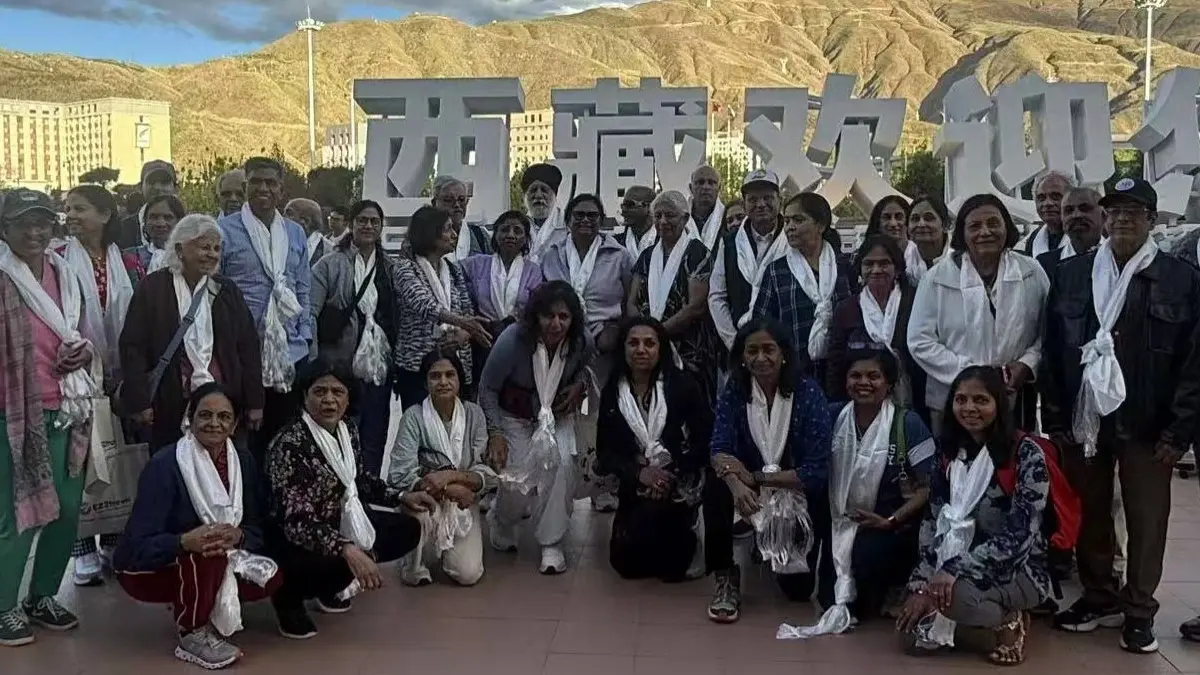
After landing at Gonggar airport (65 km from the city), your Tibetan guide greets you with a white scarf (a khata) and drives you to Lhasa along the Yarlung Tsangpo. Immigration and permit checks can be slow, so keep your passport and Tibet permit within reach.

This is the day when altitude arrives all at once. Walk slowly, skip the stairs, and do nothing but rest, eat lightly and drink water. A headache or poor sleep tonight is common, and resting oxygen readings in the high 80s to low 90s are normal at this height. 

Keep tonight's shower short and warm rather than hot. Tell your guide how you feel, because we adjust the next day accordingly. Drink water even if you feel fine!

Max Altitude: 3650m
Meals: Full Board
Accommodation: Hotel
Transportation: Himalayan Airlines
Duration: 1:30 hrs
Distance: kathmandu - Lhasa
Lhasa Airport
Lhasa Airport
Day 5

Walking: about 4 km (2.5 miles) | Duration: 6 hours with rests | Sleeping altitude: 3,650 m | Max altitude: 3,750 m | Difficulty: Easy to Moderate

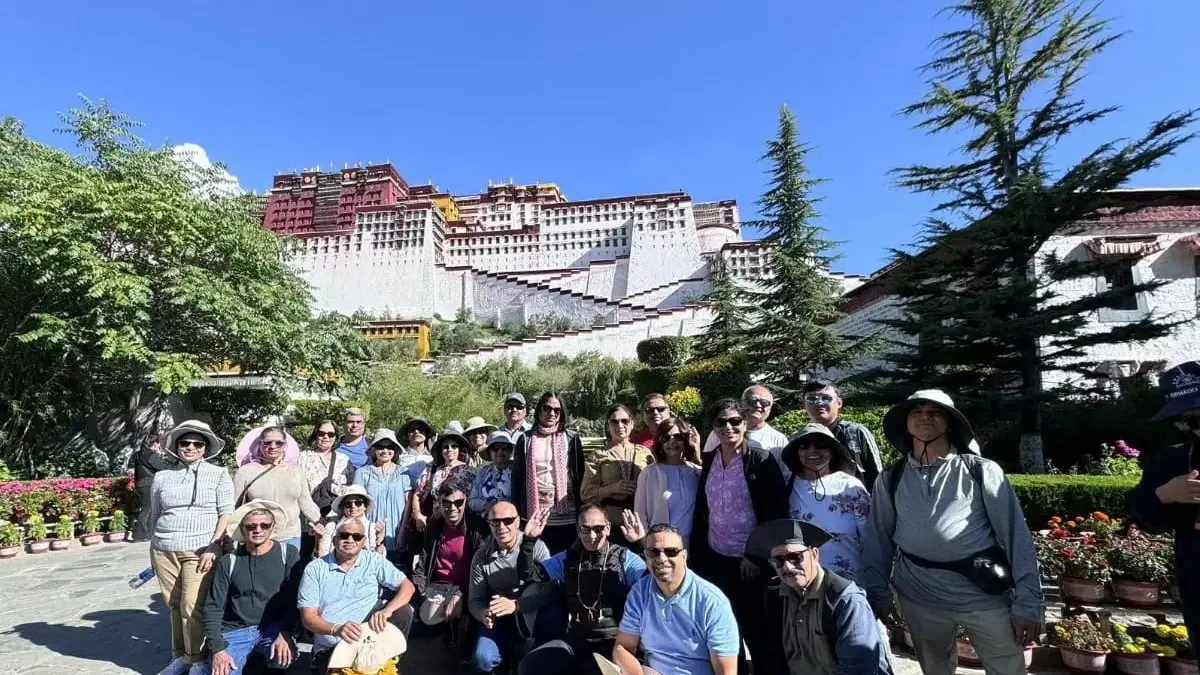
We reserve the Potala Palace for the morning, when you are freshest. Entry is timed, your passport is checked at the gate, and you get about 1 hour inside, so listen closely to your guide as you climb the long stairways.

Photography is restricted in most chambers. After lunch we walk to the Jokhang Temple, where pilgrims prostrate before the Jowo Shakyamuni statue, and then we circle the Barkhor, the lively old-city loop of market stalls and butter lamps.

Try a cup of sweet tea in a local teahouse and watch the pilgrims go by. Go at a pilgrim's pace. If your breath is short on the Potala steps, stop and look at the view. Nobody is timing you except the ticket gate! 

Back at the hotel by late afternoon, rest your legs and drink water before dinner. We keep the pace slow, because the second day is easier on rested legs.

Max Altitude: 3650m
Meals: Full Board
Accommodation: Hotel
Transportation: private vehicle
Duration: 6 hours
Distance: about 3 km (2 miles) plus 25 km (16 miles) by vehicle
Lhasa Potala Palace
Lhasa Potala Palace
Day 6

Sightseeing in Lhasa: Walking: about 3 km (2 miles) plus 25 km (17 miles) by vehicle | Duration: 6 hours | Sleeping altitude: 3,650 m | Max altitude: 3,700 m | Difficulty: Easy

Drepung Monastery, about 10 km west of the center, is the first stop, and its kitchens and assembly halls explain how a monastic city once worked.

Sera Monastery follows, and if the schedule lines up, you can watch young monks debate in the courtyard with sharp claps and loud challenges (the debates usually run in the afternoon, so we plan the order around them).

Norbulingka, the summer palace, is a calm place to end the day among gardens and shaded halls. In the evening, pack a small bag for the kora, change money, charge devices and repack the main bag.

Leave anything you will not need on the plateau in a spare bag and ask the hotel to hold it until we return on day 15. Your last real shower for a while is tonight, so take your time. Take small sips of water through the day instead of large gulps.

Max Altitude: 3,650 m
Meals: Full Board
Accommodation: Hotel
Transportation: private vehicle
Duration: 6 hours
Distance: about 3 km (2 miles) plus 25 km (17 miles) by vehicle
Norbulingka Palace
Norbulingka Palace
Day 7

Drive to Shigatse via Yamdrok Lake and Gyantse: Drive: 355 km (221 miles) | Duration: 7 to 8 hours | Sleeping altitude: 3,840 m | Max altitude: 5,045 m | Difficulty: Moderate

We cross the Yarlung Tsangpo and climb to Khamba La (4,794 m), where Yamdrok Lake appears in an unreal shade of blue. The road then winds beside the water before rising to Karo La (around 5,045 m), where a glacier hangs close to the highway. 
This is likely your first time above 5,000 m, so keep the stop short, breathe slowly and skip the sprint to the viewpoint. Vendors at the lake sometimes offer a photo with a yak or a Tibetan mastiff for a fee, which is entirely optional.
Lunch is in Gyantse, followed by a walk through the Kumbum at Pelkor Chode Monastery. Arrive in Shigatse by early evening and visit Tashilhunpo Monastery if the light and your energy allow. 
Drink water at every stop. The road twists a lot, so take a motion sickness tablet beforehand if you tend to feel queasy in the car.
 

Max Altitude: 3,840 m
Meals: Full Board
Accommodation: Hotel
Transportation: private vehicle
Duration: 7 to 8 hours
Distance: 355 km (221 miles)
On the way to Shigantse
Day 8

Drive to Saga:Drive: 495 km (308 miles) | Duration: 9 to 10 hours | Sleeping altitude: 4,640 m | Max altitude: 4,950 m | Difficulty: Moderate to Hard

This is the first long day. We leave early, follow the Yarlung Tsangpo valley to Lhatse for lunch, then join the G219 highway as it climbs into emptier country.

The road crosses passes near 4,950 m, and the settlements grow smaller each hour. Police check-posts appear regularly, so the driver stops, your guide hands over the permits and the group waits, which stretches the day.

Saga sits at 4,640 m, about 800 m higher than Shigatse, which is a bigger jump than we like. Eat a warm dinner, avoid alcohol and go to bed early. Ask your doctor before the trip about preventive medicine.

If you wake with a pounding headache, tell your guide at once, because the next morning's plan depends on it. Keep warm layers, snacks and a water bottle in the cabin with you, because the luggage stays packed away until Saga!

At Saga, our Nepali staff joins groups that have traveled from Lhasa. From this point onward, our team supports the group with meal preparation and practical arrangements for the more remote part of the pilgrimage.
Groups starting in Lhasa receive their equipment from our crew here. Before you leave Saga, buy 2 cans of oxygen as emergency backup for the kora trail.
Our own cooks specialize in pure vegetarian Indian food, including South Indian and Nepali dishes, so guests can enjoy familiar meals while traveling across the plateau.

Max Altitude: 4,640 m
Meals: Full Board
Accommodation: Hotel
Transportation: private vehicle
Duration: 9 to 10 hours
Distance: 495 km (308 miles)
Saga, Tibet
Saga, Tibet
Day 9

Drive to Lake Manasarovar: Drive: 560 km (348 miles) | Duration: 10 to 11 hours | Sleeping altitude: 4,590 m | Max altitude: 5,211 m | Difficulty: Hard

Leave Saga as early as you can manage. The route crosses Dzongba, stops for lunch in Paryang, then climbs over Mayum La (5,211 m), the highest road pass of the trip. 

Scan the plains for kiang (wild asses), gazelle and the occasional nomad camp with black yak-hair tents. After that, the plain opens up and the lake basin appears with Gurla Mandhata (7,694 m) behind it.

Late in the afternoon, you reach Manasarovar and the first glimpse of the water tends to quiet the whole vehicle. Check in at the guesthouse near the shore, wrap up warmly and expect a cold night with little hot water.

Eat what you can, even if your appetite is gone. Tomorrow is shorter, and we will be glad of the rest. Photo stops are frequent, but keep each one short, because the wind at the pass is sharp and the air is thin.
 

Max Altitude: 4,590 m
Meals: Full Board
Accommodation: Guesthouse
Transportation: private vehicle
Duration: 10 to 11 hours
Distance: 560 km (348 miles)
Mansarovar Lake
Mansarovar Lake
Day 10

Lake Manasarovar and Drive to Darchen: Drive: 40 km (25 miles) | Duration: 1 hour drive, plus 3 to 4 hours at the lake | Sleeping altitude: 4,670 m | Max altitude: 4,670 m | Difficulty: Easy to Moderate

Morning at the lake is when the water looks its best. Our team sets up the puja and homa on the shore with the puja materials we bring, and you offer your own gratitude to the Pandit ji.

Before the puja, you can take a warm shower in our shower tent. A dip in the lake is not allowed, but during the lake Parikrama by Eco-bus we find a corner where you can step in up to knee level, so keep a towel, dry socks and warm clothes ready.

We also visit Chiu Gompa for the view and leave time for quiet!

After lunch we drive to Darchen, the base of the kora, and check in. In the afternoon, we walk to Yama Dwar, the ritual gate near the start, and watch Kailash's south face change color as the sun drops. 

Your guide briefs you for the next 3 days, checks the yak bags and explains who carries what. Washing facilities are limited here, so wet wipes and a change of socks are worth keeping at the top of your bag.

Max Altitude: 4,670 m
Meals: Full Board
Accommodation: Hotel
Transportation: private vehicle
Duration: 1 hour drive, plus 3 to 4 hours at the lake
Distance: 40 km (25 miles)
Asthapad - Darchen
Asthapad - Darchen
Day 11

Start the Kora, Trek to Dirapuk: Drive: 6 km (4 miles) | Trek: 12 km (7 miles) | Duration: about 5 hours of walking | Sleeping altitude: 4,890 m | Max altitude: 4,890 m | Difficulty: Moderate

We drive 6 km to Yama Dwar in a deluxe vehicle and begin walking clockwise from the gate. Vehicles are not allowed beyond this point, so the whole way to Dirapuk is on foot.

The trail passes Tarboche, follows the Lha Chu valley and goes by Chuku Monastery and a series of prayer flags, with the west face of Kailash growing larger at each bend.

The net gain is only about 200 m, so this stretch is easier than it sounds, but altitude still drags every step. Keep a steady pace where you can still hold a conversation, and take a break every hour for water and a snack.

Arrive at Dirapuk by mid-afternoon, drink tea, and sit facing the north face while the light lasts. Pilgrims call this the most powerful view of the mountain. Sleep in your layers and keep your headlamp near the bed, since the toilet is outside.

Porters and yaks carry the heavy bags, but your daypack still needs water, a rain shell, gloves, sunscreen and your camera, so pack it with care!

Max Altitude: 4,890 m
Meals: Full Board
Accommodation: Guesthouse
Transportation: private vehicle
Duration: 5 hours of walking
Distance: 6 km (4 miles) | Trek: 12 km (7 miles)
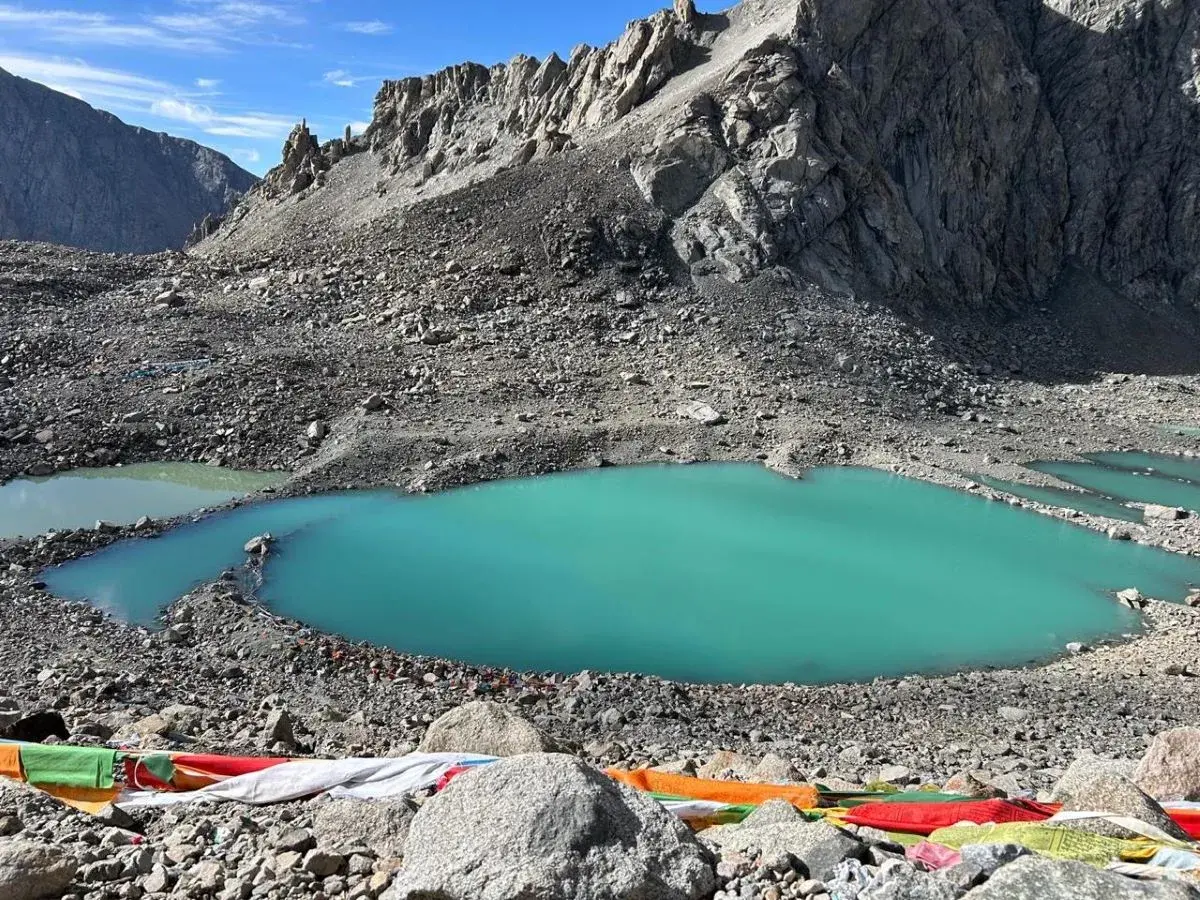
Sunrise on North Face from Dirapuk
Day 12

Cross Dolma La Pass, Trek to Zuthulpuk: Trek: 22 km (14 miles) | Duration: about 10 hours | Sleeping altitude: 4,790 m | Max altitude: 5,630 m | Difficulty: Hard

This is the hardest day. We start before sunrise and climb about 740 m over roughly 6 km to Dolma La (around 5,630 m), passing the symbolic cemetery of Shiva Tsal on the way.

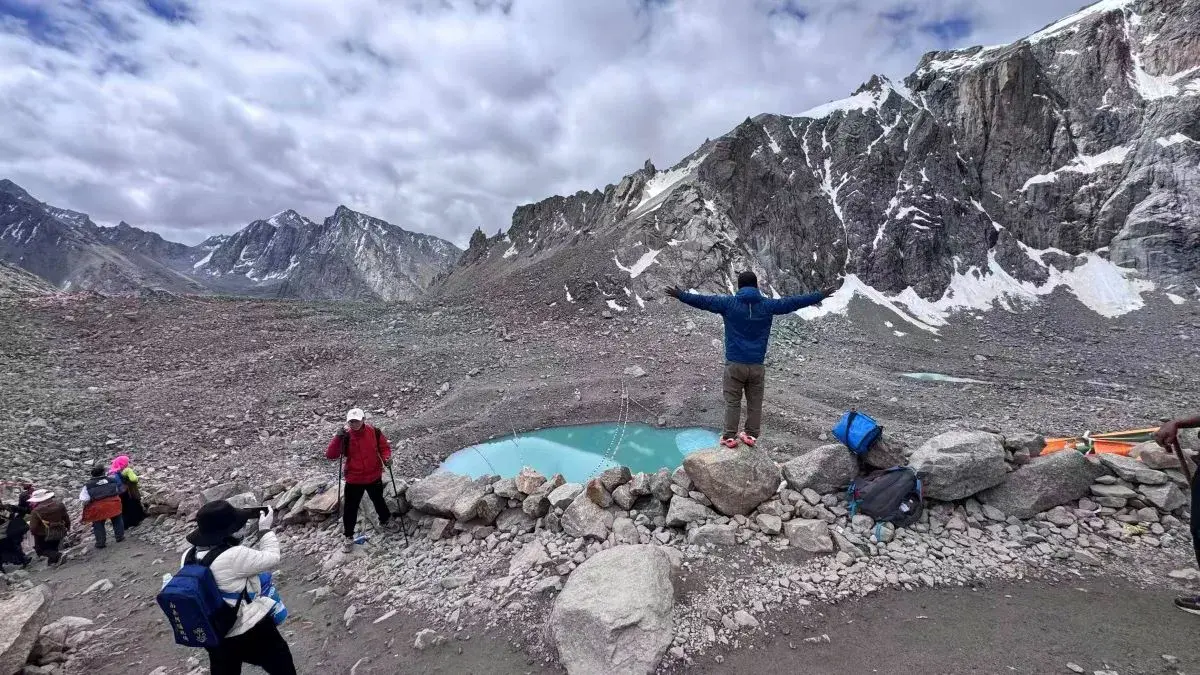
Take rests often, breathe in rhythm and let the pass come to you. Prayer flags mark the top, and the goddess Drolma is said to help pilgrims across. Below lies Gauri Kund, a small sacred lake, followed by a steep descent over loose rock where trekking poles earn their place.

From Gauri Kund, you can also rent a van to shorten the walk to Zuthulpuk, or continue to Darchen for a more comfortable stay (see the shorter options in the kora section for the costs).

Ponies are available for hire on request. Reach the pass by late morning, otherwise your guide may suggest turning around. 

Zuthulpuk and the Milarepa cave await at the end of a long afternoon, and a hot cup of tea there tastes better than it has any right to. Eat a proper breakfast before dawn even if you are not hungry, because this day burns more energy than you expect.

Max Altitude: 4,790 m
Meals: Full Board
Accommodation: Guesthouse
Transportation: private vehicle
Duration: about 10 hours
Distance: 22 km (14 miles)
Dolma La Pass Gaurikunda
Day 13

Finish the Kora and Drive Back to Saga: Trek: 12 km (7 miles) | Drive: 450 km (280 miles) | Duration: about 3 hours of walking, plus about 8 hours of driving | Sleeping altitude: 4,640 m | Max altitude: 5,211 m | Difficulty: Moderate to Hard

The final stretch brings you down from Zuthulpuk to near Darchen, where your vehicle meets you.

You have just completed the kora, and it is worth a minute of quiet before the road takes over. Celebrate with a short lunch, then start the long drive!

This is a long day, and we say that bluntly, with 450 km and about 8 hours of driving after a 3 hour walk. The route goes back through Darchen and along the lake, so you pass Manasarovar in the opposite direction with weary eyes.

If weather, road works or tired legs slow things down, we sleep at Paryang (4,550 m) instead of Saga, and your guide makes that call on the spot. Pack snacks, a neck pillow and patience. The kora is behind you, and every kilometer now lowers the altitude. 

If you hired a porter or pony, settle the payment and tip near Darchen, and ask your guide what is customary.

Max Altitude: 4,640 m
Meals: Full Board
Accommodation: Hotel
Transportation: private vehicle
Duration: 9 to 10 hours
Distance: 12 km (7 miles) walk, 450 km (280 miles)
On the way to Saga
On the way to Saga
Day 14

Drive to Shigatse: Drive: 495 km (308 miles) | Duration: 9 to 10 hours | Sleeping altitude: 3,840 m | Max altitude: 4,950 m | Difficulty: Moderate

Today you finally sleep lower. The drop of about 800 m between Saga and Shigatse brings comparatively thicker air, deeper sleep and a returning appetite, and most guests feel the difference by dinner.

The route repeats the drive to Saga in reverse, with a lunch break at Lhatse and a quick stop at passes for photos. Most of the group is quiet and happy on this day, replaying the kora in their heads and comparing blisters.

Arrive in Shigatse in the evening and enjoy a proper dinner with hot water in the bathroom. If energy allows, walk the quiet streets near the hotel, or simply collapse.

Take notes of anything you want to buy in Lhasa tomorrow, such as prayer flags, incense or woolen scarves. Check-posts appear again on this stretch, so keep your passport and permit papers in the day bag rather than in the luggage hold.
 

Max Altitude: 3,840 m
Meals: Full Board
Accommodation: Hotel
Transportation: private vehicle
Duration: 9 to 10 hours
Distance: 495 km (308 miles)
Shigatse City
Shigatse City
Day 15

Drive to Lhasa: Drive: 270 km (178 miles) | Duration: 5 to 6 hours | Sleeping altitude: 3,650 m | Max altitude: about 4,000 m | Difficulty: Easy to Moderate

The direct road back to Lhasa follows the Yarlung Tsangpo through broad farming valleys, and it is much gentler than the outbound drive via Yamdrok.

Barley fields, willow groves and small villages line the way, and the altitude stays around 4,000 m or below, so most guests sleep or catch up on photos. We stop at a village for tea and reach Lhasa by early afternoon!

Spend the rest of the day at your pace. Some guests rest, some walk the Barkhor one last time for gifts such as prayer flags, singing bowls and local tea.

In the evening, we share a farewell dinner with your guide and driver, and discuss tomorrow's flight. Keep your passport and Tibet permit in your day bag. Hand your laundry to the hotel if they offer a service, and recheck your luggage weight against the 20 kg limit for tomorrow's flight.
 

Max Altitude: 3,650 m
Meals: Full Board
Accommodation: Hotel
Transportation: private vehicle
Duration: 5 to 6 hours
Distance: 270 km (178 miles)
Lhasa, Potala Palace, Tibet
Day 16

Fly to Kathmandu: Flight: about 600 km (373 miles) | Duration: 1 hour 30 minutes, plus 1 hour by road | Sleeping altitude: 1,400 m | Max altitude: 3,650 m | Difficulty: Easy

Leave the hotel early for the 65 km drive to Gonggar airport, allowing time for security screening and the permit check at the counter. The flight lands in Kathmandu within 90 minutes, and many people notice how warm and thick the air feels after weeks on the plateau.

If the sky is clear, enjoy the Himalayan views during your flight. On arrival, our representative transfers you to your Hyatt Centric or Radisson hotel in Kathmandu. Your hotel stay is on a full-board basis again, with meals included in the package, giving you time to relax and recover after the pilgrimage.

Sleeping at 1,400 m after 12 nights above 3,600 m is a quiet luxury. If you plan to leave Kathmandu the next day, confirm your flight time tonight and ask us for the airport transfer time.

Max Altitude: 1,400m
Meals: Full Board
Accommodation: Hotel
Transportation: Flight
Duration: 1 hour 30 minutes, plus 1 hour by road
Distance: 600 km (373 miles)
Farewell in Kathmandu
Day 17

Fly Home: Transfer: 6 km (4 miles) | Duration: 30 to 45 minutes | Sleeping altitude: none, departure day | Max altitude: 1,400 m | Difficulty: Easy

After breakfast, we transfer you to Tribhuvan International Airport for your onward flight. Plan to arrive about 3 hours before an international departure, and keep your passport and boarding pass handy.

If your flight leaves in the afternoon, a slow breakfast and a last walk around Thamel or Boudhanath fits in easily, and we can store your bags at the hotel until the transfer. 
If you have time to spare, an extra night or two in Kathmandu, Pokhara or Chitwan makes a good cooldown, and we can arrange it. Rules on souvenirs such as antiques and wildlife products can be strict at customs, so ask before buying anything unusual in Lhasa.

Check that nothing is left in your hotel room, especially your sleeping bag liner. We hope the mountain stays with you for a long time. Safe travels, and send us a photo of Dolma La when you reach home.

Transportation: Private Car
Duration: 30 to 45 minutes
Distance: 6 km (4 miles)
Thank you, hope to see you again someday in the future

We have special offer for the families and group leaders, so if you are traveling with your loved ones or friends, relatives or leading a society and community trip from your area please contact us now! +977-98510-36844 (Ram Adhikari). 

Are you still confuse from where to start?
No worries - Our Team is ready to guide you!

Tour Route Map

Kathmandu Lhasa Kailash Overland Tour
Kathmandu Lhasa Kailash Overland Tour Map

Trip Cost Details

Cost Includes

  • Kathmandu international airport pick up and drop
  • Sightseeing tour of Pashupatinath Temple and other spiritual places
  • Original Travel Permits
  • Flight tickets: Kathmandu - Lhasa - Kathmandu (round trips)
  • Kathmandu to Lhasa by Himalayan Airline or available Airline
  • Lhasa (Gonggor airport pick up and drop)
  • Sightseeing tour of Lhasa including Potala Palace and Barkor Bazaar, Shigantse and Tashilimphu monastery
  • Standard Accommodation in Lhasa and Shigatse and best available hotels in Saga and Darchen During parikrama, basic guest houses (dormitories) will be provided
  • Tibet PSB Permits, Special Kailash Mansarovar Permit and Applicable Entrance Fees to above mentioned places
  • Bus dedicated for the group travel to Kailash tour/Yatra
  • Support truck for carry food- Kailash-equipment, Nepali staff
  • Kailash Mansarovar Permit
  • Sightseeing of Manasarovar Lake, Ashtapad, Yamadwar, Dirapuk, Dolma La Pass, Gauri Kunda and Zuthulphuk monastery)
  • Yak & Yak man for round Kora (Parikrama) Kailash Yatra/tour
  • Ground transportation in Tibet with heating & oxygen system
  • Everest Base Camp permits with Eco Bus tour
  • Nepali Guides and Tibetan Guides
  • Nepali team leader with fluent speaking English/Hindi language
  • Insured Chef/Cook who can prepare Indian-dishes as per your requirements
  • Insured Cook helper and full support Nepali staff (Sherpa/guides)
  • 3 Meals - Breakfast, Lunch, and Dinner ( Only Vegetarian) throughout the trip
  • Drinking Water (3 bottles per day per person)
  • Duffle bag (big bag for keeping personal clothes and equipment)
  • ENOUGH Oxygen cylinder in the Van for the entire of tour
  • Drive from Lhasa to Kailash and back to Lhasa by private Tourist Bus / Vans
  • Final transfers from Kathmandu hotel to International airport
  • Our service charge and government taxes

Cost Excludes

  • Personal Pony Charges (will cost about US$ 750 per pony and helper for three days)
  • Personal expenses like shopping, phone calls, extra drinks, laundry, yak etc.
  • Any additional expenses caused by reasons beyond our control such as evacuation, rescue, additional charges, losses due to natural calamities and unforeseen circumstances.
  • Tips to drivers and staff.
  • Extra cost of transportation, Porterage etc involved due landslides, snowfall.
  • Extra days stay at Kathmandu and other places.
  • Home to Kathmandu and Kathmandu to home flight fares.
  • Services other than specified.

Dates and Availability

If the below-set departure dates are not suitable for you, you may choose your own departure date. These types of departures are best suited for solo travelers, couples, families, and small groups.

Please call us on +977 98510 36844 to talk about your trip or chat with Ram Kumar on WhatsApp (Available 24hrs) for the best quote and detailed information.

Select Departure Dates
Minimum Group Size 17 devotees
Start Date
April 12, 2027
End Date
April 28, 2027
Status
Guaranteed
Price Per Person
US$3500
Full Moon Trip (May 20th)
Start Date
May 12, 2027
End Date
May 28, 2027
Status
Guaranteed
Price Per Person
US$3500
Minimum Group Size 17 devotees
Start Date
May 25, 2027
End Date
June 10, 2027
Status
Guaranteed
Price Per Person
US$3500
Full Moon Trip (June 18th)
Start Date
June 10, 2027
End Date
June 26, 2027
Status
Guaranteed
Price Per Person
US$3500
Minimum Group Size 17 devotees
Start Date
June 24, 2027
End Date
July 10, 2027
Status
Guaranteed
Price Per Person
US$3500
Full Moon Trip (July 18th)
Start Date
July 10, 2027
End Date
July 26, 2027
Status
Guaranteed
Price Per Person
US$3500
Minimum Group Size 17 devotees
Start Date
July 26, 2027
End Date
August 11, 2027
Status
Guaranteed
Price Per Person
US$3500
Full Moon Trip (Aug 17th)
Start Date
August 09, 2027
End Date
August 25, 2027
Status
Guaranteed
Price Per Person
US$3500
Minimum Group Size 17 devotees
Start Date
August 23, 2027
End Date
September 08, 2027
Status
Guaranteed
Price Per Person
US$3500
Full Moon Trip (Sept 15th)
Start Date
September 07, 2027
End Date
September 23, 2027
Status
Guaranteed
Price Per Person
US$3500
Minimum Group Size 17 devotees
Start Date
September 13, 2027
End Date
September 29, 2027
Status
Guaranteed
Price Per Person
US$3500
Can’t find your dates?
Get in touch to craft a bespoke itinerary or request an additional date to privatize.

Add-Ons and Trip Extension

Personalize your Everest Adventure with our curated add-on services for a safer, smoother and more memorable experience.

Muktinath Temple Trip

  • Day 01: Drive from Kathmandu to Pokhara on a deluxe tourist coach. Overnight at Temple Tree Resort and Resort on bed and breakfast basis. 
  • Day 02: Drive to airport, fly to Jomsom and drive to Muktinath and back to Jomsom by the jeeps. Overnight at standard hotel in Jomsom with full board. 
  • Day 03: Fly from Jomsom to Pokhara and drive to Temple Tree Resort and Spa on bed and breakfast basis. After refreshment, enjoy a full day sightseeing of Pokhara valley.
  • Day 04: Drive from Pokhara to Kathmandu. Overnight at Radisson with full board. 
  • Day 05: Final transfer to International airport and fly home.

The Trip Cost:

US$ 1150 Per person (minimum group size 5 people or above).

Trip Cost Includes: 

  • Kathmandu to Pokhara by a deluxe tourist bus transfer 
  • 2 Nights hotel in Temple Tree Resort and Spa with breakfast 
  • Pokhara to Jomsom and Jomsom to Pokhara flight tickets and Jomsom to Muktinath and back to Jomsom transportation by jeeps
  • Hotel in Jomsom with full board 
  • An English speaking tour guide
  • Annapurna conversation area project (ACAP) permits 
  • Sightseeing tour in Pokhara
  • Pokhara to Kathmandu on a deluxe tourist bus
  • 1 night accommodation at Radisson hotel with full board. 
  • Final transfer to airport – drop off. 

Trip Cost Excludes:

  • Lunch and Dinner in Pokhara 
  • Bottled drink. 
Muktinath Temple Trip
US$ 950 per person
Day 01: Drive from Kathmandu to Pokhara on a deluxe tourist coach. Overnight at Temple Tree Resort and Resort on bed and breakfast basis. Day 02: Drive to airport, fly to Jomsom and drive to Muktinath and back to Jomsom by the jeeps. Overnight at standard hotel in Jomsom with full board. Day 03: Fly from Jomsom to Pokhara and drive to Temple Tree Resort and Spa on bed and breakfast basis. After refreshment, enjoy a full day sightseeing of Pokhara valley.Day 04: Drive from Pokhara to Kathmandu. Overnight at Radisson with full board. Day 05: Final transfer to International airport and fly home.

Equipment List

When planning a Kailash Mansarovar tour, you might be wondering how to pack and what items to bring along.

First of all, what you should pack depends on how you are traveling—whether by road, air, or helicopter—as well as the duration of your trip.

It also depends on the month in which you plan to travel. Most importantly, keep in mind that the region you are visiting is at a very high altitude, strong winds, low temperatures, and challenging, remote terrain.

So that, you must pack your clothing and other essentials accordingly.

  • Sufficient warm clothing including warm down jacket for Kailash tour.
  • Wool / Thermo cot undergarments, wind and water proof jacket
  • Woolen gloves, Woolen socks (minimum 4 pairs), hand clove
  • T-Shirt, long shirt and pants which is easier to be while doing trekking
    • Hiking shoes good for walking 3 days Kailash Kora/trekking
    • Umbrella, walking stick, Sandal for use evening and morning
    • UV protection sunglass
    • Thermos for hotel water (1 Liter)
    • Walking poles (You can buy walking poles before Parikarma starting point - Darchen)
    • Small flashlight
    • Camera and its battery with charger
    • Mobile and charges
    • Adapter for electricity charging
    • Sun cream
    • Lip care
    • Skin moisturizer
    • Hand sanitizer
    • Toothbrush and paste
    • Wet tissue
    • Toilet paper
    • Soap
    • Bathing Shampoo
    • 1 pair of hiking pants
    • 1 pair of warm trousers
    • 1 Pair of normal pants
    • 1 Pair down jacket
    • 2 Pairs of T-shirts
    • 1 Pair warm inner thermal (up and down)
    • 1 Pair a light warm jacket or sweater
    • 1 Pair of warm windproof trousers and a Jacket  
    • Warm cap to cover your head and ears
    • Muff to cover your nose, neck, and mouth
    • One pair of warm gloves
    • 3 Pairs of warm shocks
    • 2 pairs of light shocks
    • Small light towel
    • Your regular medicine if there is any
    • Medicines for altitude sickness (Diomox, Zolamide)
    • Tablet for headache, fever, and body pain Tablet for diarrhea
    • Antibiotic powder/ ointment or liquid to clean in case of cut and blister
    • Anti-vomiting tablet
    • Move ointment or spray
    • Bandage and Zinc oxide tape for any cracked skin or small cuts
    • Original passport (6+ months validity)
    • Nepal visa
    • Chinese Group Visa
    • Tibet Travel Permit
    • Travel insurance certificate
    • Passport photos (2 copies)
    • Emergency contact card
    • Rudraksha Mala (108 beads)
    • Small Shiva linga or deity image
    • Sacred ash (vibhuti) or sindoor
    • Personal offerings for Mansarovar
    • Items to release at Dolma La
    • Prayer beads / rosary
    • Small prayer book or scripture

    Food Iteam

    • Chocolate
    • Biscuits or cookies
    • Energy bar
    • Dry fruits

    Essential Information

    Kailash Tour from Nepal for Indian Pilgrims: Private Tour or MEA Yatra?

    Indian travelers have 2 ways to reach Kailash, and they are quite different. The first is the Kailash Mansarovar Yatra run by India's Ministry of External Affairs. 

    In 2026, it operated from June to August in 20 batches of 50 pilgrims, a total of 1,000 yatris selected by a computerized draw, using the Lipulekh Pass in Uttarakhand and Nathu La in Sikkim. 

    Estimated costs were around INR 2.09 lakh via Lipulekh and INR 3.31 lakh via Nathu La, and applicants had to be between 18 and 70 years old!

    The second is a private tour through Nepal. There is no draw, dates are flexible, and far more people can go. Reports in 2026 suggested about 25,000 Indian pilgrims travel to Kailash through Nepal on private packages each year, with China raising the cap for Indians entering from Nepal from 20,000 in 2025 to 24,000 in 2026.

    The catch is paperwork. In late June 2026, around 52 Indian pilgrims were stranded in Kathmandu because their operators had not arranged valid Chinese visas and Tibet permits, and India's Ministry of External Affairs issued an advisory the same week. 

    Indian passport holders are classified by Chinese authorities as pilgrims, must hold a Chinese visa issued in New Delhi before they leave India, and should never leave home on a promise that the visa will be sorted out in Kathmandu.

    So what should you ask us? Ask for the visa route in writing, the names of the hotels, the permit timeline and the plan if the road is closed. Choose one that is registered. 

    This is the part of the planning where a few extra questions save a whole trip, and it is why we start Indian departures earlier than any others!

    Travel Insurance and Emergency Support

    Insurance is the one item we ask every guest to arrange before booking flights. Standard holiday policies often stop covering medical costs at 3,000 to 4,000 m, which means they stop well before Dirapuk. 

    Ask your provider for a policy that covers trekking to at least 5,700 m, emergency evacuation and medical treatment in China, and keep the policy number and emergency phone line on paper in your daypack. A scan on your phone is useless if there is no signal!

    Cancellation cover matters this year too. The August 2026 flood showed how quickly a road or border can close, and policies differ on whether they pay for natural disasters, airline schedule changes or missed connections. Read the exclusions before you pay, and keep receipts for every flight and hotel.

    On the plateau itself, the usual response to serious altitude illness is descent by vehicle, with oxygen if needed. Lhasa has major hospitals, while Darchen and Burang have small clinics with limited equipment. 

    An evacuation from the kora to Lhasa by road takes more than a day, so the earlier you report symptoms, the more options your guide has. Do not count on helicopter rescue in western Tibet, because it is rarely available and weather-dependent.

    Our team in Kathmandu stays in contact with the Tibetan guide throughout the tour. Share your emergency contact, blood group if known, allergies and current medicines with your guide on day 1. Hopefully you never need any of it. If you do, it saves hours!

    Money, Internet and Phone Signal on the Plateau

    Carry Chinese yuan (RMB). Bank of China branches in Lhasa exchange US dollars, and ATMs in Lhasa and Shigatse accept some international cards, although they can fail without warning. 

    From Saga onward, assume cash only. Most small purchases at Darchen, Dirapuk and Zuthulpuk are paid in cash, and you will want small notes for tea, snacks, hot water and tips. 

    Foreign cards can now link to WeChat Pay and Alipay, which helps in cities but not in remote guesthouses.

    Internet is the next surprise! Hotel Wi-Fi in Lhasa and Shigatse is decent, but Google services, WhatsApp, Instagram and Facebook are blocked on local networks. 

    An international eSIM that routes traffic through your home network usually works, while Nepali and Indian SIM roaming is unreliable in Tibet. Download offline maps, boarding passes and important documents before you land.

    Mobile coverage follows the highway but disappears in valleys and on the kora. Dirapuk and Zuthulpuk have no usable signal. Tell family beforehand that you will be offline for 3 days, and share your guide's contact details if needed. 

    For power, bring a 20,000 mAh power bank and keep devices inside your jacket at night, because cold drains batteries quickly. Chinese sockets accept Type A, C and I plugs at 220 V, so a universal adapter helps.

    Etiquette and Rules in Tibet

    Respect is more than courtesy here! It is part of the pilgrimage. Here are some handy tips:

    Walk clockwise around stupas, chortens, mani walls and monasteries, since this is the direction of Buddhist and Hindu circumambulation. Bon followers go counterclockwise, so you will meet them, and neither group needs to give way. 

    Remove your hat and shoes before entering chapels, and avoid pointing your feet toward altars.

    Ask before photographing people, and know that many monastery halls forbid photos altogether or charge a fee. 

    Do not touch prayer flags, prayer stones or the ground around Tarboche flagpole. 

    Do not attempt to climb any part of Kailash.

    Do not wash with soap in lakes or streams, and carry every piece of litter out with you.

    Political topics are best avoided. Do not carry or display political materials, and expect bag checks at checkpoints.

    Drones are heavily restricted across Tibet, so leave yours at home unless your guide has confirmed permission in writing.

    Pilgrims who prostrate along the road deserve space. Do not step over them or block their path, and never take their photo without a gesture of permission. 

    Finally, keep your voice low at the lake. For many people it is the holiest water they will ever touch, and the quiet is part of why they came!

      Planning Timeline: From First Idea to Boarding Pass

      Most guests ask when they should start. The honest answer is earlier than you think. Here is the order that works:

      When?What to do?Why?
      At least 3 weeks before traveling to KathmanduUS and South African passport holders should arrange their Chinese visa according to the applicable procedureThese nationalities need additional advance planning
      At least 15 days before the planned travel dateIndian passport holders must provide their original passport for the Chinese Group Visa application in DelhiThe visa must be arranged before traveling to Nepal
      Before arriving in KathmanduTravelers who need an individual China L visa must apply for it themselvesThe individual visa must be obtained before arrival in Kathmandu
      Before departureConfirm your visa requirements and Tibet permit arrangements with usRequirements depend on nationality and current rules

      Starting early also gives you more choice of flights, rooms and guides, which is worth more than most discounts!

      Save US$250 pp
      Price Per Person
      US$3500
      US$3750
      • TravellersPrice/ Person
      • 17-20 people
        US$3500
      • 21-30 people
        US$3450
      • 31-40 people
        US$3400
      • 41-50 people
        US$3300

      The above group discounts are for private groups traveling with friends and family. If you are traveling alone, please contact.

       WHY US?

      • Bespoke Itinerary - Reasonable Price
      • Experienced Guides - Dedicated Service
      • Trained Cooks - Delicious Food
      Book Now
      Ram Kumar Adhikari
      Ram Kumar Adhikari