
Kailash Overland Tour via Kodari New

158 Reviews in TripAdvisor
15 Reviews in Google
6 Reviews in Trustpilot

On this 14-day Kailash Overland Tour via Kodari Nyalam Border, the Alpine Eco Trek team drives you from Kathmandu across the Kodari border to Saga. You’ll pray on the shore of Lake Manasarovar, then walk the 52 km kora around Mount Kailash. In 14 days, you gain 2,400 m in just one day, cross Dolma La at 5,630 m, and return along the same road. Having guided pilgrims here since 1997, the team brings its own cooks, oxygen on every bus, and daily health checks, so you reach the foot of Kailash with enough energy to pray.

Trip Facts
Duration
14 Days
Destination
Tibet
Grade
Strenuous
Maximum Altitude
5638m /18,500ft
Group Size
Min 1 to Max 75 people
Starts / Ends
Kathmandu

Trip Highlights

  • Cross the Sino-Nepal Friendship Bridge at Kodari and climb to Nyalam (3,750 m) in one long day.
  • Visit Pashupatinath, Guhyeshwari Shakti Peeth and Doleshwar Mahadev during 2 days of sightseeing in Kathmandu.
  • Rest a full day in Saga (4,640 m) before the long drive to Lake Manasarovar.
  • Cross Mayum La (5,211 m), the highest road pass of the trip, on the way to the lake.
  • Join a puja and hawan on the Manasarovar shore (4,590 m) after a warm shower in our tent.
  • Walk the 52 km Kailash kora in 3 days through Yama Dwar, Dirapuk and Zuthulpuk.
  • Cross Dolma La at about 5,630 m, the highest point of the journey.
  • Stay in rooms with attached bathrooms and an oxygen setup at Nyalam, Saga and Darchen.
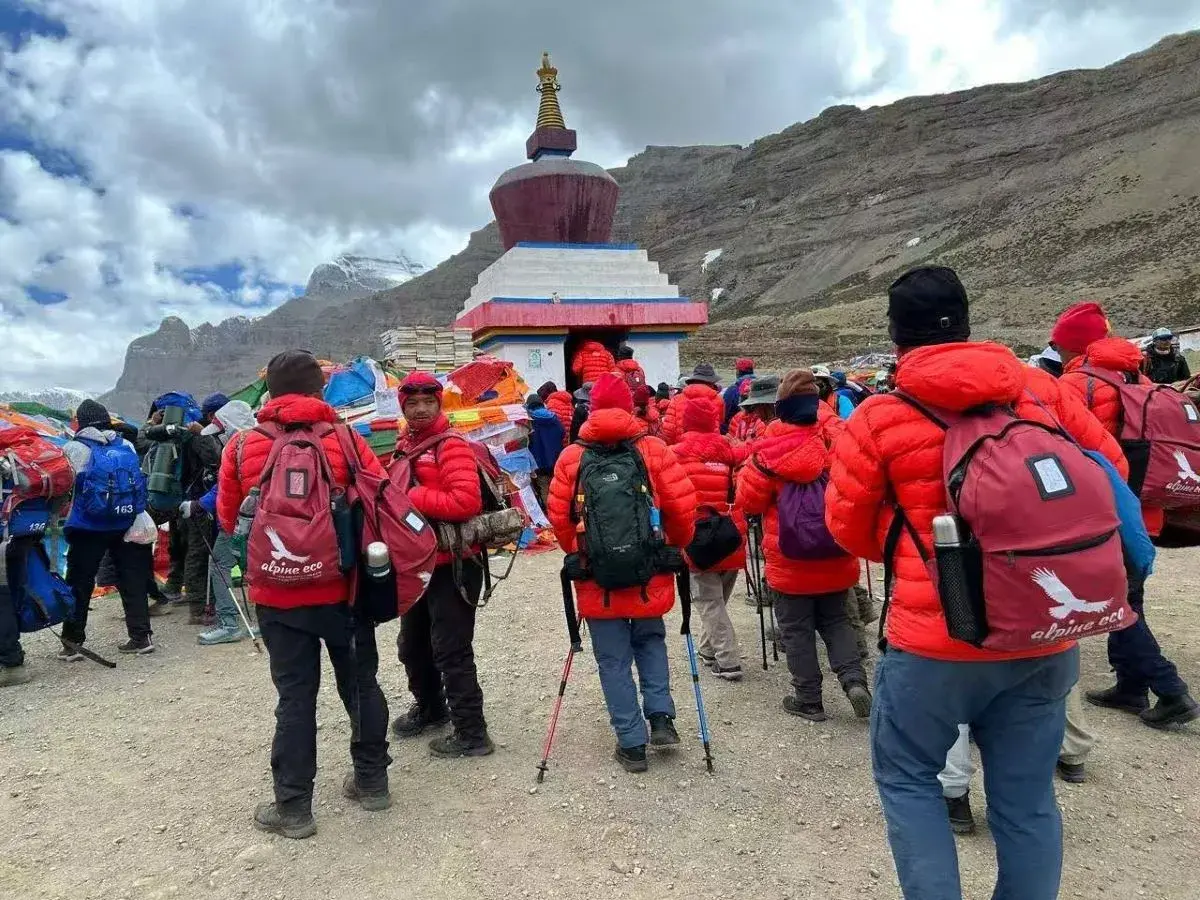
  • Receive a down jacket, warm hat, duffel bag, kora trekking bag and rain poncho in Kathmandu.
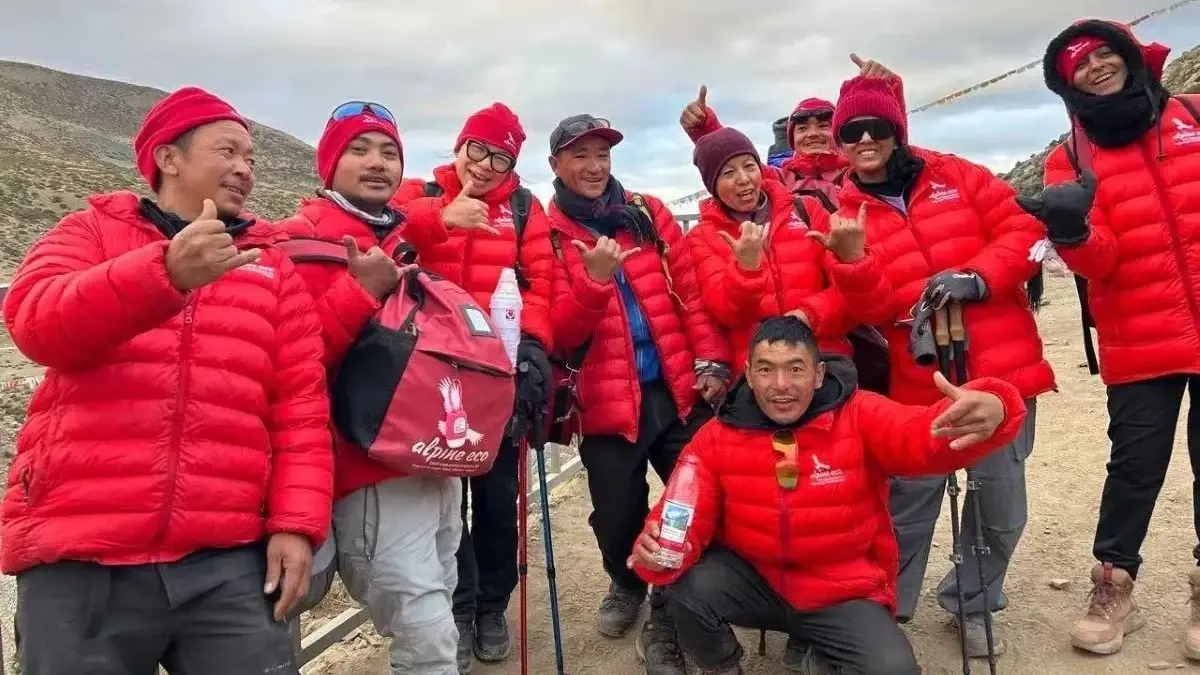
  • Travel with a Nepali team leader, our own cooks and Tibetan guides, with pure vegetarian meals in Tibet.
  • Ride with oxygen on every bus, while our team checks your pulse and oxygen level daily.

Trip Overview

If you are comparing ways to reach Mount Kailash from Nepal, your first question is rarely about the mountain. It is usually about the border!

The Kailash Overland Tour via Kodari Nyalam Border answers that question with the Araniko Highway, the shortest road from Kathmandu into Tibet, followed by a long drive west across the plateau to Saga, Lake Manasarovar and Darchen.

This 14-day package from Alpine Eco Trek keeps the plan simple. You spend 2 days in Kathmandu, cross at Kodari on day 4 and rest in Saga on day 6. Dirapuk, with the first close look at the north face of Kailash, comes on day 9, and the 3-day kora follows. After that, a long road brings you back to Kathmandu on day 13!

Now the honest part: the route looks short on a map, but it depends on a mountain highway that the monsoon likes to close, and the border itself has been in the news since August 2026! So, this guide gives you the route, the altitude numbers, the paperwork, the costs, and the current border position in the order you will need them.

Read it before you pay a deposit, and keep the visa, permit and altitude sections open afterwards. Acting early on those three can save you a week of delay!

Why the Kodari Nyalam Route Makes Sense for 2027?

The Kodari Nyalam route is the shortest road journey from Kathmandu to Mount Kailash, and it puts you in Saga after just 2 driving days.

Kodari sits about 125 km from Kathmandu on the Araniko Highway. On the far side of the Friendship Bridge, the Chinese town of Zhangmu (Dram) waits at 2,300 m, and Nyalam lies another 30 km higher.

Tibet reopened this crossing to foreign tourists in 2023, after it stayed shut for years following the 2015 earthquake. That history explains why the border still reacts to every landslide and every policy change.

So, who should choose it? Our Alpine Eco Trek team suggests it for pilgrims who have about 2 weeks, prefer to travel by road and can handle a fast gain in altitude. For many Indian and Nepali pilgrims, the appeal is also practical, because the tour starts and ends in Kathmandu and you never need an internal flight.

Alpine Eco Trek also runs two other ways to Kailash for people who cannot take the fast climb. The Kathmandu Lhasa program flies you into Lhasa first and climbs more slowly, while the Simikot Kailash helicopter tour saves days but climbs even faster.

The Kerung route through Rasuwagadhi is not an option at the moment. The flood of 26 August 2026 destroyed the border post and washed out long stretches of the road, and as far as we know, nobody has announced a date for tourist traffic.

In practice, that makes Kodari the working road into Tibet from Kathmandu, with the weak points we explain next!

The Kodari Border in 2026: How We Plan Around It

The Kodari crossing between Nepal and Tibet can be unpredictable. Landslides on the Araniko Highway, monsoon rain and policy decisions on either side can close it at short notice, sometimes for days and sometimes for weeks. That is why we plan around the border instead of simply hoping it stays open.

Our Kailash Tour Trek team confirms the routing 45 to 60 days before every departure, and we ask the Tibetan side for the current status before we send permit files.

If Kodari is not workable, we move the group to our flight-in program through Lhasa rather than gamble with your dates. Please ask us for the latest position in writing before you pay a deposit!

Also, add 2 spare days after the program, because a landslide on the Araniko Highway can delay your return to Kathmandu.

Moreover, buy travel insurance that covers trip interruption and natural disasters, and read the exclusions before you pay!

Kathmandu Before Tibet: Why Two Days of Temples Matter?

Our standard departures include 2 days of sightseeing in Kathmandu, and we suggest keeping both. Most of the places you visit connect to Shiva or Shakti, the same tradition that leads you to Kailash.

However, groups that are short on time can cut this to 1 day, but 2 days give your body a gentle start at 1,350 m before the climb begins!

Day 2 covers Pashupatinath, Guhyeshwari Shakti Peeth, Budhanilkantha and Swayambhunath.

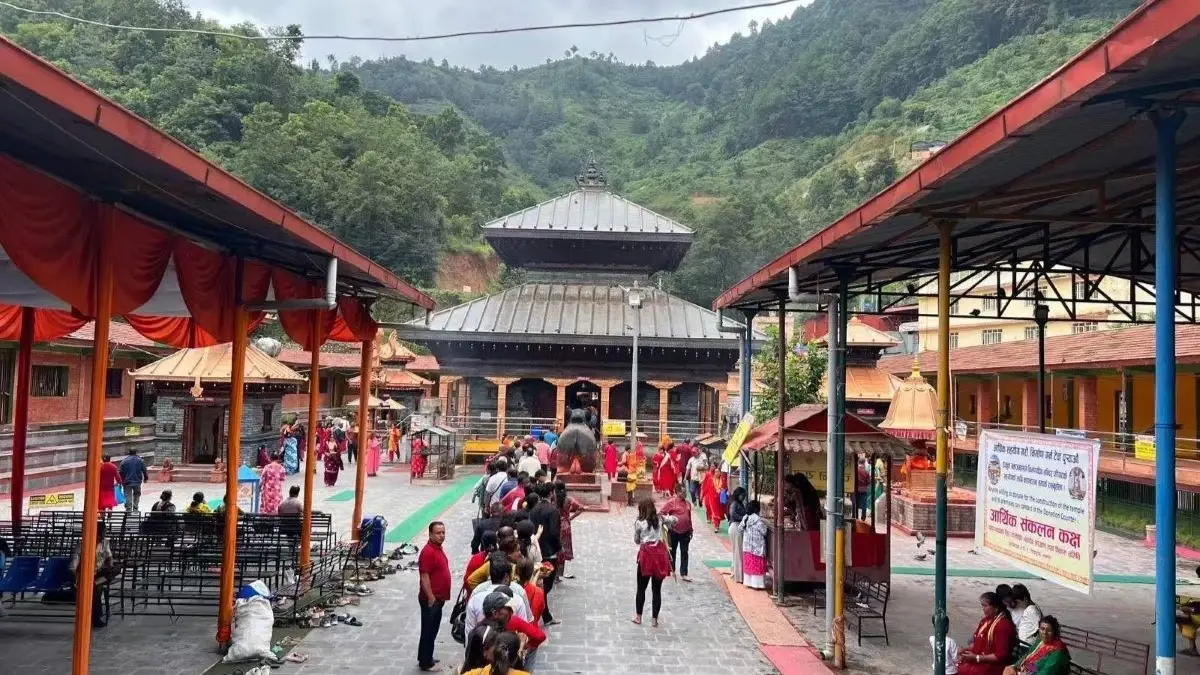
Well, Pashupatinath is the great Shiva temple of Nepal, on the Bagmati River. Only Hindus enter the main sanctum, but everyone can watch the ghats and the evening rituals from the opposite bank.

Guhyeshwari, close by, is one of the most respected Shakti shrines in the valley, and Budhanilkantha holds a large reclining Vishnu in a pool at the northern edge of the valley.

Swayambhunath ends the day on a hilltop with a long view of the city. You can opt for kora in and around the main stupa or the dedicated Parkirama route lower down the hill (if you have got time).

Day 3 goes further out. Dakshinkali, south of the city, is the main temple of the goddess Kali and gets crowded on Tuesdays and Saturdays.

The Kailashnath Mahadev statue at Sanga is among the tallest Shiva statues in the world, and Doleshwar Mahadev near Bhaktapur is where many devotees believe the head of Kedarnath is worshiped.

We close at Boudhanath, where Tibetan families walk around the stupa clockwise. Join one round with them, because the slow, even pace is exactly what the kora asks of you.

Your guide times each visit to avoid the worst crowds. Meanwhile, our team uses these 2 days to check passport copies, hand over your equipment, and start your daily oximeter checks.

Crossing at Kodari: The Friendship Bridge, Zhangmu and the Climb to Nyalam

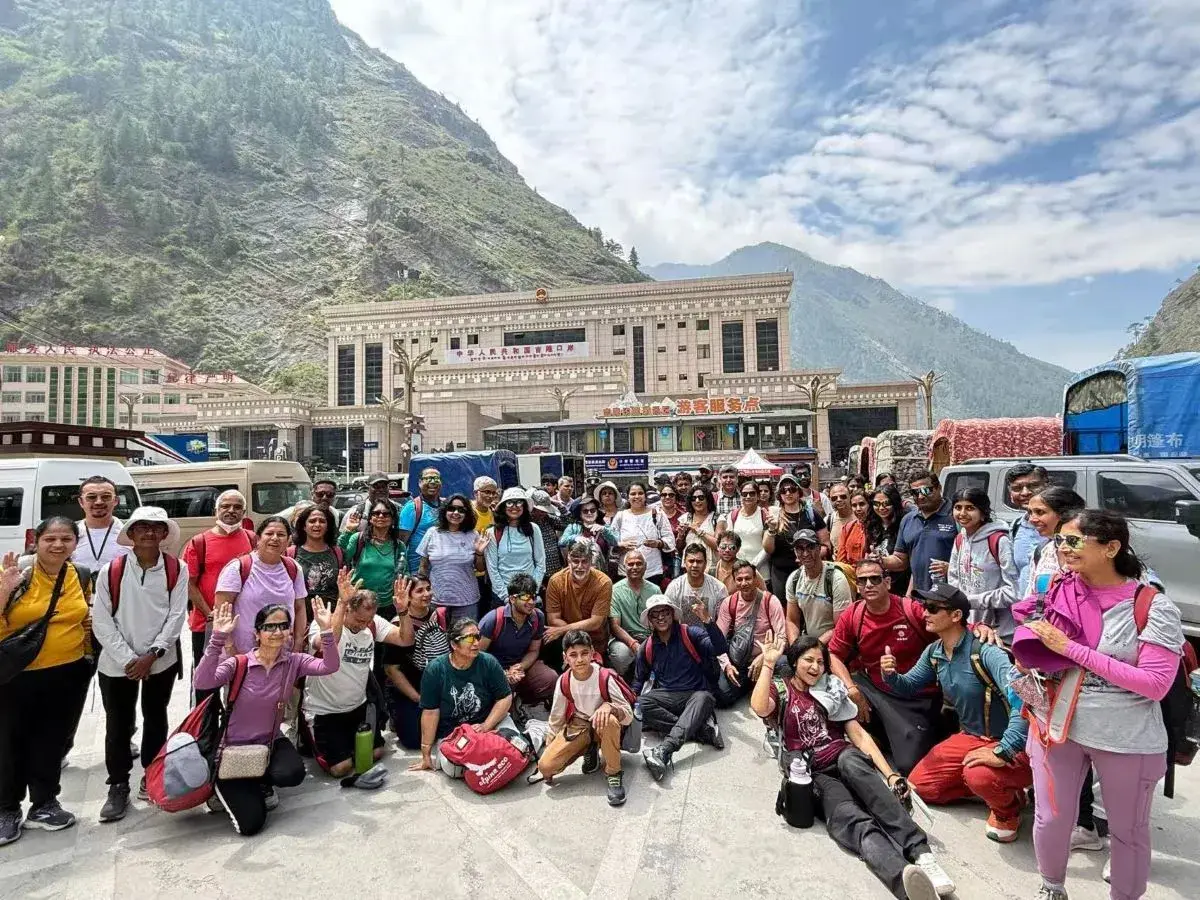
Day 4 is the crossing day, and it is the busiest day of the first week. You drive about 125 km from Kathmandu to Kodari, clear Nepali exit formalities and cross the Sino-Nepal Friendship Bridge, usually on foot. 

A Tibetan guide and driver meet you on the Chinese side, where immigration and customs checks take place at Zhangmu. Bags may be opened, and books and phones may be looked at. On a normal day, the whole process takes 2 to 3 hours.

Keep your passport, visa and Tibet Travel Permit copy where you can reach them in seconds. Also keep a warm layer in your day bag, because the weather changes fast above Zhangmu. 

Time changes too, since Tibet follows Beijing time, which runs 2 hours 15 minutes ahead of Nepal.

The 30 km road from Zhangmu to Nyalam climbs from 2,300 m to 3,750 m through wet forest, waterfalls and narrow gorges before the landscape turns dry and open. 

Rock falls happen here, mostly in the monsoon, so the driver may stop for road crews. Nyalam, an old trading town, is where you sleep.

We will be direct about what this day does to your body. You start at 1,350 m in the morning and end at 3,750 m the same evening, a gain of 2,400 m. Mountain medicine guidelines advise no more than 500 m a day in sleeping altitude above 3,000 m, so walk slowly in Nyalam, drink water, skip alcohol and tell your guide about any headache. 

At least the rooms help, since Alpine Eco Trek uses Nyalam hotels with an attached bathroom and an oxygen setup in each room!

Across Western Tibet: Nyalam to Saga and the Long Road to the Lake

After Nyalam, the tour turns west, and the plateau stops feeling like a place you pass through. 

Day 5 covers about 230 km to Saga in 5 to 7 hours, depending on check-posts. Saga stands at 4,640 m beside the Yarlung Tsangpo, the river that becomes the Brahmaputra further downstream.

It is a plain town with a hotel, a few shops and a police post, and it is where the remote part of the journey really begins.

Day 6 is a rest day here, and we suggest treating it seriously! You can walk gently around the Saga valley, but the real job is to sit, eat, drink and sleep. Resist the urge to climb the nearest hill for a photograph.

Day 7 is the long one. The road runs about 450 km through Dzongba and Paryang to Lake Manasarovar, and it takes 8 to 10 hours with stops. 

You cross Mayum La at 5,211 m, the highest road pass of the trip, and the plains around Paryang are home to kiang (Tibetan wild ass), gazelle and nomad tents. Gurla Mandhata (7,694 m) appears as you near the lake basin.

Lunch stops are simple roadside restaurants, so carry snacks. Oxygen travels on board every vehicle, and our team keeps checking pulse and oxygen levels each day. Keep a small day bag within reach, because digging through luggage in a moving vehicle is a bad idea.

Lake Manasarovar: Puja, Hawan and the Rules at the Water

Lake Manasarovar lies at 4,590 m and is sacred to Hindus, Buddhists, Jains and followers of Bon. 

Hindus say Brahma created it from his mind, which is how it earned the name lake of the mind. On a good morning, the water shifts between turquoise and deep blue, with Gurla Mandhata standing behind it.

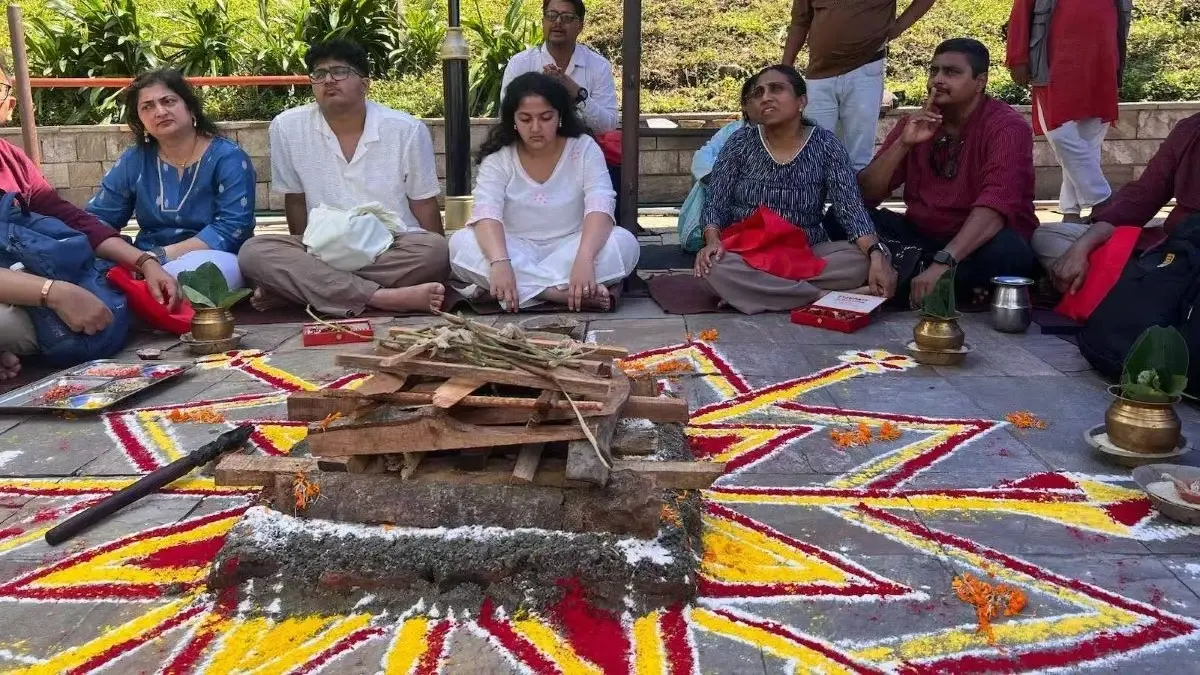
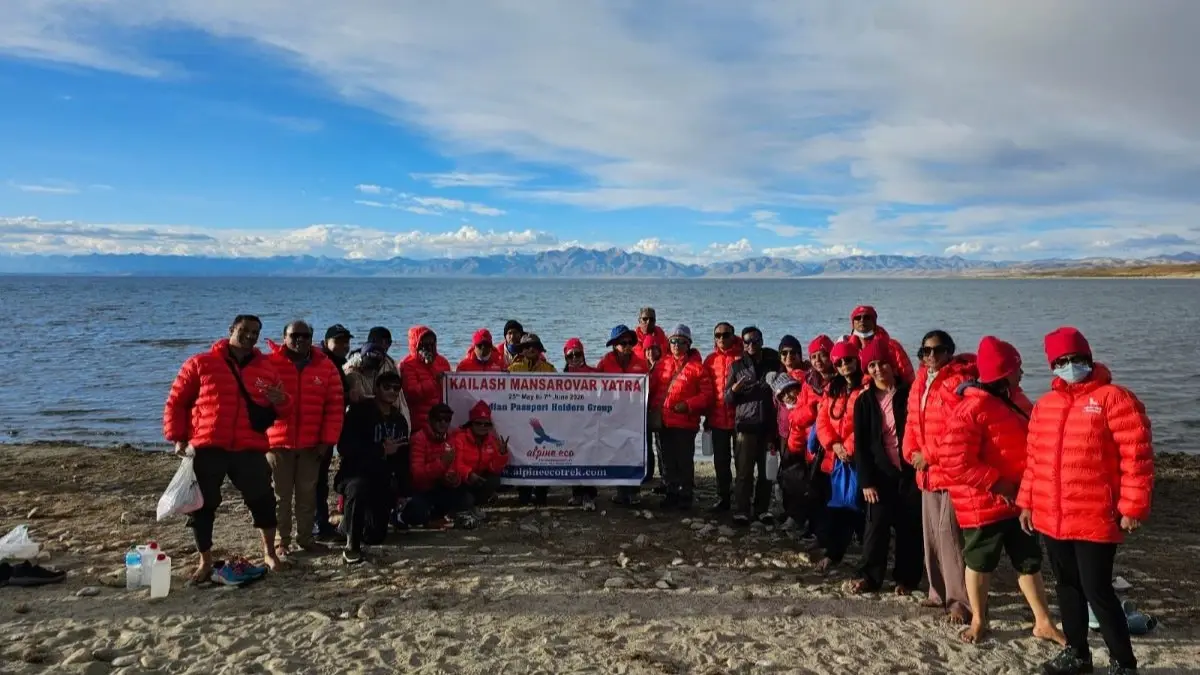
On day 8, Alpine Eco Trek arranges a puja and hawan on the shore. We bring the puja materials and find a suitable place for the ritual, and you offer your own gratitude (dakshina) to Pandit ji. 

Before you sit for the puja, our team sets up a shower tent and heats water, so you can wash properly in the cold. That small detail matters more than it sounds, because there are no attached bathrooms at the lake.

Note that a dip in the lake is not allowed. Instead, our guide finds a corner where you can step in up to knee level during the lake parikrama by eco-bus, which covers about 90 km of shoreline. 

Midday is the most comfortable time, so keep a towel and dry socks ready. Never drink the water untreated, even if you hold it sacred. Carry a small bottle for holy water to take home, and let your guide show you a clean spot.

Rakshas Tal, the saltwater lake to the west, connects to Manasarovar through a narrow channel, and Chiu Gompa, a small monastery on a rock, gives the best view over the water. 

You sleep in a basic guesthouse near the shore with shared rooms. If you want more comfort, the 5-star Mansarovar Hot Springs Hotel stands at the lake, and a double room costs US$ 250 per night. That upgrade is an extra cost, so contact us or the hotel directly if you are interested!

Darchen, Yama Dwar and Your First Look at Kailash

Darchen, at 4,670 m, is the base town of the kora. It is plain, with guesthouses, a few shops and a police checkpoint, yet it is where Tibetan, Indian and Nepali pilgrims meet, and the evening mood is warm. You sleep here on day 8 in a hotel with an attached bathroom and an oxygen setup in the room.

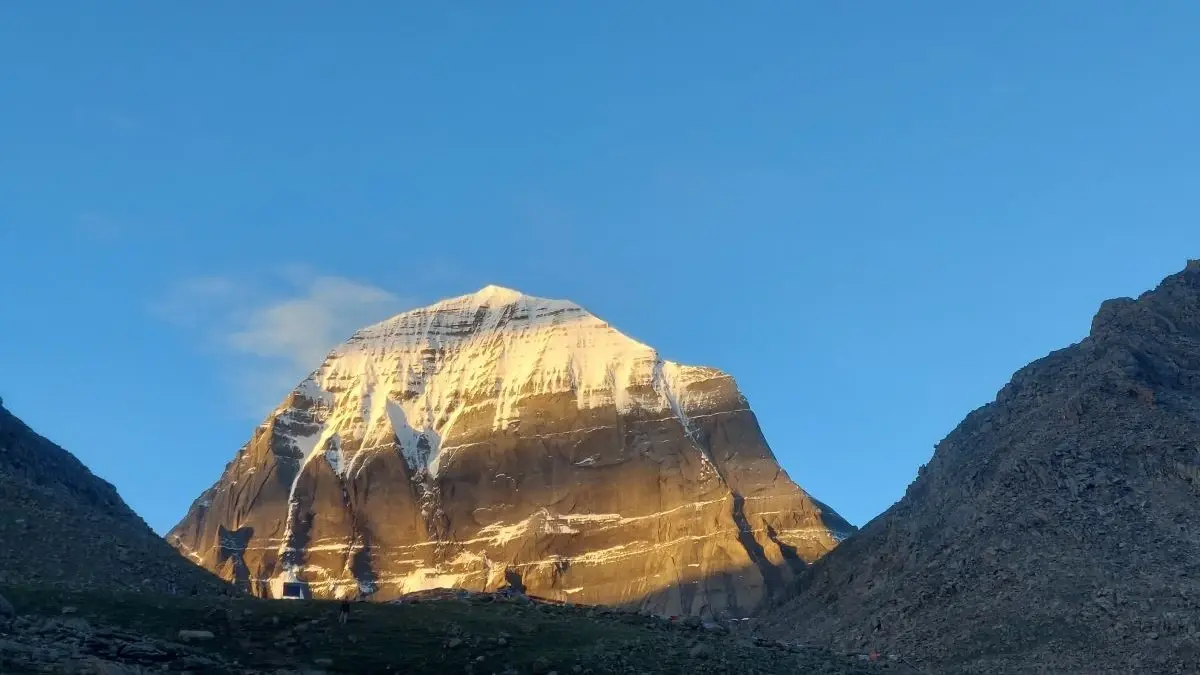
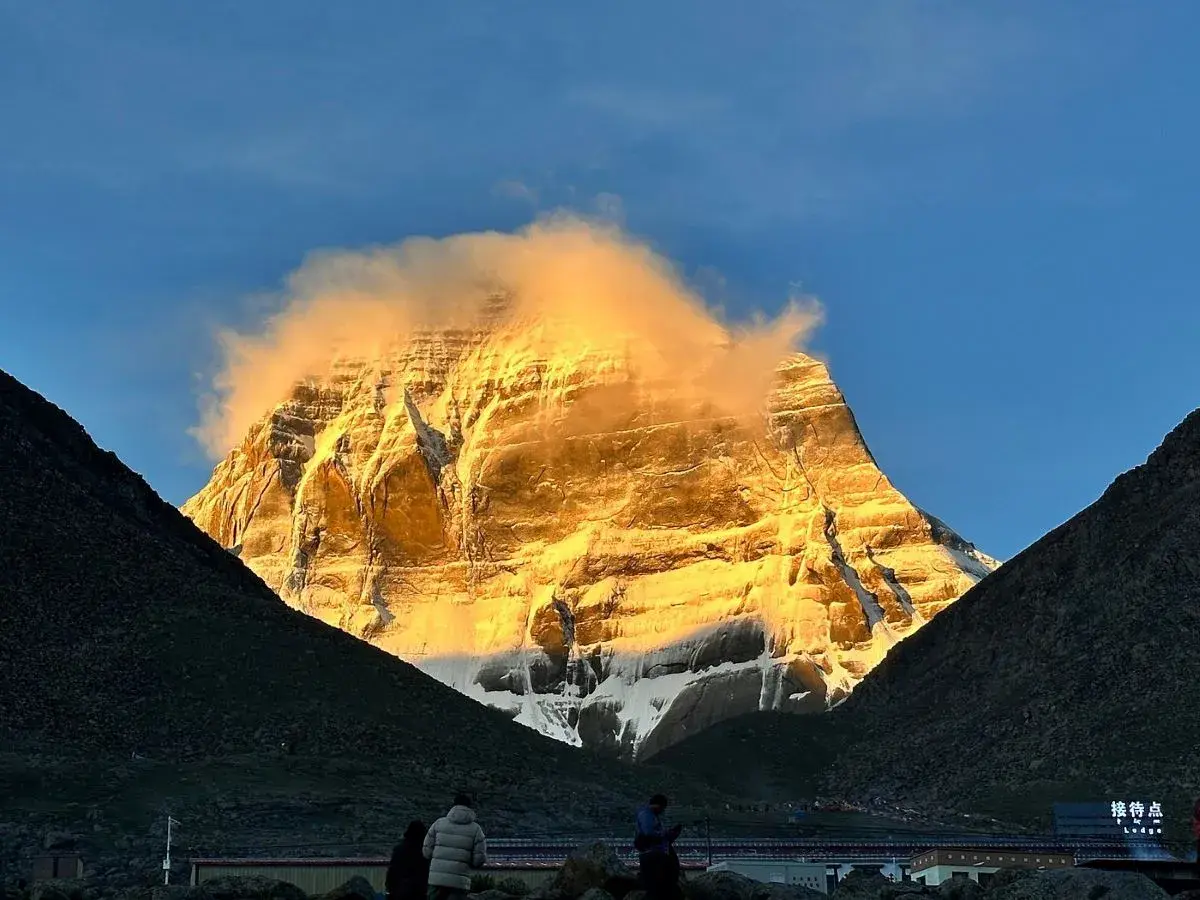
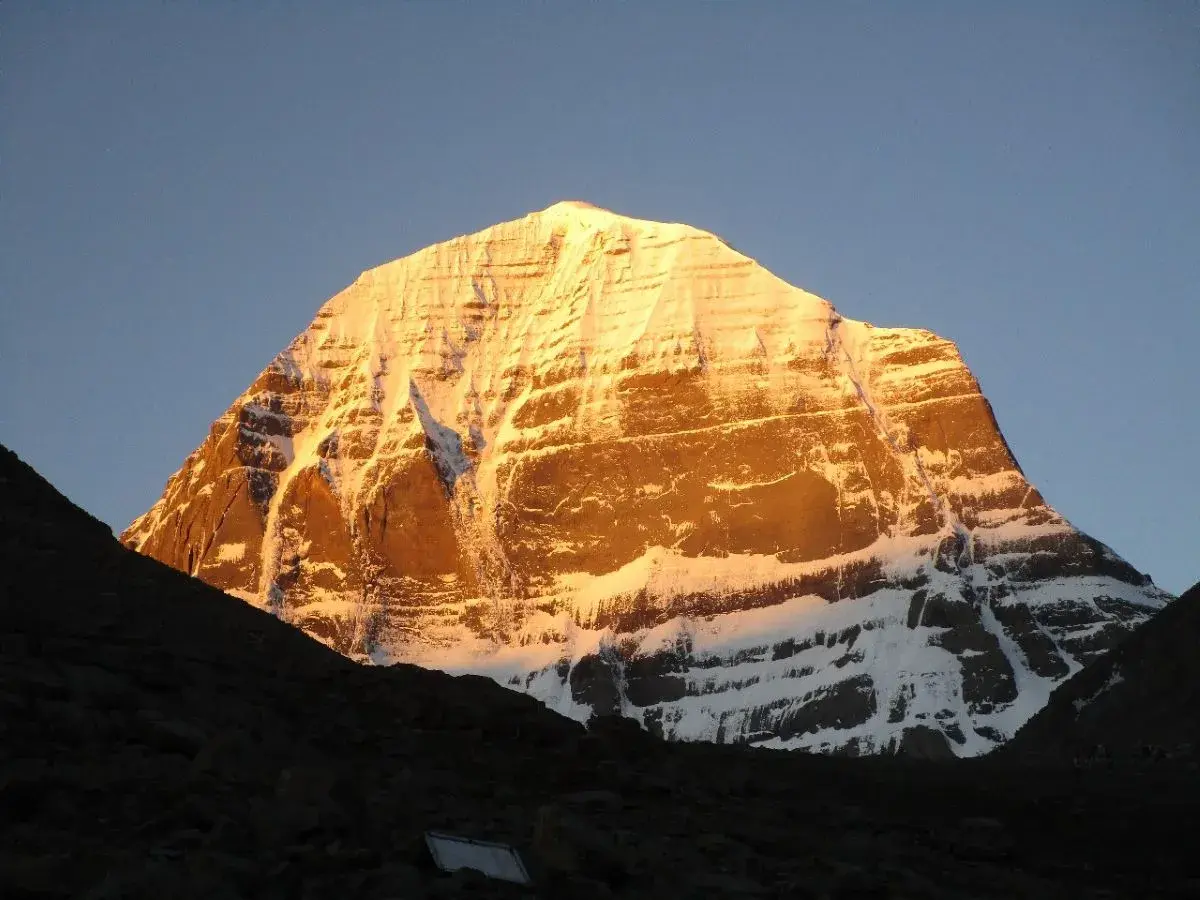
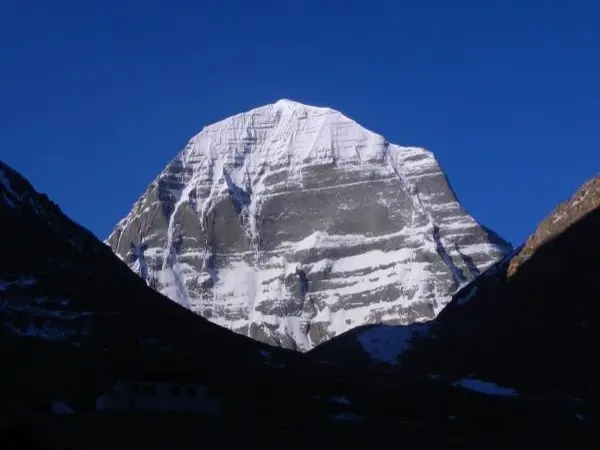
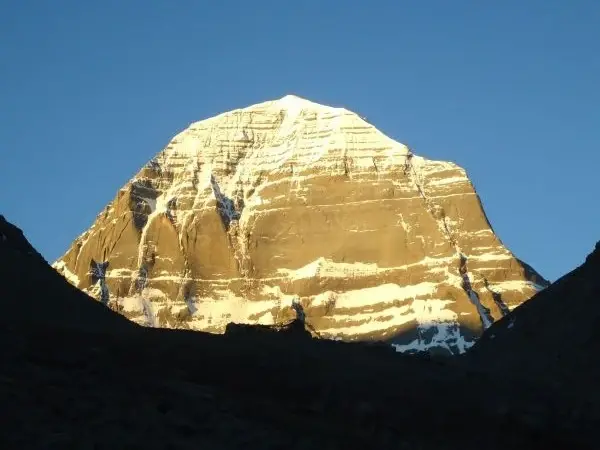
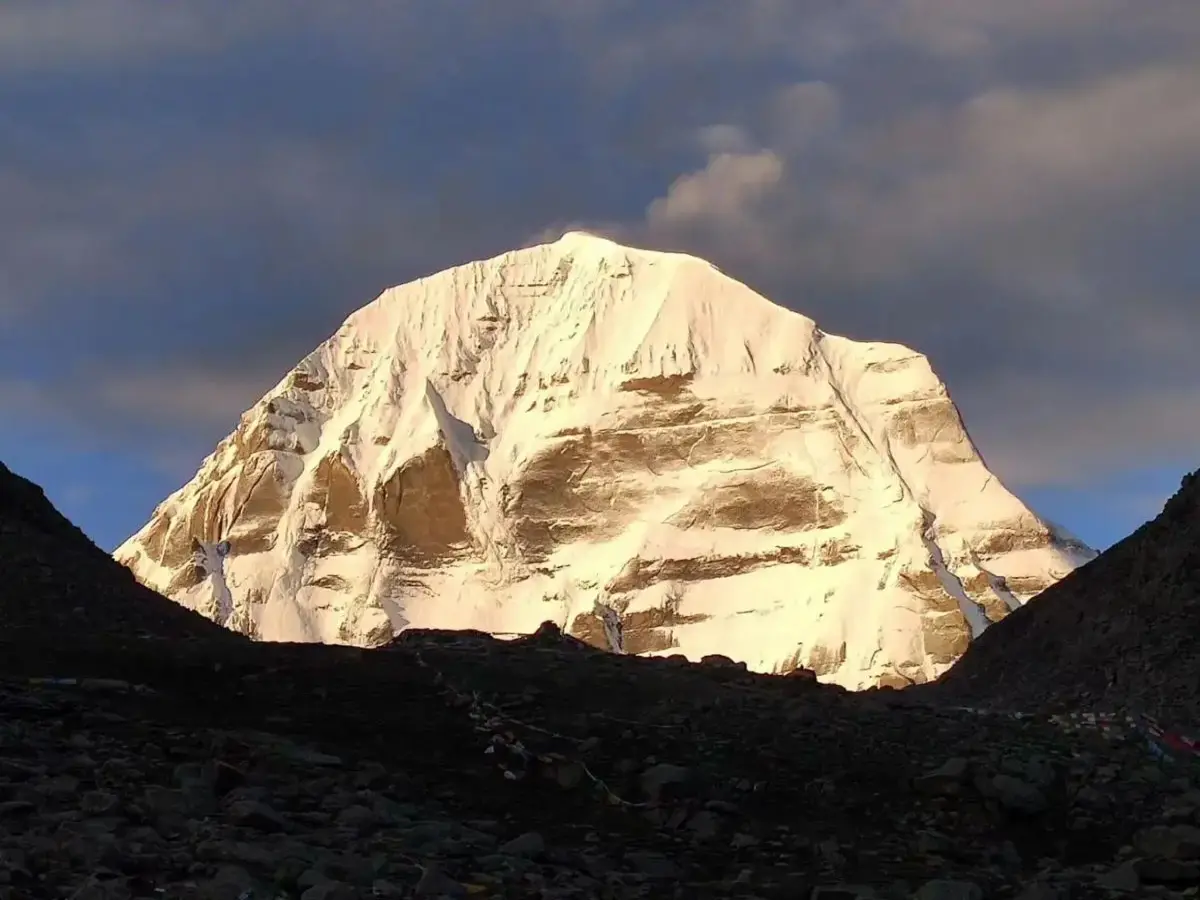
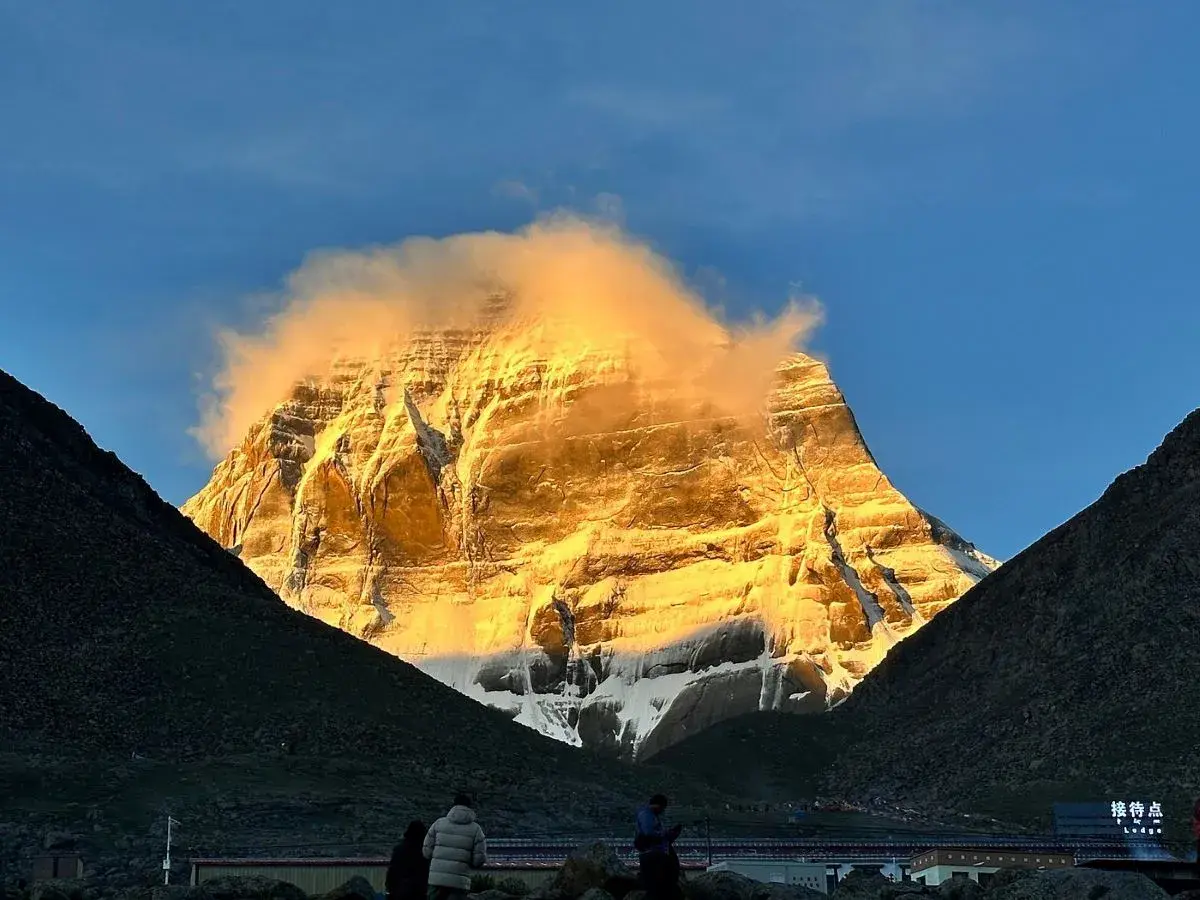
Mount Kailash (Kang Rinpoche, the jewel of snow) stands at 6,638 m and has never been climbed. Out of respect for the religions that revere it, no one is allowed to try. From Darchen, you see the south face as a clean pyramid, and its color changes as the sun drops.

Yama Dwar, about 6 km away, is the ritual gate where the kora starts. Pilgrims say that passing through it means leaving the fear of death behind. A deluxe vehicle takes you there, and you walk from the gate on day 9. 

Vehicles cannot go from Darchen or Yama Dwar to Dirapuk, so every kilometer after the gate is on foot or by horse!

Tarboche, close to Darchen, holds the giant flagpole that Tibetans replace every year during Saga Dawa Duchen. Published Tibetan calendars place the festival on 18 June 2027. 

Rooms fill months ahead, so tell us early if you want to be there. If you prefer quiet, travel at least a week either side. On the evening before the kora, your guide briefs the group, checks the yak loads and explains who carries what.

The Kailash Kora Day by Day: What the 52 km Really Asks of You

The kora is a clockwise walk around Mount Kailash, and the outer circuit measures about 52 km. Hindus, Buddhists and Jains walk clockwise, while followers of Bon walk the other way. 

When you meet them head on, nobody gives way and nobody argues, because both are praying!

The first day, day 9 of the program, is the gentle start. After the 6 km drive to Yama Dwar, you walk about 12 km in roughly 5 hours to Dirapuk (4,890 m). 

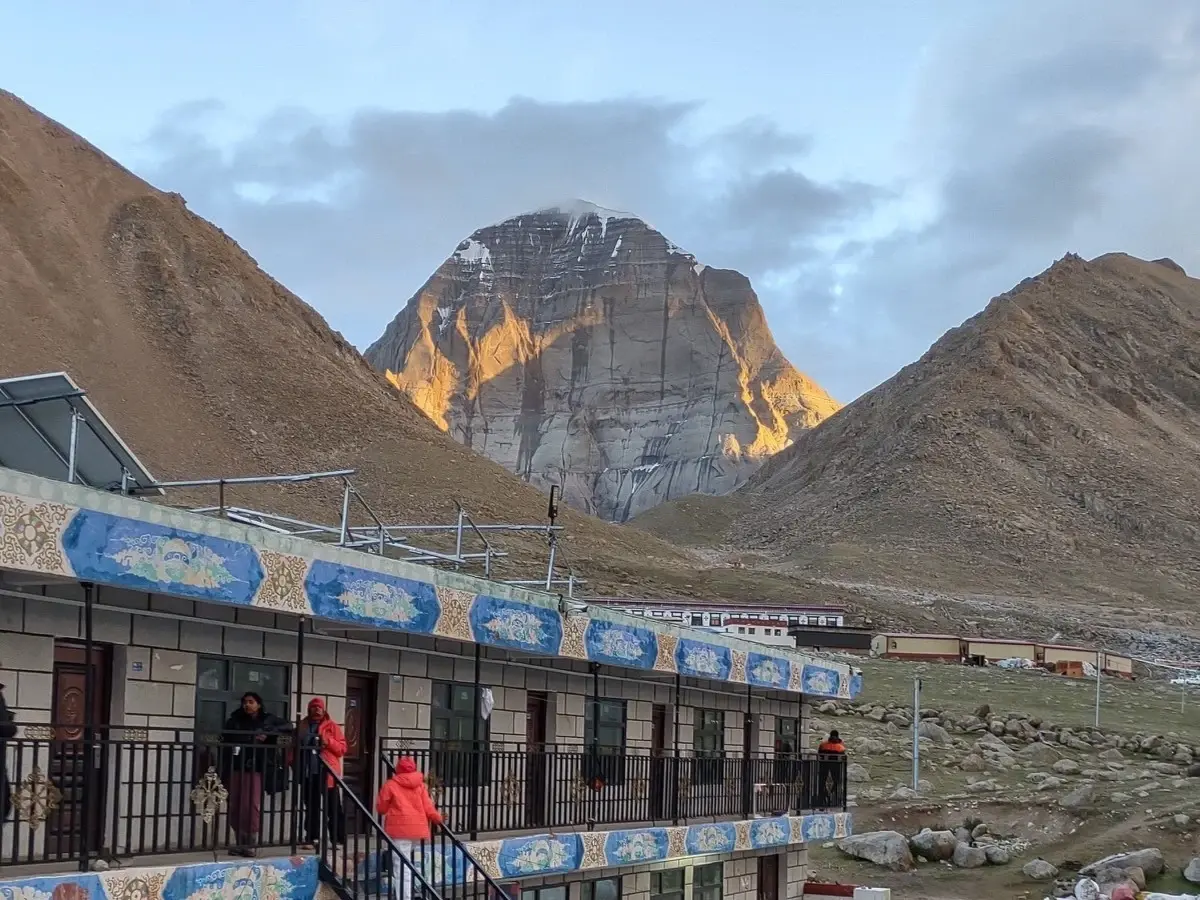
The net gain is only about 200 m, but altitude makes every step heavier, so keep a pace where you can still talk. The reward arrives in the afternoon, when the north face rises almost above the guesthouse roof.

Day 10 is the big one. You leave Dirapuk before sunrise and walk about 22 km in 9 to 10 hours to Zuthulpuk, with a climb of roughly 740 m to Dolma La (5,630 m) and a descent of nearly 850 m. 

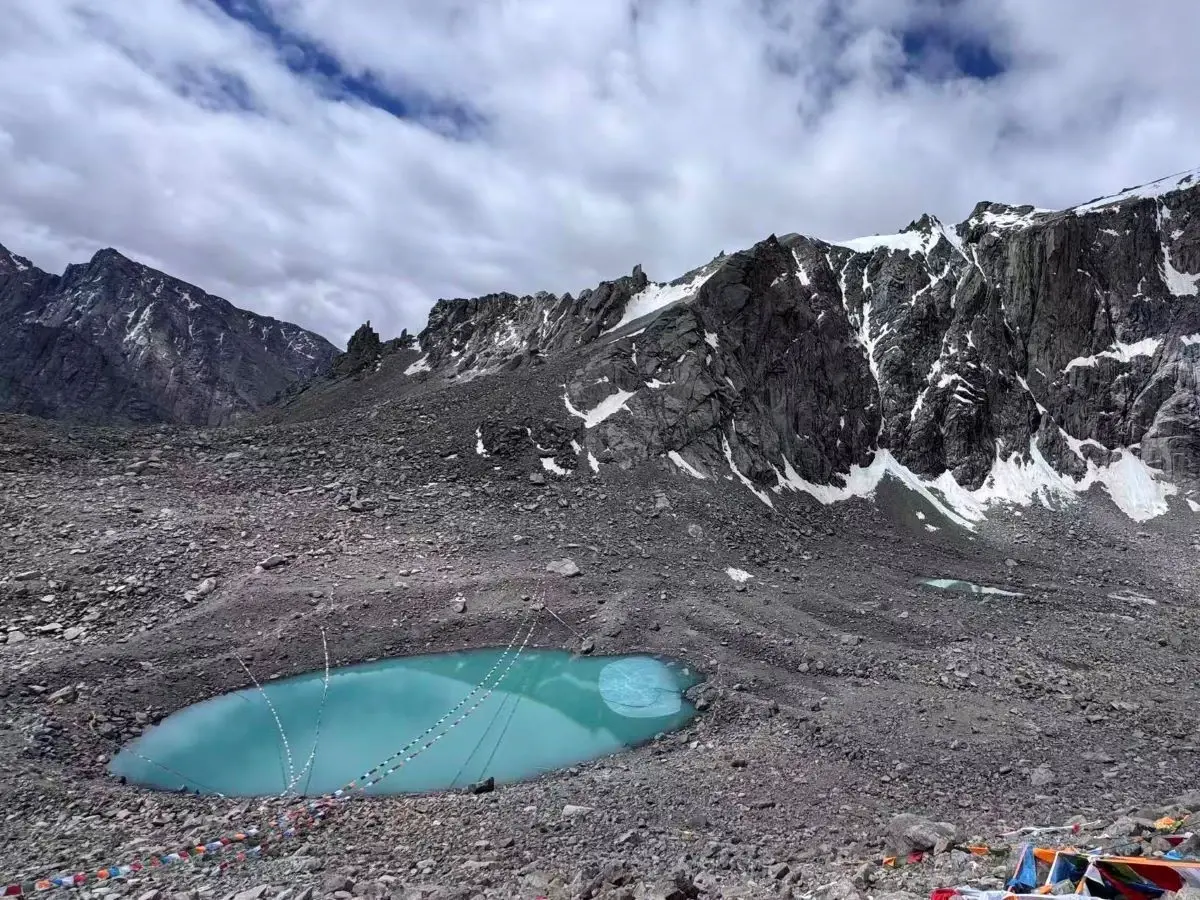
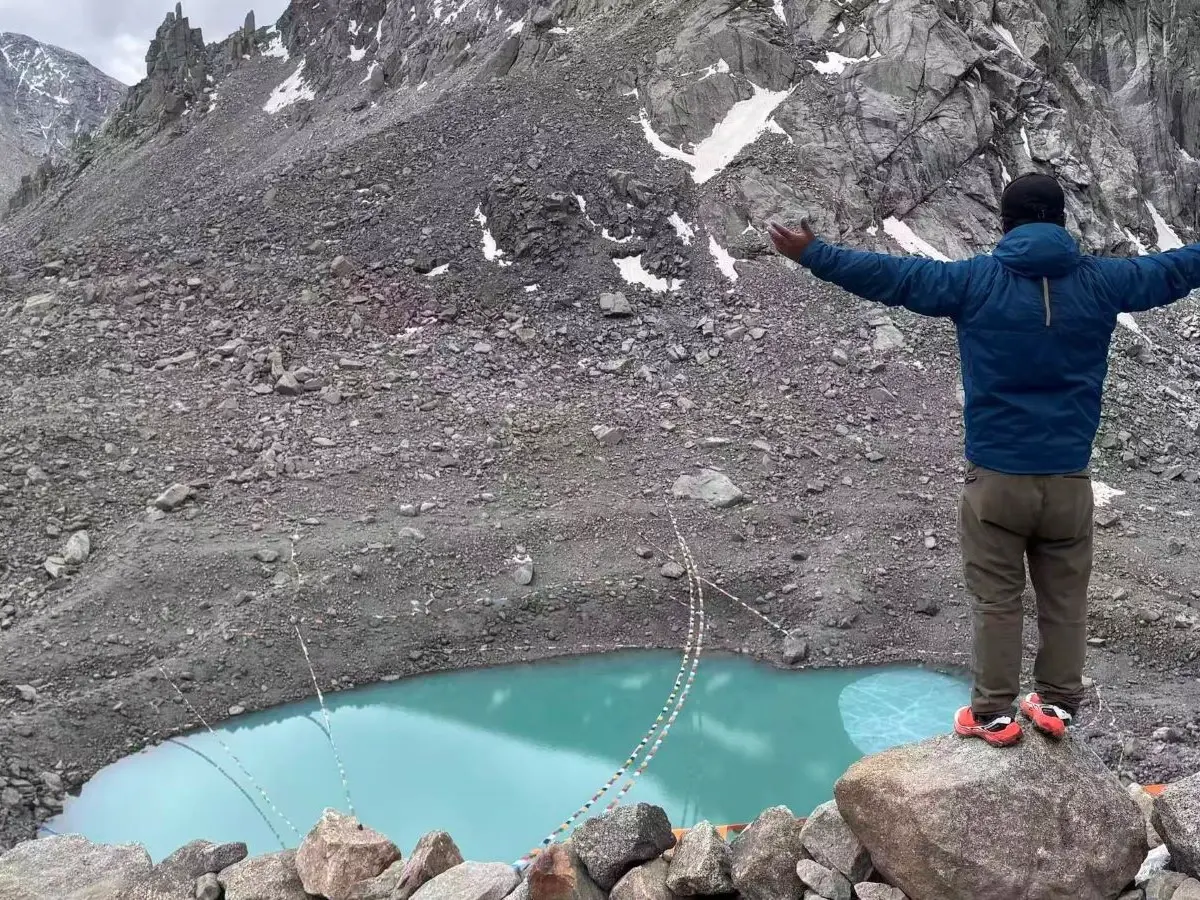
Tie a flag at the pass if you wish, say a prayer and keep moving, because the wind is cold. Below the pass lie Gauri Kund and a steep, loose descent where trekking poles help your knees.

Then comes an easy finish on day 11. You walk about 12 km in roughly 3 hours from Zuthulpuk to near Darchen, where the vehicle waits for the 450 km drive to Saga.

Tradition gives each circuit a value! One kora is said to clear the sins of a lifetime, 13 koras prepare a pilgrim for the inner kora around Nandi Parvat, and 108 koras lead to liberation. The inner kora needs extra time and permission, so it is not part of this program.

If 3 days feel like too much, there are two shorter options:

  • One-day kora: Walk from Yama Dwar to Dirapuk (12 km, about 5 hours), take your darshan, enjoy the sunset on the north face of Kailash and drive back to your Darchen hotel. The vehicle and the Darchen stay are at your own cost.
  • Shortcut after Dolma La: Walk down to Gauri Kund, then rent a van to shorten the walk to Zuthulpuk, or continue to Darchen for a more comfortable stay. The van ride, plus accommodation and meals in Darchen, are at your own cost.

Porters, Horses, Yaks and Optional Side Trips

Yaks and yak men carry baggage, food and fuel for the group during the kora, and that is part of the package. Personal support is different!

If you want a porter, or a horse with a horseman, for the 3-day parikrama, you hire them in Darchen, and you need to tell us at least 2 days before you reach Darchen.

The rates are fixed locally. A porter costs US$ 200 for 3 days, and a horse with a horseman costs US$ 500 for 3 days. You pay these amounts directly to the Darchen authority office, and each yatri who hires support receives a name tag.

A few rules apply! Hiring is compulsory for all 3 days, and a porter or horse cannot be shared with family members.

We suggest booking early if you have any doubt about your knees or lungs. A horse does not remove the cold or the altitude, and a rider needs more layers than a walker. Still, it turns a very hard day 10 into a possible one for many pilgrims.

Optional trips are available on request, including Asthapad, Tirthapuri and a 2-day stay at Dirapuk. 

Jain tradition holds that Rishabhanatha, the first Tirthankara, attained liberation at Asthapad. Tirthapuri, west of Kailash, is known for its hot springs and a monastery linked to Padmasambhava, and 2 days at Dirapuk give you more time with the north face. 

These optional trips cost about US$ 90 pp per team, and that covers the guide, permit and vehicle. Permits and road conditions decide what is possible, so ask us early rather than after you reach Darchen.

Best Time for the Kailash Overland Tour via Kodari

The best time for this tour is late April to early June and mid-September to mid-October. These two windows sit on either side of the monsoon, which is the real enemy of the Kodari road. 

Tibet itself is dry, with only about 150 mm of rain a year, but the Araniko Highway on the Nepali side suffers landslides in July and August, as the 40-day closure that began on 15 July 2026 showed.

Here is how the calendar breaks down:

  • Late April to May: The kora usually opens to foreign groups in mid to late April, although April nights at Dirapuk are very cold. May brings drier roads and the best balance of weather and crowds.
  • June: Saga Dawa Duchen falls on 18 June 2027, and rooms in Darchen and Saga fill up months ahead. The monsoon also reaches Nepal around mid-June, so road delays become more likely.
  • July and August: The Tibetan side stays in a rain shadow, but the Kodari highway and the Liping section are at their most fragile. We do not recommend this route in these months.
  • September to mid-October: Skies are clear and crowds thin out. Dashain and Tihar push up demand in Kathmandu, and China's National Day holiday (1 to 7 October) can crowd hotels and check-posts. Snow can close the kora by late October.
  • November to March: Roads close, guesthouses shut and the kora is not realistic. Tibet has also closed to foreign visitors for several weeks around March in many years.

Temperatures tell the real story! At the Purang County weather station (3,900 m), the July mean is about 15 to 20°C, and January falls to about -10°C. 

Darchen and Dirapuk sit far higher, so nights drop below freezing even in summer. Mornings are usually cold and clear, and afternoons turn windy, which is why our long days start early.

If you want the festival, choose 18 June 2027 knowingly. It is powerful but loud, crowded and close to the monsoon, so a late-May departure is my pick for most pilgrims. Alpine Eco Trek confirms the exact routing 45 to 60 days before any departure!

How Hard is This Tour? Difficulty and Altitude Profile

We rate this tour moderate to hard. It needs no ropes or technical skills, but altitude, cold and long driving days combine in ways that surprise first-timers. 

The hardest single day is day 10, with 22 km on foot over Dolma La. The longest drives are day 7, day 11 and the border day on day 13, each lasting 8 to 10 hours.

Here are your sleeping altitudes, with the change from the night before:

NightPlaceSleeping altitudeChange from previous night
1 to 3Kathmandu1,350 mStarting point of pilgrimage 
4Nyalam3,750 m+2,400 m
5 and 6Saga4,640 m+890 m
7Lake Manasarovar4,590 m-50 m
8Darchen4,670 m+80 m
9Dirapuk4,890 m+220 m
10Zuthulpuk4,790 m-100 m
11Saga4,640 m-150 m
12Nyalam3,750 m-890 m
13Kathmandu1,350 m-2,400 m

Look at the first two jumps! Nyalam and Saga both break the altitude guidance of no more than 500 m of sleeping altitude a day above 3,000 m, with a rest day every 3 to 4 days. Day 6 is that rest day!

After Saga, no night changes by more than 220 m, so the profile settles down.

Fitness helps, but it does not protect you. A rapid ascent can lead to acute mountain sickness. So a marathon runner can still struggle, and a calm 65-year-old with Himalayan experience may sail through.

Train for 8 to 12 weeks with long walks, stair climbs and a loaded daypack, so that 5 to 6 hours on your feet feels ordinary. Practice downhill with poles too, since the drop from Dolma La is harder on knees than the climb. 

If you have heart, lung or blood pressure conditions, see your doctor before you book. If you would prefer a gentler profile, tell us at booking, and our Alpine Eco Trek team will say honestly whether this route or the Lhasa program suits you better.

Altitude Sickness on the Kodari Route: Prevention, Warning Signs and Our Response

Acute mountain sickness (AMS) is a group of symptoms, including headache, nausea, dizziness and poor sleep, that appears when your body cannot adjust fast enough to thinner air. 

On this route, the highest-risk window runs from day 4 in Nyalam to day 6 in Saga, because the ascent is quick. 

Prevention is mostly habit! Walk slowly, drink 3 to 4 liters of water daily, avoid alcohol and sleeping pills, and eat lightly but regularly. 

Some doctors prescribe acetazolamide (Diamox) as a preventive. We carry Diamox pills for the circuit, but whether you take them is a conversation for your own doctor, not something to start on the road.

Here is what we put in place for you:

  • Daily pulse, oxygen and blood pressure checks for every yatri.
  • One large oxygen cylinder with mask and regulator in each bus.
  • 4 Poisk Russian oxygen cylinders with masks and regulators for the kora.
  • An oxygen setup in every room at Nyalam, Saga and Darchen, plus oxygen in the guesthouses in the morning and evening.
  • A medical kit, first aid box and altitude medicine.

On top of that, you need to buy 2 extra cans of oxygen in Saga as a personal backup for the trail, because help on the kora can be more than a day away.

Mild symptoms mean you stop going higher, rest and tell your guide. Moderate symptoms, such as a severe headache, repeated vomiting or a stumbling walk, mean you descend. 

Two forms are emergencies. High altitude cerebral oedema (HACE) brings confusion and loss of coordination, and high altitude pulmonary oedema (HAPE) brings breathlessness at rest and a wet cough. Both need immediate descent and oxygen.

The rule is simple: never go higher with symptoms. Also remember that from Darchen, a meaningful drop in altitude is a long drive away, so a guide who hears about your headache at breakfast has far more options than one who hears about it at the pass.

Accommodation From Kathmandu to Zuthulpuk

Accommodation changes sharply as you move west, so it helps to know what to expect before you pack. 

In Kathmandu, we use the Radisson or Hyatt Centric, subject to the confirmed booking, on a twin-sharing basis with full board. The rooms there offer modern comforts, private bathrooms and reliable hot water.

In Nyalam, Saga and Darchen, you stay in 3 or 4-star standard hotels, again on twin sharing. Every room has an attached bathroom and an oxygen setup. Comfort drops as you climb, though.

Saga can have limited hot water and the occasional power cut, and most hotels and guesthouses in the Kailash area have no heating.

Lake Manasarovar, Dirapuk and Zuthulpuk are different. The bathrooms at these three holy places are very basic, and none of them has an attached bathroom.

At Mansarovar, you sleep in a guesthouse near the shore, and our shower tent covers your warm water for the puja.

At Dirapuk and Zuthulpuk, expect shared sleeping rooms, outdoor toilets, no showers and electricity for a few hours from solar panels or generators. A yak-dung stove warms the common room, and hot water is sold by the flask.

Rooms in the Kailash region are shared in groups. A single supplement is possible in Kathmandu, Nyalam, Saga and Darchen, at about US$ 550 per person, and the exact amount appears in your quotation. 

Beyond those towns, privacy depends on what is available. A silk liner make a big difference, and earplugs help in shared rooms.

Roommates matter more here than in a city hotel, so choose someone who wakes early and tells you when something feels wrong.

Meals, Drinking Water and Dietary Needs

Alpine Eco Trek runs this tour on a full-board basis, with meals included according to the itinerary (day 1 includes dinner only). In Kathmandu, meals come with your hotel stay.

In Tibet, our own team prepares pure vegetarian food, and our cook can make Indian dishes as per your requirement, with a focus on familiar South Indian and Nepali meals. The kitchen travels with the support truck, so lunch and dinner at the lake and on the kora come from our cook, not from roadside menus.

If you have a food preference, such as Jain food or any other, please tell us once you land in Kathmandu. Our staff will do the shopping accordingly before the group heads west, because shops along the Tibetan route offer very little. 

Also, tell us about food allergies at booking and again on day 1. Menus on the kora are short, so we cannot promise much variety.

Our team provides 3 liters of pure drinking water for each guest every day, in 1-litre bottles. Do not drink directly from lakes or streams, including Lake Mansarovar. Carry a reusable bottle and purification tablets as backup, and a thermos for hot water on cold mornings.

Appetite drops at altitude, but eat regularly anyway. Soup, rice and vegetables keep your energy up on long drives and on the kora. Pack nuts, dried fruit, chocolate, glucose sachets and ginger or garlic candies for the walking days, when food stops are limited. Avoid alcohol during acclimatization.
Kailash Overland Tour via Kodari New Itinerary

Starts / EndsKathmandu
Max Altitude5638m /18,500ft
Day 01

Arrive in Kathmandu: Max altitude: 1,400 m | Meals: Dinner | Accommodation: Radisson or Hyatt Centric | Transport: Private vehicle | Distance: 6 km airport transfer

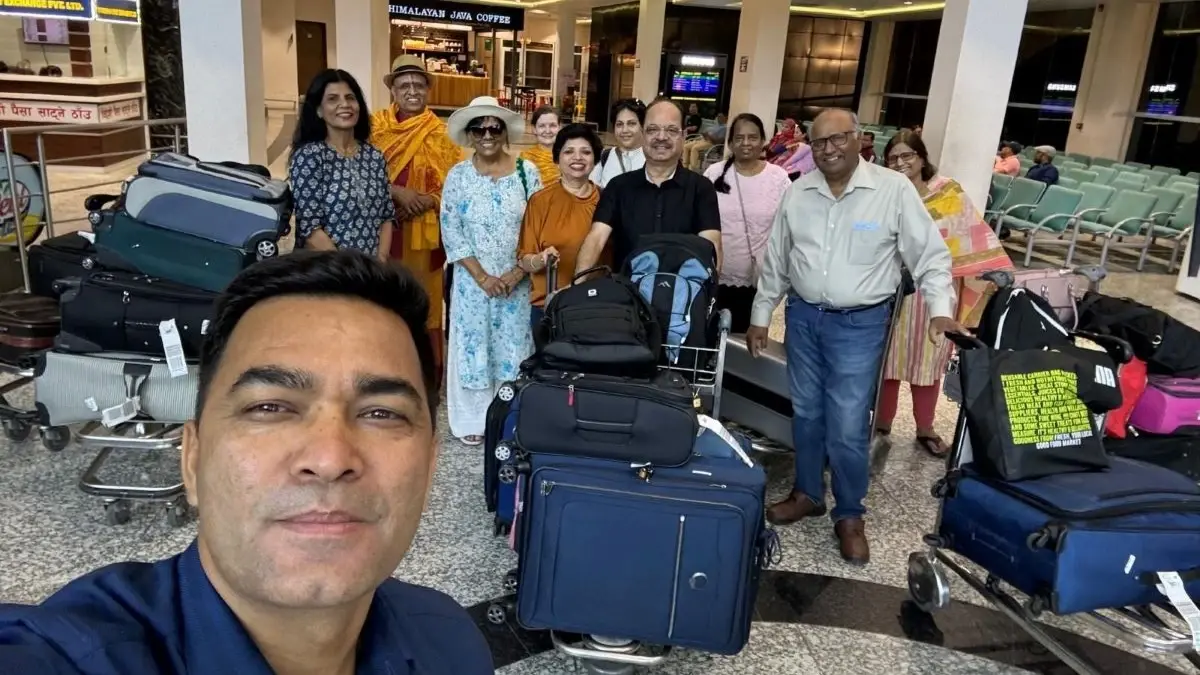
Our representative meets you outside the arrivals hall at Tribhuvan International Airport with a name board, and the drive to your hotel takes 30 to 45 minutes. 

After a rest at your Radisson or Hyatt Centric hotel, Alpine Eco Trek holds a short briefing. We check passport copies, visa status and the medicines you plan to carry. 

Equipment handover follows: a special down jacket for the kora, a warm hat that covers your ears, a large duffel bag, a trekking bag and a rain poncho. Tell our staff about any food preference, such as Jain food, so they can shop before the group leaves Kathmandu. 

If you still need thermals, trekking poles or a sleeping bag liner, Thamel is the easiest place to buy them. Dinner is included tonight, so drink plenty of water and sleep early.

Max Altitude: 1.400m
Meals: Full Board
Accommodation: Hotel
Transportation: Luxury Bus
Duration: 14
Distance: 6km
arrive in Kathmandu
arrive in Kathmandu
Day 02

First Day Kathmandu Sightseeing: Max altitude: 1,400 m | Meals: Breakfast, Lunch, Dinner | Accommodation: Radisson or Hyatt Centric | Transport: Private vehicle | Distance: Inside Kathmandu Valley

Start early at Pashupatinath, when the Bagmati ghats are quiet and the first rituals have begun. Non-Hindus watch from the east bank, which also gives the best view of the golden roofs. 

Guhyeshwari Shakti Peeth stands close by, so walk there next. After that, drive north to Budhanilkantha to see the reclining Vishnu resting in his pool. 

Swayambhunath closes the day with a view over the valley and a few opportunistic monkeys, so keep your snacks zipped. Meals are included on full board, and we plan them around the sightseeing. 

Back at the hotel, pack your main clothing into the duffel bag, because the limit for the trip is one large bag. Keep a small daypack for the border. Tomorrow takes you further from the city center, so eat lightly and sleep early.

Max Altitude: 1,400m
Meals: Full Board
Accommodation: Hotel
Transportation: Luxury Bus
Duration: Full Day
Distance: Inside Kathmandu Valley
Homa/Hawan at Pashupatinath Temple
Day 03

Second Day Kathmandu Sightseeing: Max altitude: 1,400 m | Meals: Breakfast, Lunch, Dinner | Accommodation: Radisson or Hyatt Centric | Transport: Private vehicle | Distance: Inside Kathmandu Valley

Today leaves the city center! Drive south to Dakshinkali first, the main temple of the goddess Kali in the valley, which gets crowded on Tuesdays and Saturdays. 

Next comes the Kailashnath Mahadev statue at Sanga, one of the tallest Shiva statues in the world. Doleshwar Mahadev follows near Bhaktapur, a temple where many devotees believe the head of Kedarnath is worshiped. 

We finish at Boudhanath, where Tibetan families walk around the stupa clockwise. Join one round, and notice how people pace themselves. Our guide explains the customs before each entrance, so you know when to remove shoes and when photos are fine. Meals are included.

Check your baggage weight again tonight, then keep your passport, permit copies and warm layers in the daypack. Tomorrow you cross into Tibet!

Max Altitude: 1,400m
Meals: Full board
Accommodation: Hotel
Transportation: Luxury Bus
Duration: Full Day
Distance: Inside Kathmandu Valley
Doleshwar Mahadev Temple
Day 04

Drive From Kathmandu to Nyalam via Kodari and Zhangmu: Max altitude: 3,750 m | Meals: Breakfast, Lunch, Dinner | Accommodation: Hotel in Nyalam | Transport: Private vehicle | Distance: About 155 km plus border formalities

Leave early for the 125 km drive to Kodari on the Araniko Highway, which takes 5 to 7 hours depending on road work. At the border, you clear Nepali exit formalities, cross the Friendship Bridge and meet your Tibetan guide and driver on the other side. 

Chinese immigration at Zhangmu can take 2 to 3 hours, so keep your passport, visa and permit copies handy. From Zhangmu, a 30 km road climbs to Nyalam (3,750 m) through forest and gorges. 

Remember that you gain 2,400 m today. Walk slowly, eat a warm dinner and drink water even if you are not thirsty. Your room in Nyalam has an attached bathroom and an oxygen setup. 

Tell the guide about any headache tonight, because tomorrow's plan depends on it!

Max Altitude: 3,750 m
Meals: Full Board
Accommodation: Hotel
Transportation: Deluxe bus
Duration: 6 to 7 hours
Distance: 155km
Nyalam Village
Nyalam Village
Day 05

Drive From Nyalam to Saga: Max altitude: 4,640 m | Meals: Breakfast, Lunch, Dinner | Accommodation: Hotel in Saga | Transport: Private vehicle | Distance: About 230 km, 5 to 7 hours

Today is a long drive west from Nyalam to Saga, about 230 km in 5 to 7 hours. The exact time depends on the police check-posts, where the driver stops and your guide hands over the permits. 

The road crosses open country, with fewer villages each hour and more sky than ground. Saga sits at 4,640 m beside the Yarlung Tsangpo, about 890 m higher than Nyalam, which is a bigger jump than we would like. 

Because of that, you should eat a warm dinner, avoid alcohol and go to bed early. Before the evening ends, ask the guide where to buy your 2 cans of emergency oxygen for the kora. Your hotel room has an attached bathroom and an oxygen setup. If you wake with a pounding headache, tell the guide at once.

Max Altitude: 4,640 m
Meals: Full Board
Accommodation: Hotel
Transportation: Deluxe bus
Duration: 5 to 6 hours
Distance: 230
Saga
Saga
Day 06

Acclimatization Day in Saga: Max altitude: 4,640 m | Meals: Breakfast, Lunch, Dinner | Accommodation: Hotel in Saga | Transport: Walking | Distance: Gentle hike around Saga valley

Today, lets rest! Walk gently around the Saga valley in the morning if you feel well, and keep the pace slow enough to hold a conversation. Spend the afternoon eating, drinking and sleeping, because this is the day your body uses to catch up with the altitude. 
Our team checks everyone's pulse and oxygen level with an oximeter and asks how you slept. A mild headache or light sleep is common at 4,640 m, so mention it rather than hide it. Buy your 2 cans of oxygen for the kora today if you have not done so already. 

Use the free hours to sort your daypack for the trail, with water, a rain shell, gloves, sunscreen and a headlamp. Sleep early, since tomorrow is the long drive to the lake.

Max Altitude: 4,640 m
Meals: Full Board
Accommodation: Hotel
Transportation: Walking
Duration: Full Day
Distance: Inside Saga Valley
Saga Hiking
Saga Hiking
Day 07

Drive From Saga to Lake Manasarovar: Max altitude: 5,211 m (sleeping 4,590 m) | Meals: Breakfast, Lunch, Dinner | Accommodation: Guesthouse near the lake | Transport: Private vehicle | Distance: About 450 km, 8 to 10 hours

Leave Saga as early as you can manage. The route covers about 450 km, and with lunch, check-posts and photo stops it takes 8 to 10 hours. 

You pass Dzongba and Paryang, then cross Mayum La at 5,211 m, the highest road pass of the trip. Scan the wide plains for kiang (wild asses), gazelle and nomad tents made of black yak hair. 

Keep each photo stop short, because the wind at the pass is sharp and the air is thin. Lunch is in a simple roadside restaurant, so carry snacks, tissues and hand sanitizer. 

In the late afternoon the lake appears, with Gurla Mandhata (7,694 m) behind it. You sleep in a basic guesthouse near the shore, where rooms are shared and nights are very cold.

Max Altitude: 4,590 m
Meals: Full Board
Accommodation: Guesthouse
Transportation: Deluxe bus
Duration: 8 to 10 hours
Distance: 450 km
Mansarovar Lake
Mansarovar Lake
Day 08

Puja and Hawan at Manasarovar, Drive to Darchen: Max altitude: 4,670 m | Meals: Breakfast, Lunch, Dinner | Accommodation: Hotel in Darchen | Transport: Private vehicle and eco-bus | Distance: 40 km, about 30 minutes

Morning is the best time at the lake. Alpine Eco Trek's team sets up a shower tent and heats water, so you can wash before the ritual.

We bring the puja materials and find a suitable place on the shore. You offer your own gratitude to Pandit ji after the puja and hawan. A dip in the lake is not allowed. 

During the lake Parikrama by Eco-bus, our guide finds a corner where you can step into the water up to knee level. We also visit Chiu Gompa for the view. After lunch, drive 40 km to Darchen, which takes about 30 minutes, and check in at your hotel. 

In the afternoon, your guide briefs you on the 3-day kora, checks the yak loads and explains who carries what.

Max Altitude: 4,670 m
Meals: Full Board
Accommodation: Hotel
Transportation: Deluxe bus
Duration: 30 mins
Distance: 40 km
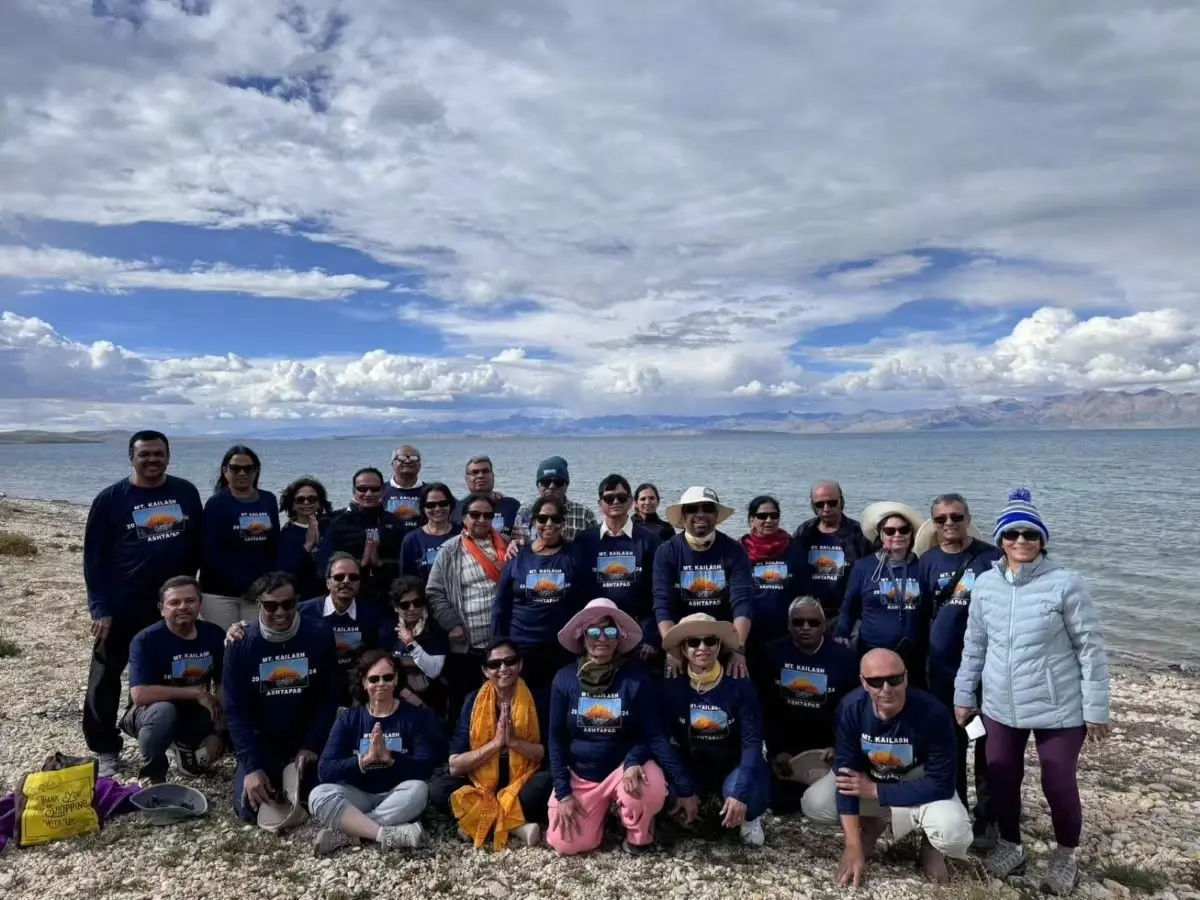
Darchen Asthapad
Darchen Asthapad
Day 09

Start the Kora, Darchen to Dirapuk via Yama Dwar: Max altitude: 4,890 m | Meals: Breakfast, Lunch, Dinner | Accommodation: Guesthouse at Dirapuk | Transport: Deluxe vehicle to Yama Dwar, then on foot | Distance: 6 km drive, 12 km walk

After breakfast, a deluxe vehicle drives you 6 km from Darchen to Yama Dwar, and the walking begins at the gate. From here, you follow the Lha Chu valley for about 12 km, which takes around 5 hours. 

The trail passes Chuku Monastery and long strings of prayer flags, and the west face of Kailash grows larger at each bend. The net gain is only about 200 m, yet the altitude slows everyone, so rest every hour and drink water. 

Vehicles are not allowed beyond Yama Dwar, so the whole way to Dirapuk (4,890 m) is on foot or by horse. Arrive by mid-afternoon, drink tea and sit facing the north face while the light lasts. The guesthouse has no attached bathroom, so keep your headlamp beside the bed.

Max Altitude: 4,890 m
Meals: Full Board
Accommodation: Guesthouse
Transportation: Walking
Duration: 5 to 6 hours walking
Distance: 18 km
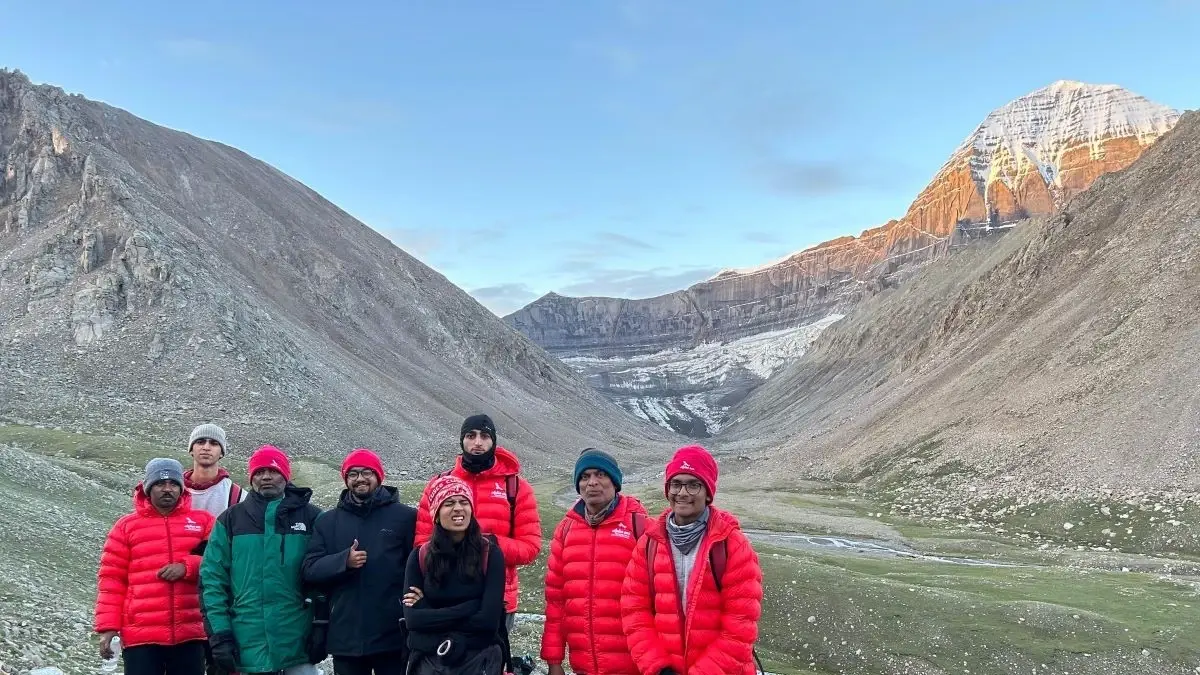
Dirapuk North Face
Dirapuk North Face
Day 10

Cross Dolma La and Trek to Zuthulpuk: Max altitude: 5,630 m (sleeping 4,790 m) | Meals: Breakfast, Lunch, Dinner | Accommodation: Guesthouse at Zuthulpuk | Transport: On foot | Distance: 22 km, about 10 hours

Wake at about 4 a.m., eat a hot breakfast and start with headlamps while the valley is still dark. The trail climbs about 740 m to Dolma La (5,630 m), passing the symbolic cemetery of Shiva Tsal on the way. 

Rest often, breathe in rhythm and let the pass come to you. Prayer flags cover the top, so tie one if you wish and move on, because the wind is cold. Below the pass lies Gauri Kund, then a steep, loose descent where trekking poles help your knees. 

From Gauri Kund, you can rent a van to shorten the walk to Zuthulpuk or continue to Darchen, and the extra cost is yours. The full day covers 22 km in about 10 hours, ending at Zuthulpuk (4,790 m), near the cave of the Tibetan saint Milarepa.

Max Altitude: 4,790 m
Meals: Full Board
Accommodation: Guesthouse
Transportation: Walking
Duration: 10 hours of walking
Distance: 22 km
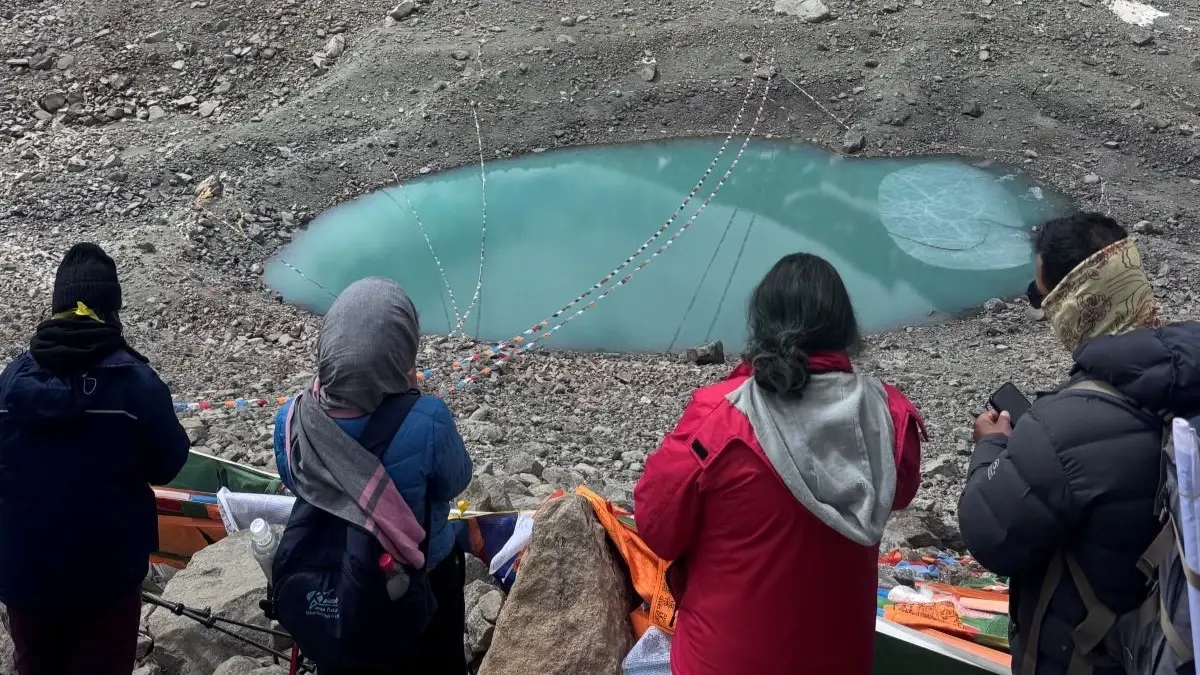
Gaurikunda Pond
Gaurikunda Pond
Day 11

End the Kora and Drive Back to Saga: Max altitude: 4,790 m (sleeping 4,640 m) | Meals: Breakfast, Lunch, Dinner | Accommodation: Hotel in Saga | Transport: On foot, then private vehicle | Distance: 12 km walk, 450 km drive

The last stretch of the kora is the kindest. You walk about 12 km from Zuthulpuk to near Darchen, and most people finish in about 3 hours. 

The ground is flatter, and the air feels thicker with every step. Our vehicle waits at the end, so settle any porter or horse payment before you leave and ask your guide about tips. 

After a short lunch, the long drive begins: about 450 km and 8 hours to Saga, back along the lake and across the plains. Pack snacks, a neck pillow and some patience. 

If weather, road work or tired legs slow us down, we may sleep at Paryang instead, and Alpine Eco Trek's guide makes that call on the spot. Eat what you can, even if your appetite is gone.

Max Altitude: 4,640 m
Meals: Full Board
Accommodation: Hotel
Transportation: Deluxe bus
Duration: 10 to 12 hours (walking and driving)
Distance: 12 km 450 km (drive)
Zuthulpuk
Zuthulpuk
Day 12

Drive From Saga to Nyalam: Max altitude: 4,640 m (sleeping 3,750 m) | Meals: Breakfast, Lunch, Dinner | Accommodation: Hotel in Nyalam | Transport: Private vehicle | Distance: About 230 km, 5 to 7 hours

Today you finally sleep lower. The drive from Saga to Nyalam covers about 230 km in 5 to 7 hours, and it repeats the road of day 5 in reverse. Most of the group is quiet and happy, replaying the kora and comparing blisters. 

Keep your passport and permit papers in the day bag rather than the luggage hold, because check-posts appear again on this stretch. Nyalam (3,750 m) is about 890 m lower than Saga, so thicker air should bring deeper sleep and a returning appetite. 

Enjoy a proper dinner with hot water in the bathroom if the supply holds. Wash your socks, charge your phone and repack the duffel bag for tomorrow's border day. Set an early alarm, because the next day depends on an on-time start.

Max Altitude: 3,750 m
Meals: Full Board
Accommodation: Hotel
Transportation: Deluxe bus
Duration: 5 to 6 hours
Distance: 230 km
Drive From Saga to Nyalam: Max altitude: 4,640 m (sleeping 3,750 m) | Meals: Breakfast, Lunch, Dinner | Accommodation: Hotel in Nyalam | Transport: Private vehicle | Distance: About 230 km, 5 to 7 hours
Day 13

Drive From Nyalam to Kathmandu via Zhangmu and Kodari: Max altitude: 3,750 m | Meals: Breakfast, Lunch, Dinner | Accommodation: Radisson or Hyatt Centric | Transport: Private vehicle | Distance: About 155 km plus border formalities, 8 to 9 hours

Leave Nyalam early, because the border day has the least slack of the whole program. Drive 30 km down to Zhangmu, complete Chinese exit formalities and cross the Friendship Bridge, usually on foot, into Nepal. 

Clear Nepali immigration at Kodari, where our vehicles wait, then follow the Araniko Highway for about 125 km to Kathmandu. With the crossing, the whole day takes 8 to 9 hours when the road is clear. 

Landslides can interrupt the highway, particularly in the monsoon, so Alpine Eco Trek keeps a close eye on the road and the forecast. Keep snacks, water and your passport in the day bag. Tonight you sleep at your Radisson or Hyatt Centric hotel on full board, and a hot shower feels like a luxury at 1,400 m.

Max Altitude: 1,400m
Meals: Full Board
Accommodation: Hotel
Transportation: Deluxe bus
Duration: 8 to 10 hours
Distance: 155 km
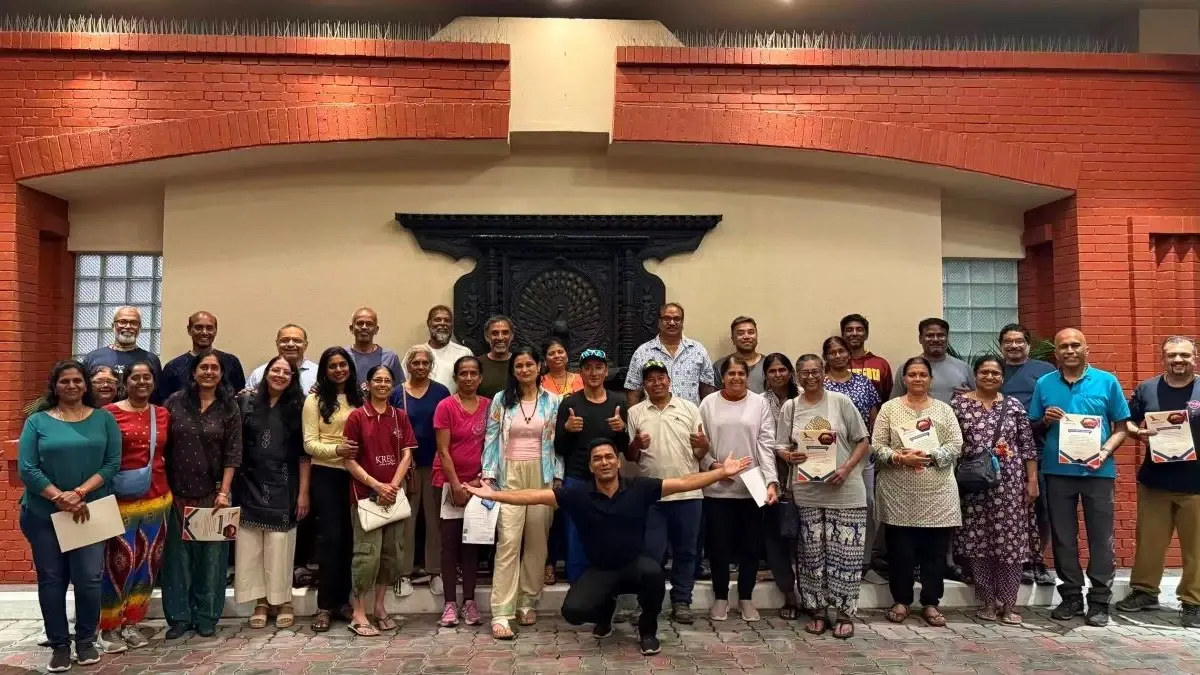
Certificates distribution ceremony in Kathmandu
Day 14

Final Transfer and Departure: Max altitude: 1,400 m | Meals: Breakfast | Accommodation: None, departure day | Transport: Private car | Distance: 6 km, 30 to 45 minutes

After a slow breakfast, our team transfers you to Tribhuvan International Airport for your onward flight, about 6 km and 30 to 45 minutes away. Plan to reach the airport at least 3 hours before an international departure. 

If your flight leaves late, you can use the morning to shop for gifts in Thamel, and we store your bags until the transfer. Because the border day can run late, I suggest booking an evening flight on day 14 or later. 

For a gentle ending, an extra night in Kathmandu, Pokhara or Chitwan works well, and we can arrange it. Rules on souvenirs such as antiques can be strict at customs, so ask before buying anything unusual in Tibet. 

Check your room for chargers and your sleeping bag liner, and let us know how Dolma La felt!

Thank you for choosing us, we look forward to seeing you again!
Are you still confuse from where to start?
No worries - Our Team is ready to guide you!

Tour Route Map

Kailash Overland Tour via Kodari New
Kailash Kora Map

Trip Cost Details

Cost Includes

  • All the necessary airport arrival and departure and drop, and pick up to/from Kodari/Zhagmbu/Nyalam transfers by a private coach.
  • Four nights' accommodation in Kathmandu on twin-sharing room with full-board meals.
  • 2 full days guided tour in Kathmandu as per mentioned in the itinerary
  • Necessary transfers from Kathmandu to Kodari and back to Kathmandu by road.
  • Guesthouse accommodation with full board in Timure
  • Accommodations in Tibet on a private room-sharing basis using a guesthouse / Hotel
  • Twin sharing accommodation in Kathmandu, Nyalam, Saga Darchen and group sharing in Manasarovar, Dirapuk, and Juthulpuk.
  • Tibet Visa fee and Travel Permits with PSB fees
  • All necessary entrance fees during the tour in Tibet
  • Special Kailash Mansarovar Eco-Bus Permit
  • Applicable entrance fees to visit Monasteries and temples
  • English speaking Guides and experience drivers with supporting crew including our own cooks
  • Medical kits which will be carried by Nepali guides
  • Enough oxygen cylinder, other necessary equipment for clients guides and drivers
  • Private transportation in a deluxe bus for clients and a small truck for staff and food during the trip.
  • Custom formalities at Nepal Tibet immigration, Kodari
  • Duffle bag (big bag for keeping personal clothes and equipment) and day carry a handbag
  • Experienced tour leader / co-coordinator
  • Yaks and Yak-men to carry kitchen utilities, food, fuel etc… while making round of Mt. Kailash.
  • Our Service charges, Tax and Vat

Cost Excludes

  • Personal Pony Charges (will cost US$ 600 to 700 per pony and helper for three days)
  • Personal expenses like shopping, phone calls, extra drinks, laundry, yak etc.
  • Any additional expenses caused by reasons beyond our control such as natural calamities, flight delays, rescheduling or cancellations, accidents etc.
  • Tips to drivers, hotel staff.
  • Extra cost of transportation, Porterage etc involved due landslides, flood and snowfall.
  • Services other than specified.
  • Extra days stay at Kathmandu than 4 nights/ any other place.

Dates and Availability

If the departure dates are not suitable for you, you may choose your own departure date. Please call us on +977 98510 36844 to talk about your trip or chat with Ram Kumar on WhatsApp (Available 24hrs) for the best quote and detailed information.

Select Departure Dates
Booking Open
Start Date
May 02, 2027
End Date
May 15, 2027
Status
Available
Price Per Person
US$2500
Booking Open
Start Date
May 08, 2027
End Date
May 21, 2027
Status
Available
Price Per Person
US$2500
Full Moon on May 20th (Full Moon Trip)
Start Date
May 14, 2027
End Date
May 27, 2027
Status
Guaranteed
Price Per Person
US$2500
Booking Open
Start Date
May 22, 2027
End Date
June 04, 2027
Status
Available
Price Per Person
US$2500
Booking Open
Start Date
May 29, 2027
End Date
June 11, 2027
Status
Available
Price Per Person
US$2500
Booking Open
Start Date
June 05, 2027
End Date
June 18, 2027
Status
Available
Price Per Person
US$2500
Full Moon on June 18th (Full Moon Trip)
Start Date
June 12, 2027
End Date
June 25, 2027
Status
Guaranteed
Price Per Person
US$2500
Booking Open
Start Date
June 19, 2027
End Date
July 02, 2027
Status
Available
Price Per Person
US$2500
Booking Open
Start Date
June 26, 2027
End Date
July 09, 2027
Status
Available
Price Per Person
US$2500
Booking Open
Start Date
July 03, 2027
End Date
July 16, 2027
Status
Available
Price Per Person
US$2500
Full Moon on July 18th (Full Moon Trip)
Start Date
July 12, 2027
End Date
July 25, 2027
Status
Guaranteed
Price Per Person
US$2500
Booking Open
Start Date
July 17, 2027
End Date
July 30, 2027
Status
Available
Price Per Person
US$2500
Booking Open
Start Date
July 25, 2027
End Date
August 07, 2027
Status
Available
Price Per Person
US$2500
Booking Open
Start Date
August 07, 2027
End Date
August 20, 2027
Status
Available
Price Per Person
US$2500
Full Moon on August 17th (Full Moon Trip)
Start Date
August 11, 2027
End Date
August 24, 2027
Status
Guaranteed
Price Per Person
US$2500
Booking Open
Start Date
August 21, 2027
End Date
September 03, 2027
Status
Available
Price Per Person
US$2500
Booking Open
Start Date
August 28, 2027
End Date
September 10, 2027
Status
Available
Price Per Person
US$2500
Booking Open
Start Date
September 04, 2027
End Date
September 17, 2027
Status
Available
Price Per Person
US$2500
Full Moon on September 15th (Full Moon Trip)
Start Date
September 09, 2027
End Date
September 22, 2027
Status
Guaranteed
Price Per Person
US$2500
Booking Open
Start Date
September 18, 2027
End Date
October 01, 2027
Status
Available
Price Per Person
US$2500
Booking Open
Start Date
September 25, 2027
End Date
October 08, 2027
Status
Available
Price Per Person
US$2500
Can’t find your dates?
Get in touch to craft a bespoke itinerary or request an additional date to privatize.

Add-Ons and Trip Extension

Personalize your Everest Adventure with our curated add-on services for a safer, smoother and more memorable experience.

Day 01: Drive from Kathmandu to Pokhara on a deluxe tourist coach. Overnight at Temple Tree Resort and Resort on bed and breakfast basis.

Day 02: Drive to airport, fly to Jomsom and drive to Muktinath and back to Jomsom by the jeeps. Overnight at standard hotel in Jomsom with full board.

Day 03: Fly from Jomsom to Pokhara and drive to Temple Tree Resort and Spa on bed and breakfast basis. After refreshment, enjoy a full day sightseeing of Pokhara valley.

Day 04: Drive from Pokhara to Kathmandu. Overnight at Radisson with full board.

Day 05: Final transfer to International airport and fly home.

Trip Cost Includes: 
01)Kathmandu to Pokhara by a deluxe tourist bus transfer 
02)2 Nights hotel in Temple Tree Resort and Spa with breakfast 
03)Pokhara to Jomsom and Jomsom to Pokhara flight tickets and Jomsom to Muktinath and back to Jomsom transportation by jeeps
04)Hotel in Jomsom with full board 
05)An English speaking tour guide
06)Annapurna conversation area project (ACAP) permits 
07)Sightseeing tour in Pokhara
08)Pokhara to Kathmandu on a deluxe tourist bus
09)1 night accommodation at Radisson hotel with full board. 
10)Final transfer to airport – drop off.

 Trip Cost Excludes
01)Lunch and Dinner in Pokhara 
02)Bottled drink. 

Muktinath Temple Visit
US$ 1150 per person

Equipment List

  • Small bag pack for 3 days trekking/Parikarma/ Kora around Mount Kailash
  • Sufficient warm clothing including warm down jacket for Kailash tour.
  • essential medicines (for minor injuries / life saving kits)
  • Any regular medicines that you have been prescribed
  • Toiletries kit (shop, Shampoo, Toothpaste, tooth brush)
  • Water bottle /Thermos flask for hot water (2litters bottle)
  • Hiking shoes good for walking 3 days Kailash Kora/trekking
  • Woolen gloves, Woolen socks (minimum 4 pairs), hand clove
  • Wool / Thermo cot undergarments, wind and water proof jacket
  • T-Shirt, long shirt and pants which is easier to be while doing trekking 
  • Sunglasses, Sun lotion/cold cream, Torch light, rain coat
  • Umbrella, walking stick, Sandal for use evening & morning
  • Sweets, Zinger / garlic candies or dry fruits, lozenges, etc…

Essential Information

Visa Requirements for the Kodari Nyalam Border Crossing

Two visa systems apply to this tour. Nepal decides who enters through Kathmandu, and China decides who enters Tibet. Most delays happen in the gap between them, so take them one at a time:

Nepal: Most foreign travelers can get a tourist visa on arrival at Tribhuvan International Airport. The fees are US$ 30 for 15 days, US$ 50 for 30 days and US$ 125 for 90 days. Indian citizens do not need a visa for Nepal, and citizens of SAARC countries get a free 30-day visa on arrival for their first visit in a visa year. Check the current rules for your nationality before you fly.

China: From 2026, you can enter Tibet from Nepal with an individual Chinese visa issued in your home country, so you no longer need the Chinese group visa from Kathmandu. Some nationalities can enter China visa-free under current policies, but eligibility depends on your passport and travel dates, so we confirm it for you. In every case you still need the Tibet Travel Permit, which we arrange through a registered agency.

Indian passport holders: Chinese authorities treat Indian passport holders as pilgrims, so your Chinese visa must be issued in New Delhi before you leave India. The application needs your original passport, and I suggest sending it at least 15 days before your planned travel date. Do not fly to Kathmandu expecting the Chinese visa to be sorted out there.

US and South African passport holders: Plan ahead and arrange your Chinese visa at least 3 weeks before traveling to Kathmandu. NRIs, OCI cardholders and foreign residents should check the rules for the passport they will actually travel on, because visa requirements follow nationality, not your country of residence.

Processing times differ by nationality, so start early! Before you book flights or pay any visa fee, send your passport details and travel dates to our Kailash Tour Trek team, and we will confirm the exact procedure for your passport in writing.

Permits for Mount Kailash and Tibet

Tibet is a permit-based destination, and a foreign visitor cannot arrange the paperwork alone. We apply through registered agencies, and these are the documents that matter:

Tibet Travel Permit (TTP): The Tibet Tourism Bureau issues it, and only a registered agency can apply. It costs nothing in itself, and officials check it at the border, at hotels and at checkposts.

PSB permits (also called the Alien's Travel Permit): These cover areas outside Lhasa, including the road through Nyalam and Saga and the Kailash region.

Special Kailash Mansarovar permit and kora permit: Both are part of the package, and your guide collects them locally.

You do not carry every permit separately, but you must keep your passport accessible, because checkposts examine it.

Applications need a clear scan of your passport photo page, your Chinese visa if you have one, and details such as your occupation. Some professions, including journalists and diplomats, can face extra questions or refusals, so tell us early.

We need your scanned passport copy at least 45 days before departure, and your passport must stay valid for at least 6 months. For Saga Dawa departures, we start earlier. Remember that your route is fixed once the permit is issued, so you cannot swap cities or add a side trip on the way. If you want an optional trip, ask before we apply.

The rule behind all of this is simple. A foreign visitor cannot travel independently to Kailash. You travel with a registered agency, a licensed guide and an approved route, and sticking to that is the cheapest way to avoid trouble at checkpoints. Alpine Eco Trek handles each application as part of the package.

For Indian Pilgrims: Private Tour or MEA Yatra?

Indian pilgrims can reach Kailash in two different ways:

  1. The first is the Kailash Mansarovar Yatra run by India's Ministry of External Affairs (MEA). In 2026, it ran from June to August in 20 batches of 50 pilgrims, about 1,000 yatris in total, chosen by a computerized draw and sent through Lipulekh Pass and Nathu La. Applicants had to be between 18 and 70 years old.
  2. The second is a private tour through Nepal, like this one. There is no draw, dates are flexible and far more people can go. Reports in 2026 suggested that about 25,000 Indian pilgrims travel to Kailash through Nepal on private packages each year. A family with a 72-year-old member, or a group that cannot wait for a draw, often prefers this route.

The catch is paperwork! In late June 2026, around 52 Indian pilgrims were stranded in Kathmandu because their operators had not arranged valid Chinese visas and Tibet permits, and the MEA issued an advisory that same week.

Chinese authorities classify Indian passport holders as pilgrims, so your Chinese visa must come from New Delhi before you leave India.

You might ask: Where will my visa be issued? Which border will we use, and what is the plan if it closes? Which hotels will we sleep in? Well, Alpine Eco Trek answers all three before booking, and we plan Indian departures further ahead for this reason.

What We Provide and What You Pack?

We hand over the following items once you land in Kathmandu, so you do not need to buy or carry them from home:

  • A special down jacket for the kora
  • A warm hat that covers your ears
  • One large duffel bag for your main clothing (30 to 35 liters)
  • One trekking bag for the kora
  • One rain poncho

Guests whose trip starts in Lhasa receive the same items from our crew members in Saga!

Keep your main clothing inside the duffel bag, and leave anything you will not need on the plateau at your Kathmandu hotel.

Now your own list. Most of it is warm layers and foot care, since that is where this tour is won or lost:

  • Sufficient warm clothing, including thermal underwear and a windproof, waterproof jacket
  • Hiking shoes broken in for 3 days of kora walking, and sandals for mornings and evenings
  • Woolen gloves and at least 4 pairs of woolen socks
  • A sleeping bag rated to about minus 10 °C and a silk liner
  • Sunglasses, sunscreen or cold cream, and a torch or headlamp
  • A walking stick or trekking poles
  • A 2-litre water bottle or thermos for hot water
  • Toiletries, essential medicines for minor injuries and any regular prescriptions
  • Sweets, ginger or garlic candies, dry fruits and lozenges

Carry your passport (valid for at least 6 months) and a proof of ID at all times. If you are missing a layer, Thamel sells thermals, poles and liners, so you can fix gaps on day 1!

Money, ATMs, Internet and Power

Carry Chinese yuan (RMB) in small notes, because tea, snacks, hot water and tips all work in cash. Ask our Kathmandu team where to exchange before you cross, since Darchen has no reliable exchange service.

ATMs may exist in the larger towns, but they fail without warning, so assume cash only from Saga onward. Foreign cards can now link to WeChat Pay and Alipay, which helps in towns but not in remote guesthouses.

Internet is the next surprise. Google services, WhatsApp, Instagram and Facebook are blocked on local networks. An international eSIM that routes your traffic through your home network usually works, while Nepali and Indian SIM roaming is unreliable in Tibet. Download offline maps, tickets and documents before you cross the border.

Mobile coverage follows the highway and disappears in valleys. Dirapuk and Zuthulpuk have no usable signal, so tell your family that you will be offline for about 3 days and share your guide's contact details if needed.

For power, bring a 20,000 mAh power bank and keep devices inside your jacket at night, because cold drains batteries quickly. Chinese sockets accept Type A, C and I plugs at 220 V, so a universal adapter helps. 

Electricity at Dirapuk and Zuthulpuk runs only for a few hours, so charge everything at Darchen, and switch your phone to airplane mode on the kora to save the battery.

Etiquette and Rules in Tibet

Respect is part of the pilgrimage here, and most of the rules are simple once you know them:

  • Walk clockwise around stupas, mani walls and monasteries. Followers of Bon go counterclockwise, so you will meet them, and neither group needs to give way.
  • Remove your hat and shoes before entering chapels, and avoid pointing your feet toward altars.
  • Ask before photographing people, and expect some monastery halls to ban photos or charge a fee. Do not photograph check-posts or officers.
  • Do not touch prayer flags, prayer stones or the ground around the Tarboche flagpole.
  • Do not leave clothing, hair or coins on the route unless your guide explains the local custom.
  • Do not wash with soap in lakes or streams, and carry every piece of litter out with you.
  • Carry no political material, and expect bag checks at checkpoints. Drones are heavily restricted in Tibet, so leave yours at home.

Many Tibetan pilgrims prostrate the entire route, lying full length every few steps, which can take weeks.

Give them room, do not step over them and never photograph them without a nod of permission. Nobody may climb Kailash, so resist every temptation to wander off the path for a better angle.

At Dolma La, tie a prayer flag if you wish, but treat the pass as a place to pause rather than pose, since the wind is cold and the altitude does not reward long stops. 

Keep your voice low at Lake Mansarovar too. For many pilgrims, it is the holiest water they will ever touch, and the quiet is part of why they came.

Travel Insurance and Emergency Support

Insurance is recommended and not compulsory under our booking policy, but I would not travel without it. Standard holiday policies often stop covering medical costs at 3,000 to 4,000 m, which is well below Dirapuk.

Ask your provider for a policy that covers trekking to at least 5,700 m, emergency evacuation and medical treatment in China and Nepal. Check trip interruption and delay cover too, since landslides and border closures are the real risks on this route.

Read the exclusions on natural disasters, border closures and missed connections, because policies differ. A cheap one may leave you paying for hotels you could not use. 
Keep every receipt for flights, hotels and permits, and print your policy number and the emergency phone line for your daypack, since a phone scan is useless when the signal disappears.

On the plateau, the usual response to serious altitude illness is descent by vehicle, with oxygen if needed. Darchen has only a basic clinic, and an evacuation from the kora can take more than a day by road. Do not count on helicopter rescue in western Tibet, because it is rarely available and depends on weather.

Our team in Kathmandu stays in contact with the Tibetan guide throughout the tour. Share your emergency contact, blood group if you know it, allergies and current medicines with your guide on day 1. 

Hopefully, you never need any of it, but if you do, it saves hours. Costs caused by emergencies beyond our control are not part of the package price!

Booking, Payment and Cancellation

Here is how booking works. You send us the required documents on time: a passport valid for at least 6 months, a scanned copy of it 45 days before departure and the booking form we email you. 

Carry a proof of ID while traveling. Alpine Eco Trek then confirms your departure, and you pay a deposit of 15% to 25% at booking confirmation. The remaining amount is cleared in full on your arrival in Kathmandu.

Cancellations need a written application:

  • If you cancel more than 90 days before departure, all previously paid amounts are refunded.
  • If you cancel 31 to 90 days before departure, 75% of the deposit is refunded, except for the non-refundable deposit. 
  • If you cancel 30 days or fewer before departure, all previously paid amounts are forfeited. 

We suggest reading these terms against your travel insurance, because a policy with cancellation cover can protect the part that the company cannot refund.

Please remember that the itinerary can change without notice because of circumstances beyond our control, such as natural calamities, political unrest or itinerary changes by Chinese authorities. 

The Kodari border is the most likely cause, which is why we confirm routing 45 to 60 days before departure. Clients must also agree to abide by the company policy, which we share with your booking form. 

Lastly, ask us anything that is unclear before you pay, because a clear answer in writing saves arguments later!

Save US$250 pp
Price Per Person
US$2500
US$2750
  • TravellersPrice/ Person
  • 17-20 people
    US$2500
  • 21-30 people
    US$2450
  • 31-40 people
    US$2430
  • 41-50 people
    US$2400

The above group discounts are for private groups traveling with friends and family. If you are traveling alone, please contact us now.

WHY US?

  • Tailor-Made Itinerary - Reasonable Price
  • Professional Guides - Dedicated Service
  • Trained Cooks - Delicious Food
Book Now
Ram Kumar Adhikari
Ram Kumar Adhikari